
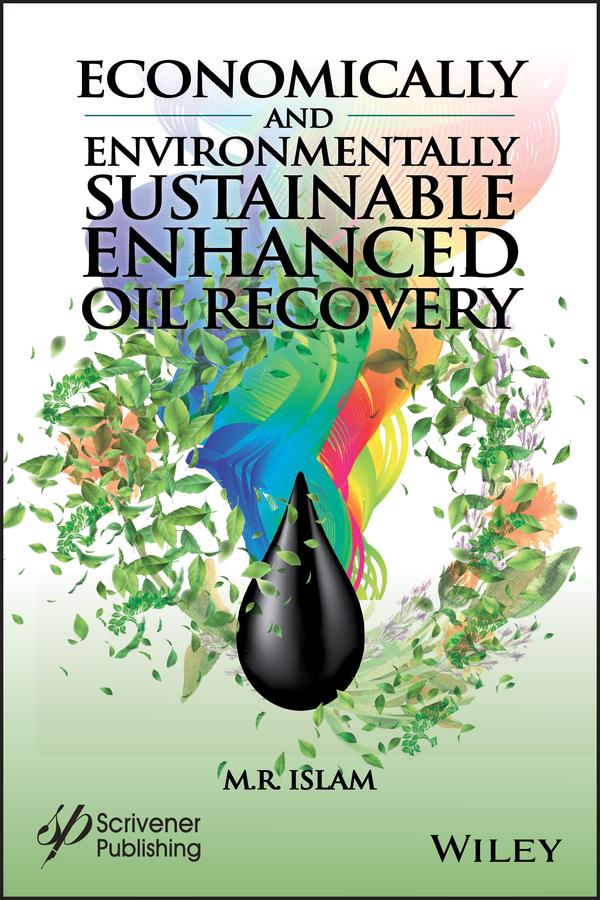
There have been many books on the topic of Enhanced Oil Recovery (EOR) over the last 100 years. They all, however, focus on how to recover more oil faster, taking a rather myopic approach. The solutions presented all work fantastically in theory and even in the laboratory, but each fails to produce results in the field with long-term success. The petroleum industry is almost resigned to the belief that for an EOR technique to be successful, it must be propped up with public funds or must compromise environmental integrity. In line with modern engineering practices, previous books discuss how existing technologies can be tweaked to accommodate for any shortcomings that just came to light. This book is unlike any other book on the topic of recovery in particular and engineering in general.
This groundbreaking volume is a continuation of the author’s and his research group’s work that started publishing on the subject of global sustainability involving energy and the environment, dating back to early 2000s. Starting with a paradigm shift in engineering that involves a long-term focus, rather than looking for short-term solutions, the methods and theories presented here delve into applying green engineering and zero waste principles to EOR.
Historically, EOR has received mixed success, mainly because innovations in these disciplines relied heavily on processed materials, which are both uneconomical and toxic to the environment. This book explains how engineers missed entirely the causes of unsustainability in these technologies due to the prevalence of many myths that are embedded in modern engineering. Once these myths are deconstructed, the appropriate technologies emerge and the merits of them both in terms of economic and environmental benefits become clear.
The book reveals how previous practices in EOR can be replaced with their sustainable versions while saving in material costs. A number of innovative technologies are introduced that can render well known technologies, such as steam flood, in situ combustion, chemical flooding, and microbial EOR environmentally sustainable and economically attractive. A triple dividend is received once these technologies are applied in otherwise marginal reservoirs, unconventional plays and even abandoned formations. The overall reserve, which reflects recoverable oil with new technologies, goes up drastically. Further benefits are drawn when processes such as value addition of waste material is performed.
Overall this book shows how EOR can be rendered green while increasing the profitability. This is in stark contrast to the past practices that considered environmental integrity as a drain on profitability. This book proves that a paradigm shift can turn a “technological disaster” into a technological marvel.
Paga facilmente con carta, Klarna, Apple Pay o Google Pay. Non sei soddisfatto? Hai sempre 14 giorni per il rimborso. Leggi di più nei nostri termini. Per qualsiasi domanda, scrivici a hello@memmo.org.
Memmo rende lo studio più facile, ovunque tu sia nel mondo. Qui trovi i tuoi libri di testo e strumenti di studio intelligenti, tutto in un unico posto: riassunti, quiz, podcast e flashcard. E poi c'è Ted, il tuo compagno di studio che risponde a ogni tua domanda. Oltre 50.000 studenti studiano già qui: è stato creato per aiutarti a imparare più velocemente e a stressarti meno.