
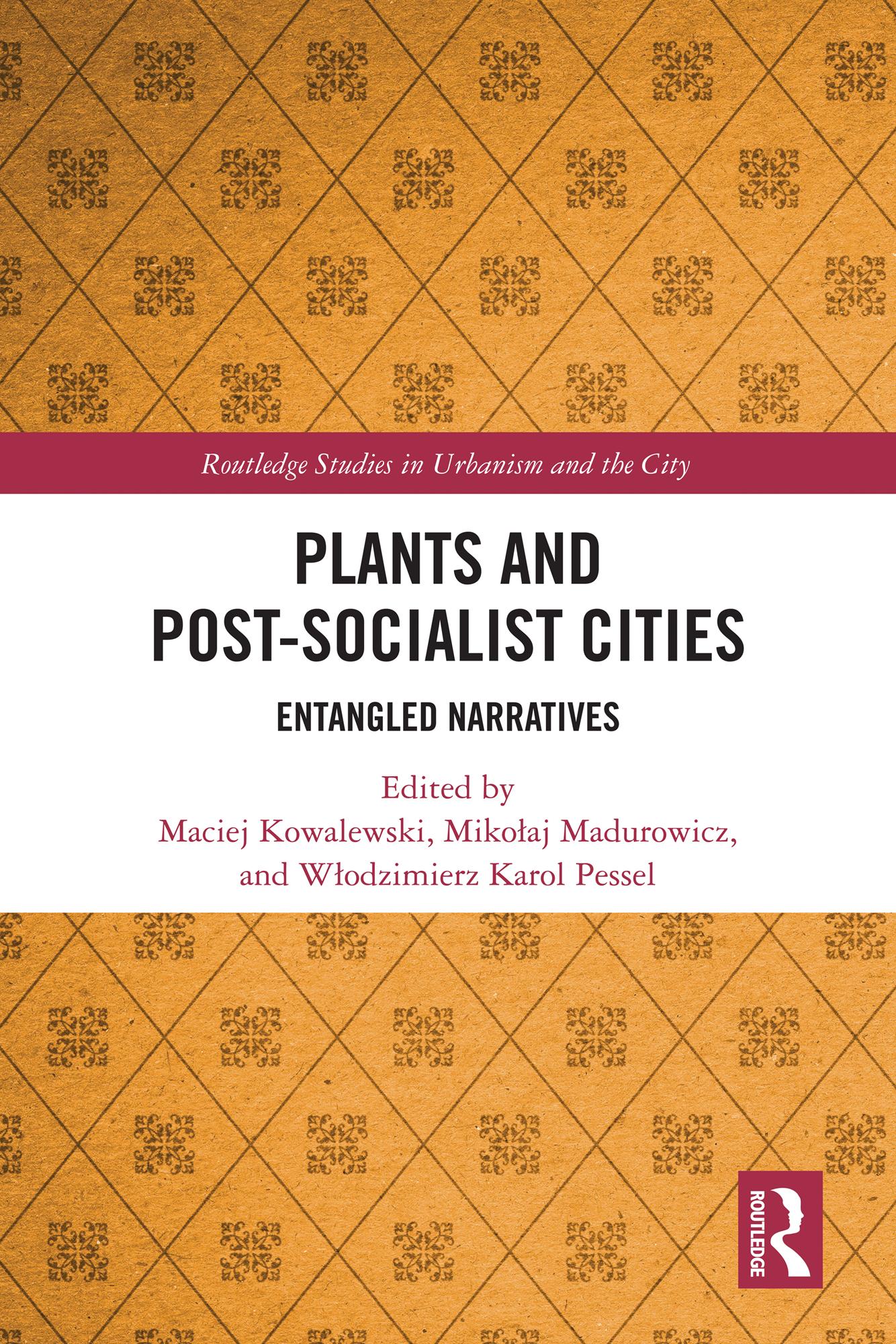
This book offers a theoretically informed exploration of the political, cultural, and ecological significance of urban greenery in post-socialist cities. It traces how plants mediate among memory, infrastructure, and regimes of power across diverse historical and geographical contexts.
The book develops a vocabulary for understanding plants as actors, symbols, archives, and processes within urban transformation. It does so through case studies ranging from Polish housing estates, Nowa Huta, the Upper Silesian brownfields, Elbląg, Szczecin, Warsaw, Vilnius, and Belgrade to Indian urban imaginaries and Chornobyl’s gardens. Drawing on environmental humanities, urban studies, critical plant studies, political ecology, plant blindness, post-political theory, and more-than-human approaches, the book shows how vegetal life participates in memory, governance, conflict, decay, and everyday urban experience.
This book will appeal to scholars and advanced students in urban studies, cultural studies, environmental humanities, anthropology, and human geography, as well as to readers interested in post-socialist transformations, urban ecology, and more-than-human approaches to the city.
Paga facilmente con carta, Klarna, Apple Pay o Google Pay. Non sei soddisfatto? Hai sempre 14 giorni per il rimborso. Leggi di più nei nostri termini. Per qualsiasi domanda, scrivici a hello@memmo.org.
Memmo rende lo studio più facile, ovunque tu sia nel mondo. Qui trovi i tuoi libri di testo e strumenti di studio intelligenti, tutto in un unico posto: riassunti, quiz, podcast e flashcard. E poi c'è Ted, il tuo compagno di studio che risponde a ogni tua domanda. Oltre 50.000 studenti studiano già qui: è stato creato per aiutarti a imparare più velocemente e a stressarti meno.