
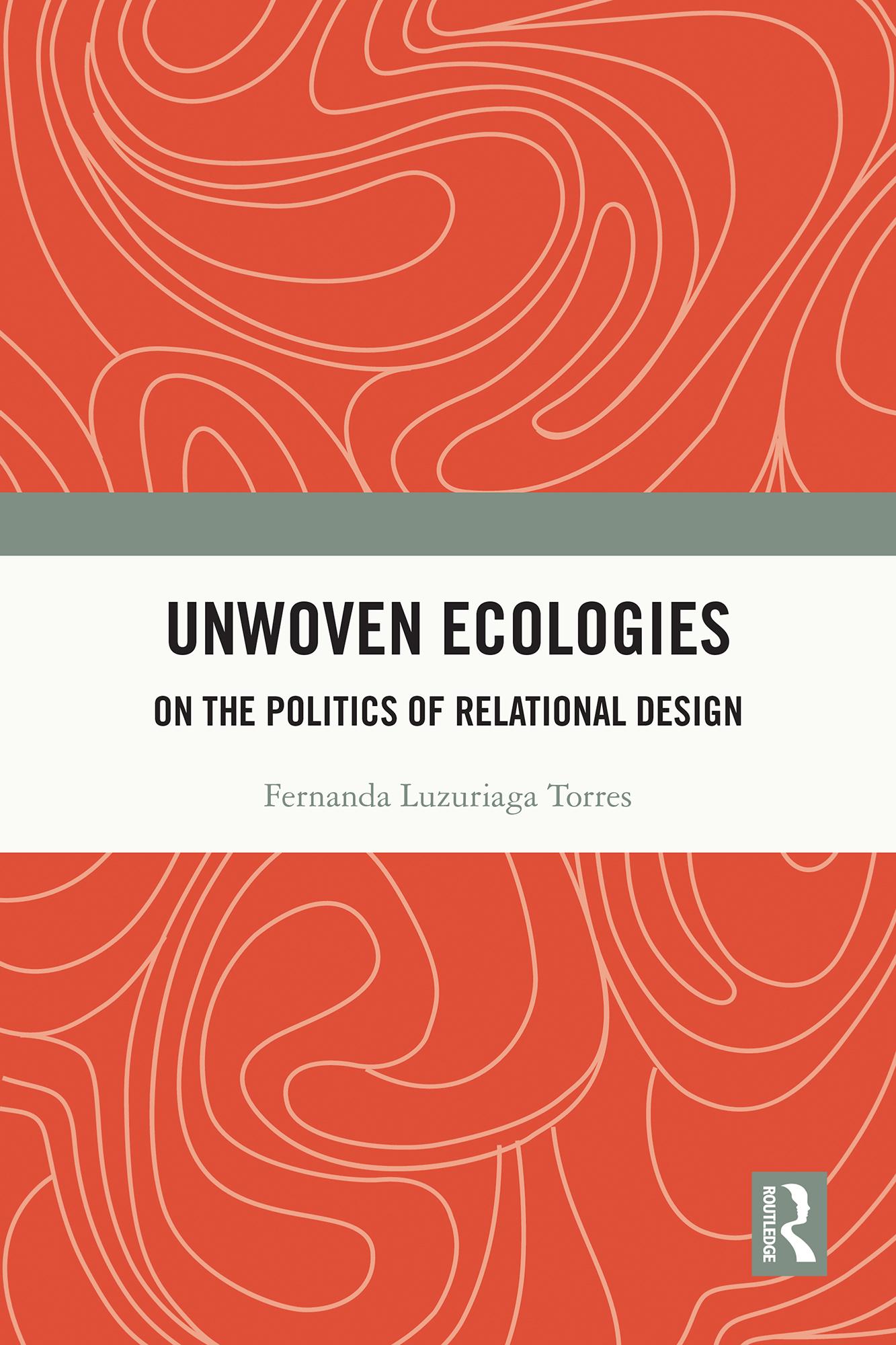
This book addresses the urgency of rethinking coexistence through urbanism. In the face of contemporary global crises, it argues that modern thought and its dichotomies
are insufficient to grasp current territorial conflicts. Instead, it proposes viewing coexistence as a field of friction among beings, knowledges, and economies
intertwined within a relational ecology, suggesting that these connections serve as the very point of departure for urbanism.
Grounded in research from the Ecuadorian Amazon, the work situates local conflicts within global dynamics of the coloniality of power. Methodologically,
it pairs socio-spatial analysis with the microhistories of Kichwa women, bringing to light living spatial configurations. Informed by cannibal thought and the bodyterritory
continuum, these practices reframe urbanism as cosmic diplomacy and predation, while the ch’ixi framework offers a way to conceive coexistence without
assimilation.
Unwoven Ecologies: On the Politics of Relational Design is intended for scholars, postgraduate students, urban planners, and activists in political ecology and decolonial
theory who are seeking relational methodologies to foster resilient models of dwelling on Earth.
Paga facilmente con carta, Klarna, Apple Pay o Google Pay. Non sei soddisfatto? Hai sempre 14 giorni per il rimborso. Leggi di più nei nostri termini. Per qualsiasi domanda, scrivici a hello@memmo.org.
Memmo rende lo studio più facile, ovunque tu sia nel mondo. Qui trovi i tuoi libri di testo e strumenti di studio intelligenti, tutto in un unico posto: riassunti, quiz, podcast e flashcard. E poi c'è Ted, il tuo compagno di studio che risponde a ogni tua domanda. Oltre 50.000 studenti studiano già qui: è stato creato per aiutarti a imparare più velocemente e a stressarti meno.