
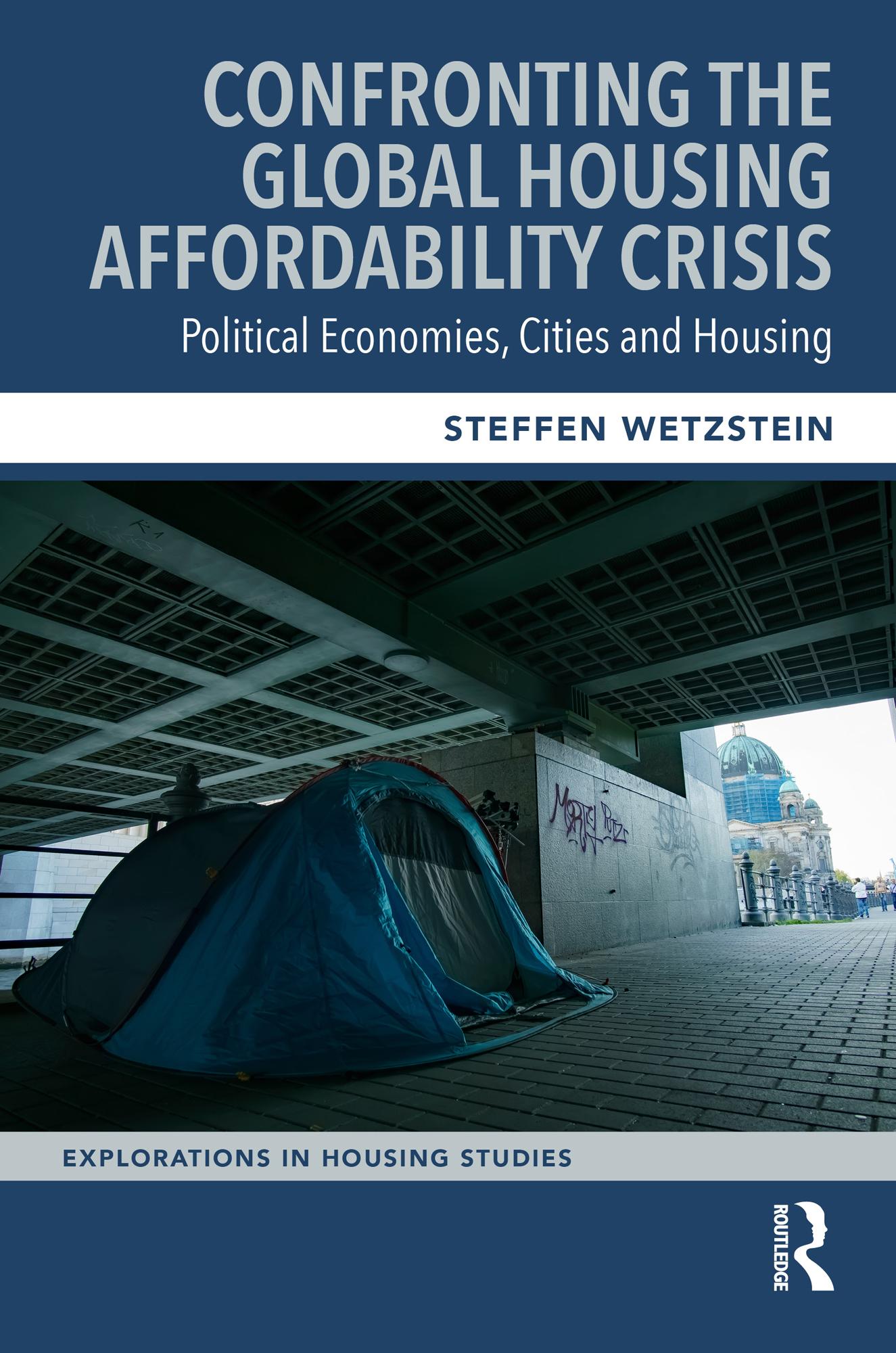
This timely book problematises growing structural housing unaffordability and the lack of affordable housing across the advanced economic world. It offers both a historically and geographically sensitive critique of why we face these issues and why we struggle to adequately respond. In addition, it offers in the last chapter informed speculation towards addressing this crisis collectively, equitably and longitudinally.
Utilising a ‘Critical-Relational Political Economy’ approach, the unaffordability dilemma is linked to converging patterns of cumulative neoliberalising and globalising developments during intense capitalist expansion from the 1970s onwards. Housing unaffordability is not explained by regulatory and planning failures but by a growth model transformation under de-industrialisation, away from labour-inclusive capitalism to city-centric, private landed property-directed political economies. Whereas residential accumulation is characterised by inflationary tendencies, households’ capacity to pay for housing largely follows deflationary dynamics. The consequence is politically stimulated, institutionally mediated and structurally variegated housing–labour decoupling on now-epic proportions.
This book will be essential reading for informed audiences interested in housing, spatial planning, economic development and political economies, as well as questions of social, spatial and intergenerational justice. Besides researchers, policymakers and advocates, it will be postgraduate and undergraduate students who will benefit the most from compelling crisis (re)framing and original rethinking of affordable futures for people and places.
Paga facilmente con carta, Klarna, Apple Pay o Google Pay. Non sei soddisfatto? Hai sempre 14 giorni per il rimborso. Leggi di più nei nostri termini. Per qualsiasi domanda, scrivici a hello@memmo.org.
Memmo rende lo studio più facile, ovunque tu sia nel mondo. Qui trovi i tuoi libri di testo e strumenti di studio intelligenti, tutto in un unico posto: riassunti, quiz, podcast e flashcard. E poi c'è Ted, il tuo compagno di studio che risponde a ogni tua domanda. Oltre 50.000 studenti studiano già qui: è stato creato per aiutarti a imparare più velocemente e a stressarti meno.