
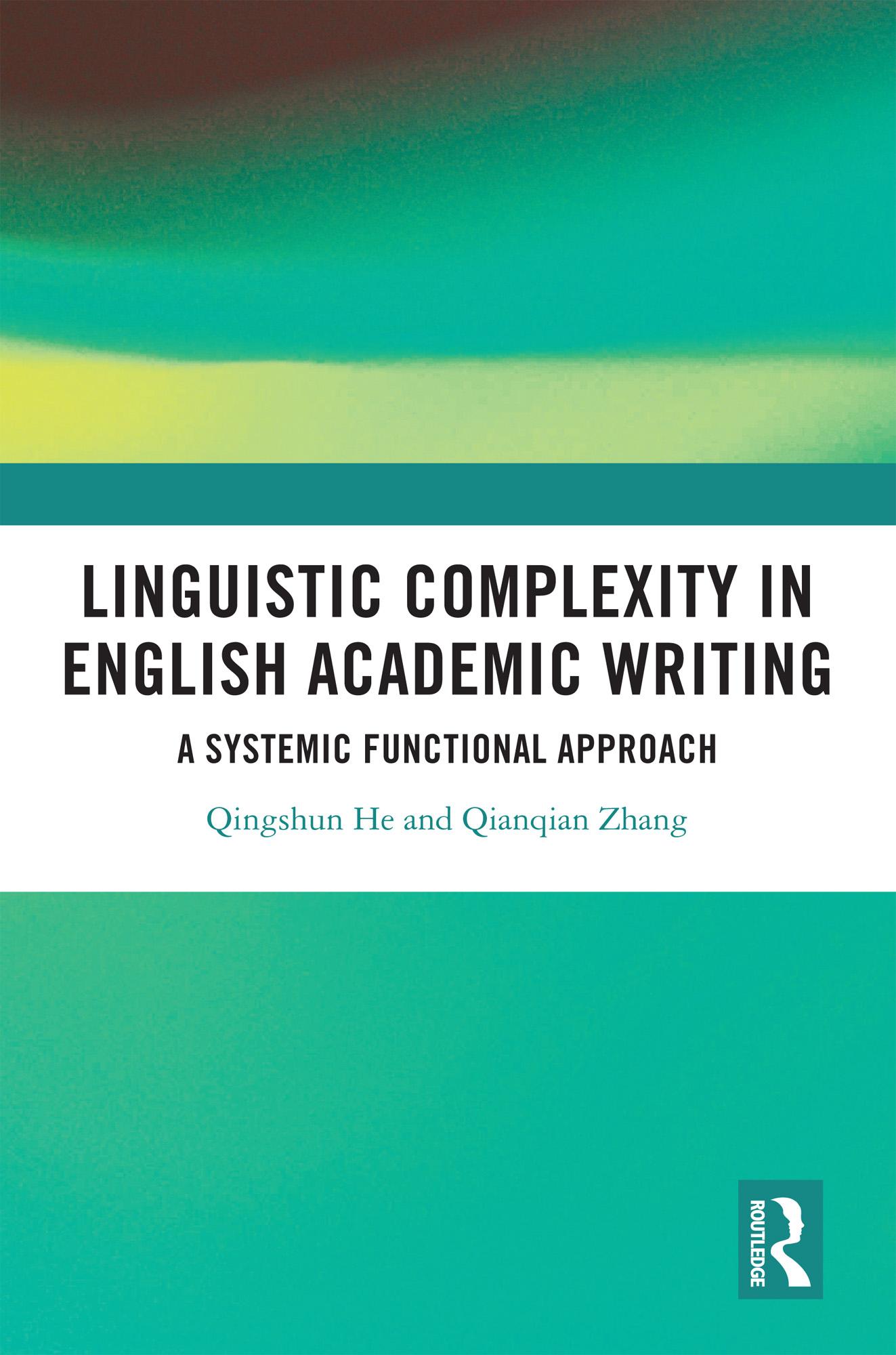
Drawing on the rank-scale hypothesis of Systemic Functional Linguistics, this book explores the synergetic relationships among syntactic complexities at the sentence, clause, and group levels. It also examines how these relationships vary among academic English writers of different proficiency levels.
Viewing language as a dynamic, self-organizing, and self-regulating system, the book examines how changes in complexity at higher levels affect their constituent units. Linguistic complexity is conceptualized systematically across four dimensions: sentence, clause, group, and word. Dependency grammar is employed as an accessible, quantitative metric for complexity analysis. Through an analysis of academic texts produced by three groups of writers with varying levels of proficiency—Chinese Master's students, Chinese Doctoral students, and native English-speaking Doctoral students—the study identifies features of academic writing related to proficiency and uncovers interrelationships among the four dimensions of linguistic complexity. Based on these findings, the book proposes a synergetic model of linguistic complexity that illustrates how these dimensions interact and achieve dynamic balance in English academic writing across different proficiency levels.
This book offers valuable insights for researchers, educators, and graduate students. It provides theoretical exploration and practical guidance for teaching and assessing academic writing.
Paga facilmente con carta, Klarna, Apple Pay o Google Pay. Non sei soddisfatto? Hai sempre 14 giorni per il rimborso. Leggi di più nei nostri termini. Per qualsiasi domanda, scrivici a hello@memmo.org.
Memmo rende lo studio più facile, ovunque tu sia nel mondo. Qui trovi i tuoi libri di testo e strumenti di studio intelligenti, tutto in un unico posto: riassunti, quiz, podcast e flashcard. E poi c'è Ted, il tuo compagno di studio che risponde a ogni tua domanda. Oltre 50.000 studenti studiano già qui: è stato creato per aiutarti a imparare più velocemente e a stressarti meno.