
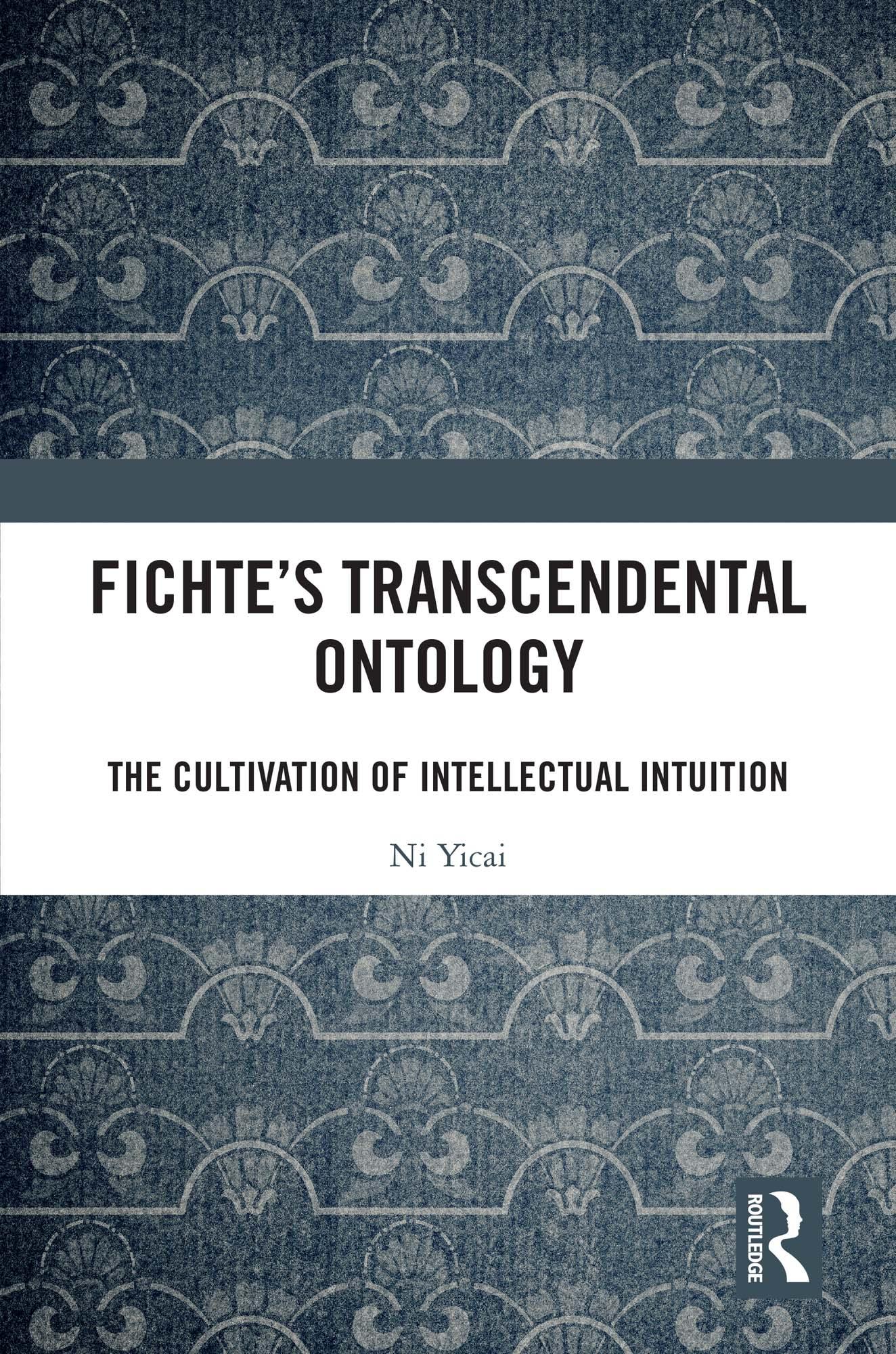
This book reinterprets Fichte’s thought as a “transcendental ontology,” arguing that his later Jena Wissenschaftslehre transcends the “History of Self-Consciousness” to establish a “History of Being,” where the I’s genesis aligns with the world’s historical development.
Challenging the dominant interpretive traditions established by Henrich and the Heidelberg School, this book adopts the framework of “Transcendental Ontology” to explicate the pre-conscious, self-generating activity of primordial reality. The narrative traces the roots of the ontological genesis from Kant’s doctrine of self-affection and Reinhold’s theory of representation, through Fichte’s theoretical confrontations with Schelling and Hölderlin, to its profound reception in the early 20th century. By examining the works of Neo-Kantians (Lask and Hirsch), Neo-Marxist Georg Lukács, and Russian philosopher Ivan Ilyin, this book demonstrates how Fichte’s philosophy evolved into a response to the spiritual crisis of European modernity. Its aim was to unite individuality with historical totality in a “concrete universal.”
This book is essential for scholars and advanced students of German Idealism, modern European philosophy, and intellectual history, especially those interested in subjectivity, the shift from Kant to Fichte and Schelling, and transcendental philosophy's impact on 20th-century thought.
Paga facilmente con carta, Klarna, Apple Pay o Google Pay. Non sei soddisfatto? Hai sempre 14 giorni per il rimborso. Leggi di più nei nostri termini. Per qualsiasi domanda, scrivici a hello@memmo.org.
Memmo rende lo studio più facile, ovunque tu sia nel mondo. Qui trovi i tuoi libri di testo e strumenti di studio intelligenti, tutto in un unico posto: riassunti, quiz, podcast e flashcard. E poi c'è Ted, il tuo compagno di studio che risponde a ogni tua domanda. Oltre 50.000 studenti studiano già qui: è stato creato per aiutarti a imparare più velocemente e a stressarti meno.