
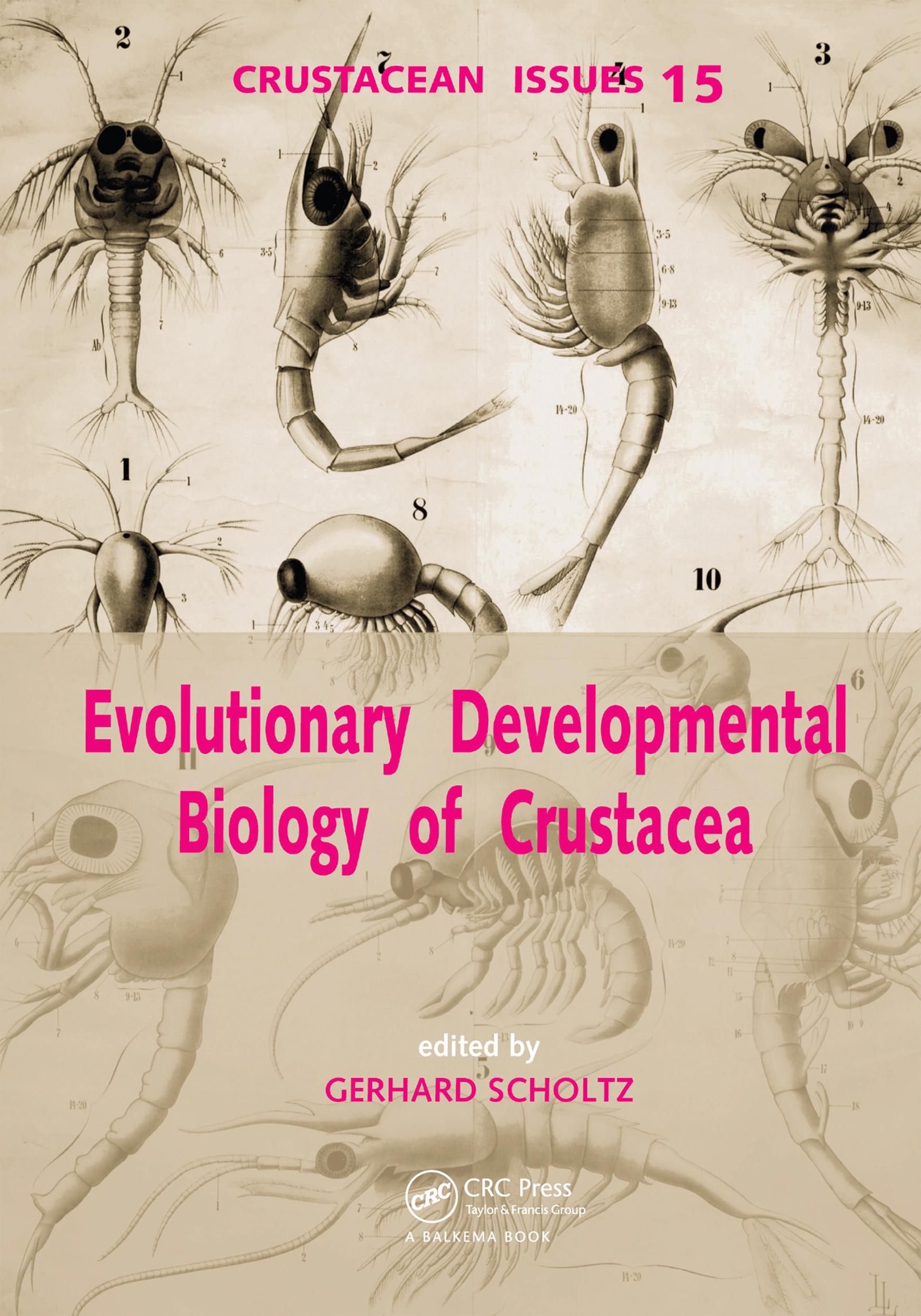
Crustaceans, due to the great diversity of their body organization, segmentation patterns, tagmatization, limb types, larval forms, cleavage, and gastrulation modes, are highly desirable for the study of questions at the interface of evolution and development. Modern interest in evolutionary developmental biology (evo-devo) rests on the molecular genetic approach and a variety of molecular techniques have proven fruitful when performed on crustaceans.
Evolutionary Developmental Biology of Crustacea presents a comprehensive treatment of all aspects of the field, beginning with a discussion of the implications of the typological Bauplan and phylum concepts versus historical concepts such as ground pattern and monophylum for the formulation of conceptual questions in evo-devo. Following this, the authors present the results of Hox gene expression in various crustacean taxa, aspects of segment formation at the cellular and genetic levels, the formation of segmental structures such as neurons, ganglia, and limbs, and the role of morphological ontogenetic characters in resolving phylogenetic relationships.
By covering so many general aspects of crustacean development, morphology, and evolution, Evolutionary Developmental Biology of Crustacea serves as an indispensable reference for developmental and evolutionary biologists investigating the role of genetics in evolution and development.
Paga facilmente con carta, Klarna, Apple Pay o Google Pay. Non sei soddisfatto? Hai sempre 14 giorni per il rimborso. Leggi di più nei nostri termini. Per qualsiasi domanda, scrivici a hello@memmo.org.
Memmo rende lo studio più facile, ovunque tu sia nel mondo. Qui trovi i tuoi libri di testo e strumenti di studio intelligenti, tutto in un unico posto: riassunti, quiz, podcast e flashcard. E poi c'è Ted, il tuo compagno di studio che risponde a ogni tua domanda. Oltre 50.000 studenti studiano già qui: è stato creato per aiutarti a imparare più velocemente e a stressarti meno.