
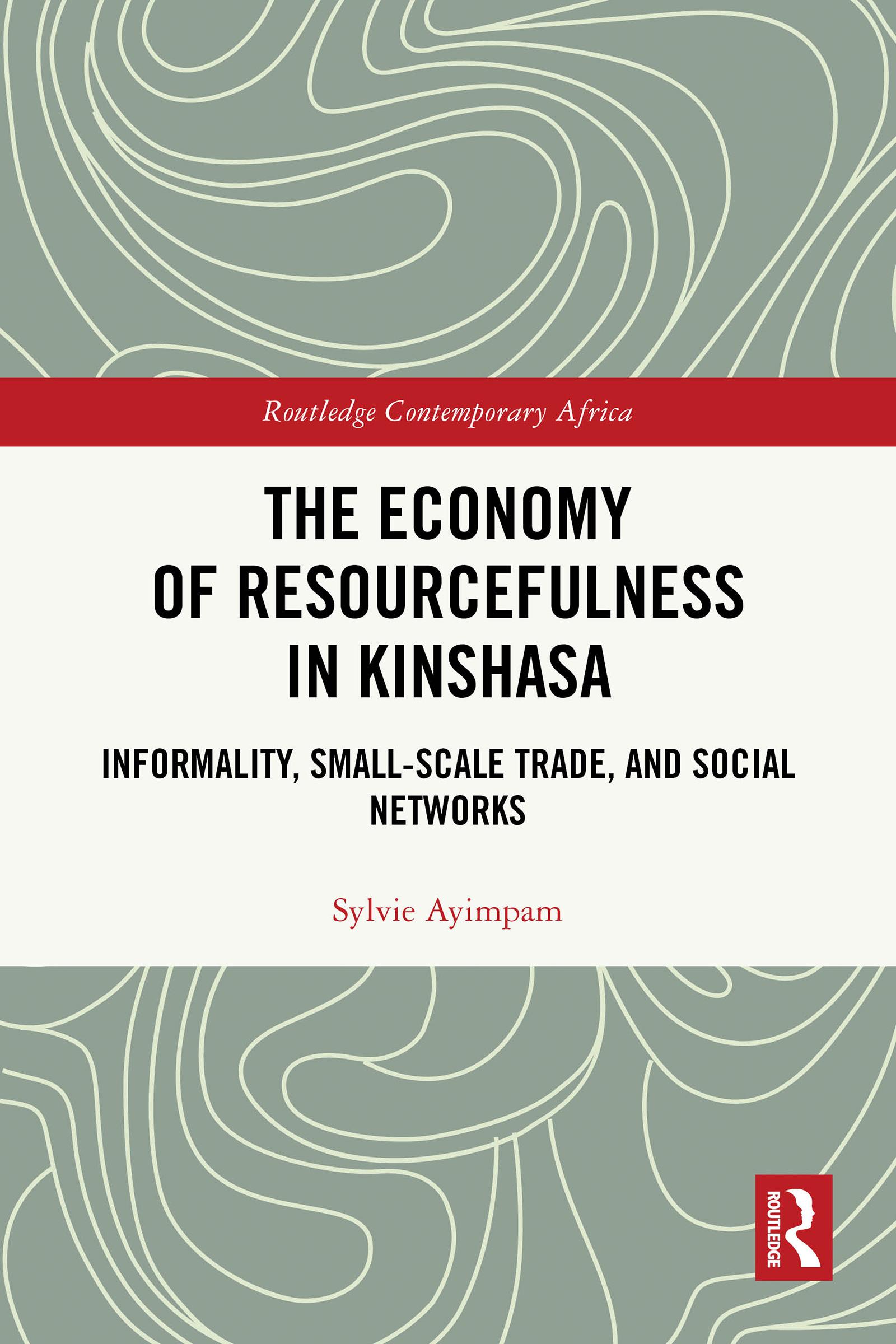
How, in a context of prolonged economic and political crisis, do city dwellers reinvent the means of their survival in Kinshasa? This book answers that question. Through fine-grained ethnography, it shows how micro-social arrangements enable small-scale traders to provision the city and ordinary citizens to keep living, immersing the reader in the many forms of “resourcefulness” that organize small-scale trade across Kinshasa’s markets.
The book moves beyond the formal/informal binary to theorize an “economy of resourcefulness,” where economic, social, political, and cultural dimensions are tightly entangled. It traces how cooperation and cunning, solidarity and extortion, coexist in everyday pursuits of income under precarious conditions. Following retail circuits while attending to shifting state presences, digital payments, congestion, and risk, it reconstructs the practical norms and negotiated rules through which actors coordinate, conflict, and protect themselves—offering a bottom-up view of governance in practice and of ongoing social change.
This volume will interest scholars and students of African studies, anthropology, sociology, political science, geography, urban studies, and development studies, as well as practitioners concerned with popular economies, urban governance, and everyday livelihoods in the Global South.
Paga facilmente con carta, Klarna, Apple Pay o Google Pay. Non sei soddisfatto? Hai sempre 14 giorni per il rimborso. Leggi di più nei nostri termini. Per qualsiasi domanda, scrivici a hello@memmo.org.
Memmo rende lo studio più facile, ovunque tu sia nel mondo. Qui trovi i tuoi libri di testo e strumenti di studio intelligenti, tutto in un unico posto: riassunti, quiz, podcast e flashcard. E poi c'è Ted, il tuo compagno di studio che risponde a ogni tua domanda. Oltre 50.000 studenti studiano già qui: è stato creato per aiutarti a imparare più velocemente e a stressarti meno.