
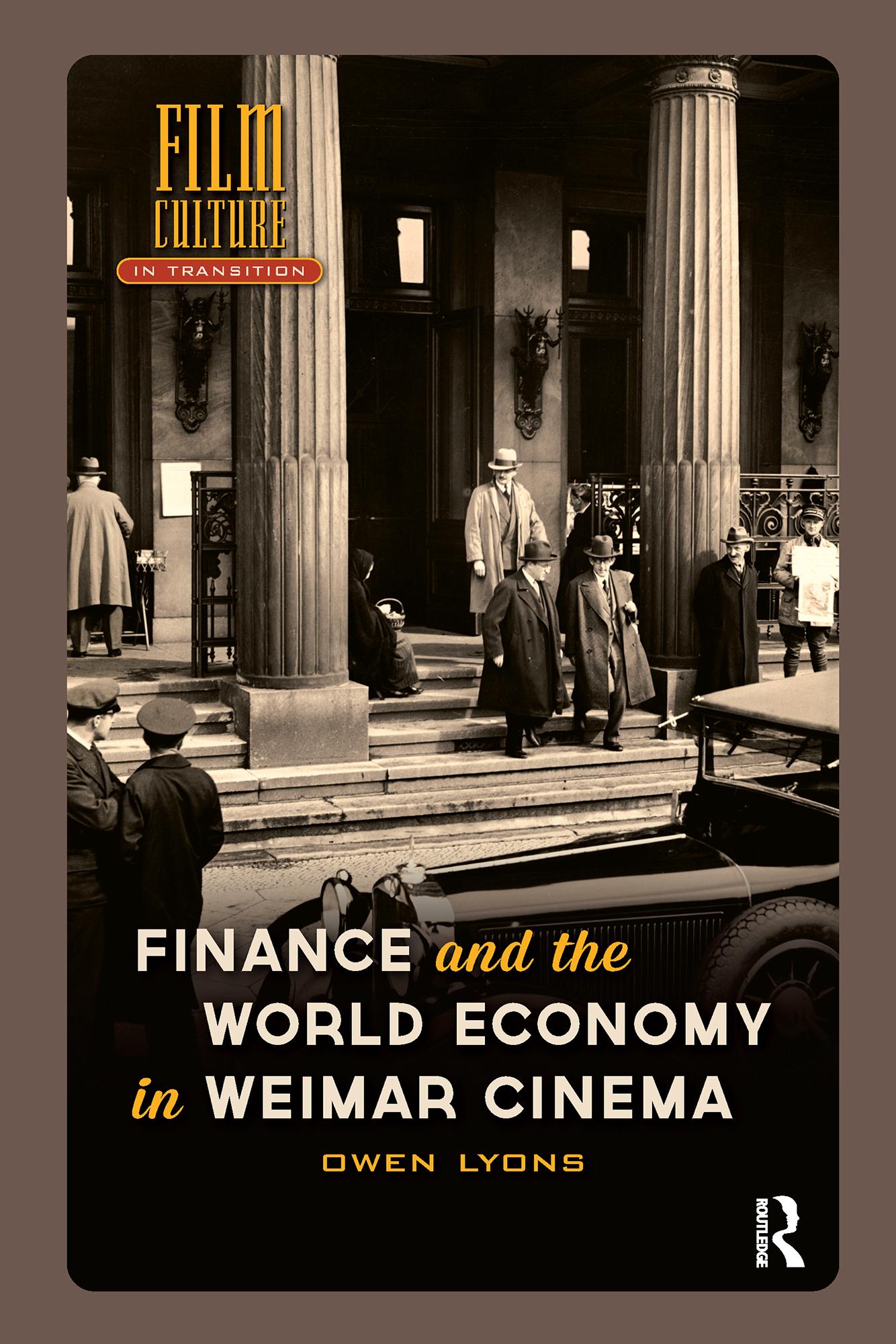
After the First World War, the effects of financial crisis could be felt in all corners of the newly formed Weimar Republic. The newly interconnected world economy was barely understood and yet it was increasingly made visible in the films of the time. The complexities of this system were reflected on screen to both the everyday spectator as well as a new class of financial workers who looked to popular depictions of speculation and crisis to make sense of their own place on the shifting ground of modern life. Finance and the World Economy in Weimar Cinema turns to the many underexamined depictions of finance capital that appear in the films of 1920s Germany. The representation of finance capital in these films is essential to our understanding of the culture of the Weimar Republic – particularly in the relation between finance and ideas of gender, nation and modernity. As visual records, these films reveal the stock exchange as a key space of modernity and coincide with the abstraction of finance as a vast labour of representation in its own right. In so doing, they introduce core visual tropes that have become essential to our understanding of finance and capitalism throughout the twentieth century.
Paga facilmente con carta, Klarna, Apple Pay o Google Pay. Non sei soddisfatto? Hai sempre 14 giorni per il rimborso. Leggi di più nei nostri termini. Per qualsiasi domanda, scrivici a hello@memmo.org.
Memmo rende lo studio più facile, ovunque tu sia nel mondo. Qui trovi i tuoi libri di testo e strumenti di studio intelligenti, tutto in un unico posto: riassunti, quiz, podcast e flashcard. E poi c'è Ted, il tuo compagno di studio che risponde a ogni tua domanda. Oltre 50.000 studenti studiano già qui: è stato creato per aiutarti a imparare più velocemente e a stressarti meno.