
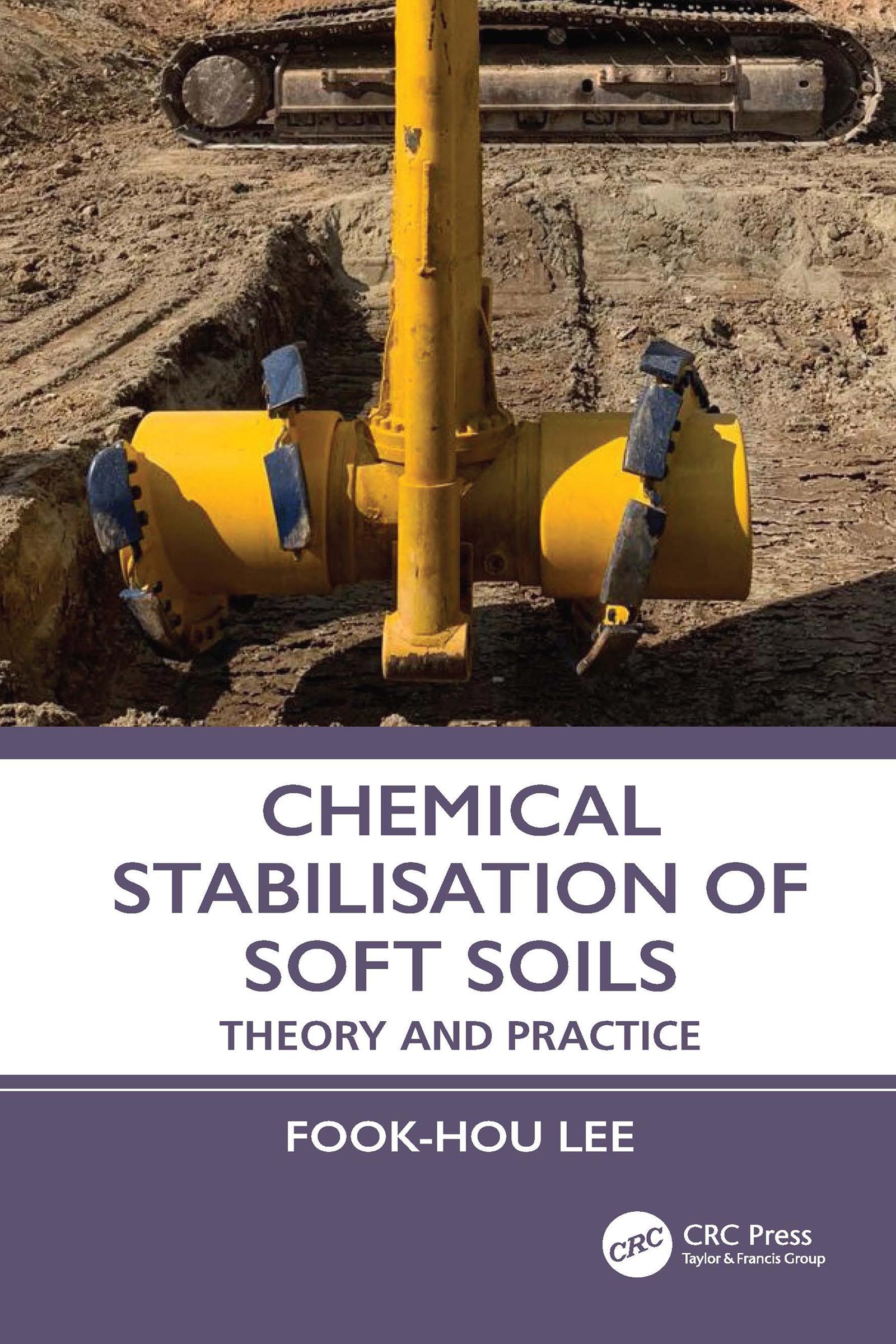
Chemical treatment is often used in ground engineering for the rapid stabilization of soft soil. Although different chemicals can be used, there are significant commonalities in their underlying principles and reactions. This book provides a holistic perspective on chemical stabilisation, covering its history, chemistry, factors affecting quality in the mixing processes, the properties and constitutive behaviour of improved soils, quality control, and design and construction.
Uniquely, this book draws out the interrelationships between the various methods of chemical stabilisation of soils. A key example is the relation between the water content and strength, constitutive behaviour, and uniformity of mixing. Operating parameters may produce conflicting results. For instance, a high water content promotes flowability and thus miscibility, but can also result in binder-soil segregation due to density differences. Furthermore, higher water content tends to degrade the strength of the treated soil. Hence, it is important to find an optimum balance.
This book is essential particularly for geotechnical engineers who are involved in the design and execution of chemical improvement of soil, as well as researchers.
Paga facilmente con carta, Klarna, Apple Pay o Google Pay. Non sei soddisfatto? Hai sempre 14 giorni per il rimborso. Leggi di più nei nostri termini. Per qualsiasi domanda, scrivici a hello@memmo.org.
Memmo rende lo studio più facile, ovunque tu sia nel mondo. Qui trovi i tuoi libri di testo e strumenti di studio intelligenti, tutto in un unico posto: riassunti, quiz, podcast e flashcard. E poi c'è Ted, il tuo compagno di studio che risponde a ogni tua domanda. Oltre 50.000 studenti studiano già qui: è stato creato per aiutarti a imparare più velocemente e a stressarti meno.