
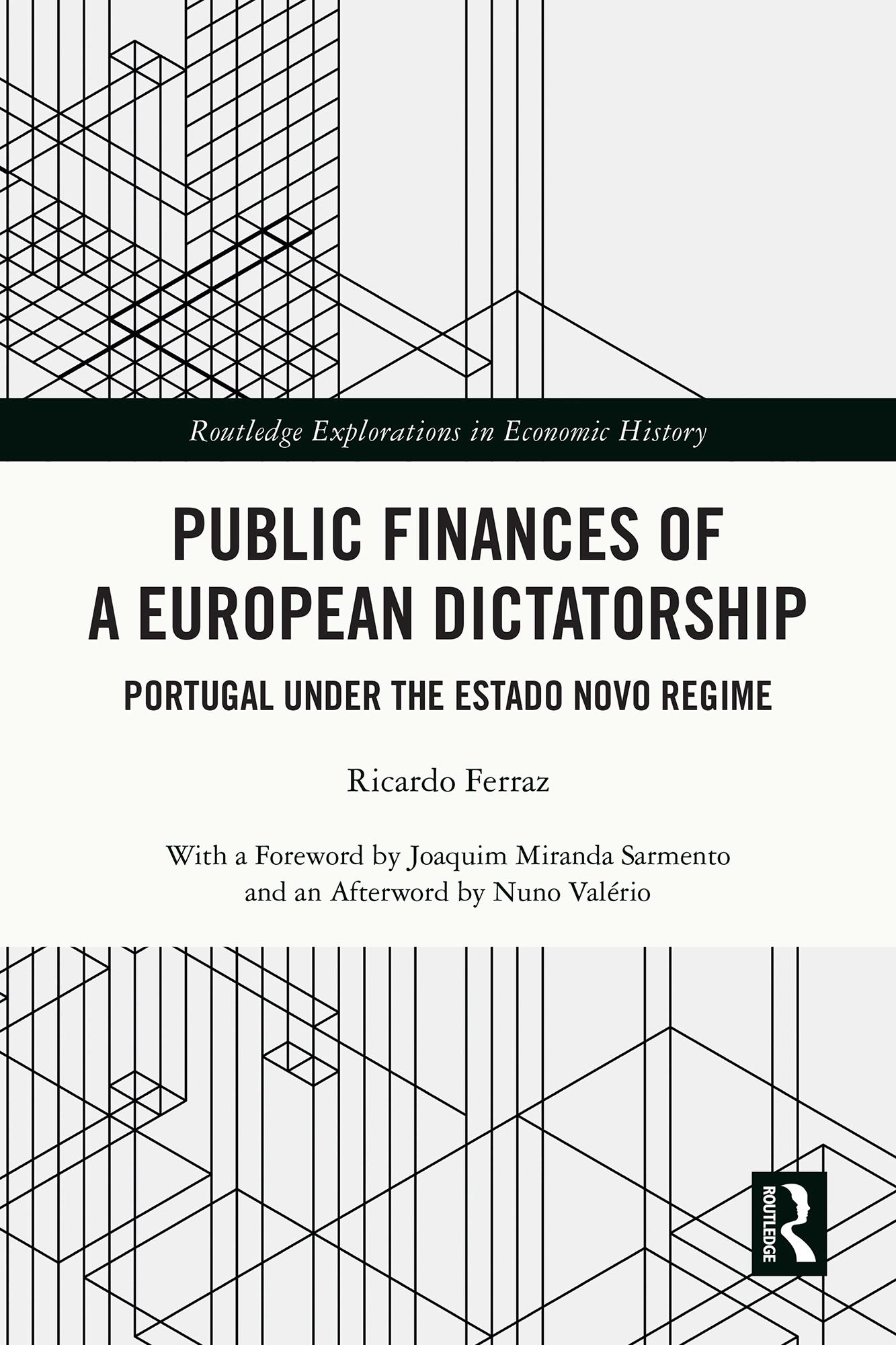
Contributing to the renewed interest in economic history in the role played by peripheral or smaller countries, this book provides a detailed analysis of Portuguese public finances during the Estado Novo regime (1933–1974) – a period marked by dictatorship, industrialization, internationalization, and war. In this book, relevant international comparisons for key macroeconomic indicators are drawn to contextualize the Portuguese case within global settings. Additionally, employing econometric techniques, the sustainability of public finances is assessed across a range of countries, enabling valuable insights for the Portuguese case within a comparative framework. Within Portugal, as the book shows, this period, largely under the dictatorship of Salazar, was characterized by the very first attempt to plan economically in the long term, with the Economic Reconstitution Law (1935–1950). Following the Second World War, and Portugal’s so-called collaborative neutrality, the Portuguese economy experienced a process of industrialization and internationalization, but this culminated in the Colonial War (1961–1974) with blood and tears. The book explores the sources of revenue and expenditure for the Portuguese State during these periods of transformation and crisis and the impact on budget balance and public debt. The book will be of interest to all readers in economic and financial history.
Paga facilmente con carta, Klarna, Apple Pay o Google Pay. Non sei soddisfatto? Hai sempre 14 giorni per il rimborso. Leggi di più nei nostri termini. Per qualsiasi domanda, scrivici a hello@memmo.org.
Memmo rende lo studio più facile, ovunque tu sia nel mondo. Qui trovi i tuoi libri di testo e strumenti di studio intelligenti, tutto in un unico posto: riassunti, quiz, podcast e flashcard. E poi c'è Ted, il tuo compagno di studio che risponde a ogni tua domanda. Oltre 50.000 studenti studiano già qui: è stato creato per aiutarti a imparare più velocemente e a stressarti meno.
Potrebbe interessarti anche
Acquista il libro0