
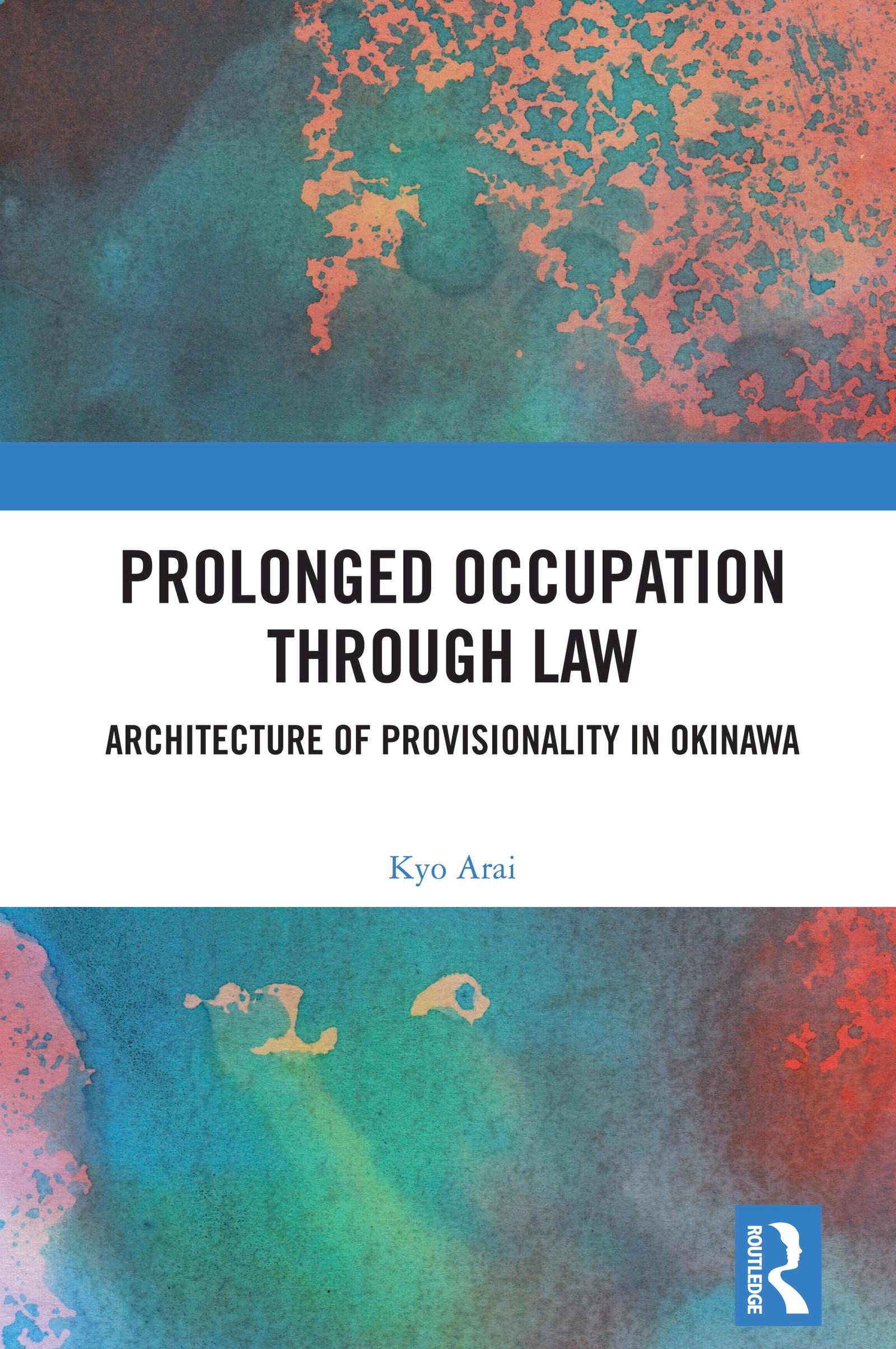
This book examines the body of law relating to occupation and analogous forms of territorial control, including the issues surrounding various types of military occupation and the domination of territory and people abroad. It achieves this through a comprehensive analysis of the legal basis of the U.S. prolonged occupation of Okinawa.
The book begins with a discussion of the legal frameworks under international and U.S. law relating to the occupation and other forms of administration of foreign territory. It then examines the drafting process of various "constitutional" orders issued by the U.S. military for Okinawa during and after World War II. Covering the entire period of the U.S. administration, the book captures the formation of highly contested legal arguments for external governance during the transitional years of 1949-1957, as well as the institutional reforms under the Kennedy administration in the 1960s. The analysis of legal developments contextualizes the Okinawa issue in the current legal discourse on foreign occupation, self-determination, and postcolonialism. The theoretical implications of residual sovereignty and its effect on the relationship between the Japanese government and the people of Okinawa in the modern day are also discussed.
Examining the factors that facilitated the U.S. military rule of Okinawa within the context of international law development, this book will interest scholars of international law, international relations, postcolonial studies, and Asian studies.
Paga facilmente con carta, Klarna, Apple Pay o Google Pay. Non sei soddisfatto? Hai sempre 14 giorni per il rimborso. Leggi di più nei nostri termini. Per qualsiasi domanda, scrivici a hello@memmo.org.
Memmo rende lo studio più facile, ovunque tu sia nel mondo. Qui trovi i tuoi libri di testo e strumenti di studio intelligenti, tutto in un unico posto: riassunti, quiz, podcast e flashcard. E poi c'è Ted, il tuo compagno di studio che risponde a ogni tua domanda. Oltre 50.000 studenti studiano già qui: è stato creato per aiutarti a imparare più velocemente e a stressarti meno.