
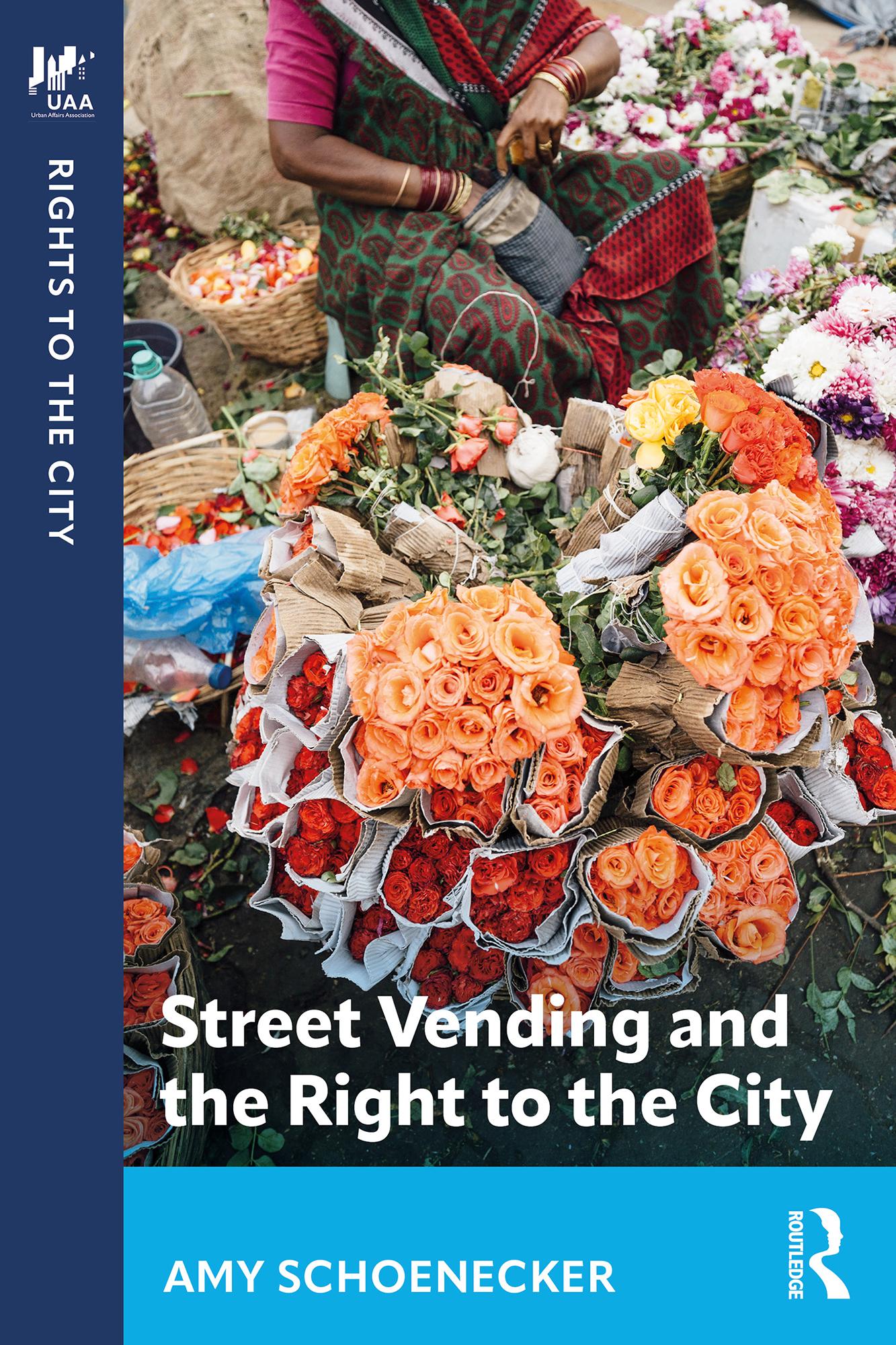
Street vendors often face disproportionate state violence not simply for their use of public space, but because of who they are as users of public space. Through a multicity comparison, Street Vending and the Right to the City demonstrates how vendors blur the lines of in/formality through their resistance tactics, and fight for their rights to the city not only as economic agents, but as residents seeking urban belonging. Given the state violence that people living and working informally face, claiming the right to exist in urban space is indeed a radical act. Cities and states, from New York City to Uruguay, have begun to formalize street vending, with many advocates arguing for this approach, but this book highlights why formalization is not a cure. With international examples and an in-depth case study featuring a comparison of Chicago and Mumbai, the chapters explore how urban informalities are produced and offer perspectives on roadblocks and pathways to gaining legitimacy. This book is essential for academics and students in urban planning, urban studies, anthropology, sociology, urban design, geography, and political science, as well as practitioners and policymakers.
Paga facilmente con carta, Klarna, Apple Pay o Google Pay. Non sei soddisfatto? Hai sempre 14 giorni per il rimborso. Leggi di più nei nostri termini. Per qualsiasi domanda, scrivici a hello@memmo.org.
Memmo rende lo studio più facile, ovunque tu sia nel mondo. Qui trovi i tuoi libri di testo e strumenti di studio intelligenti, tutto in un unico posto: riassunti, quiz, podcast e flashcard. E poi c'è Ted, il tuo compagno di studio che risponde a ogni tua domanda. Oltre 50.000 studenti studiano già qui: è stato creato per aiutarti a imparare più velocemente e a stressarti meno.