
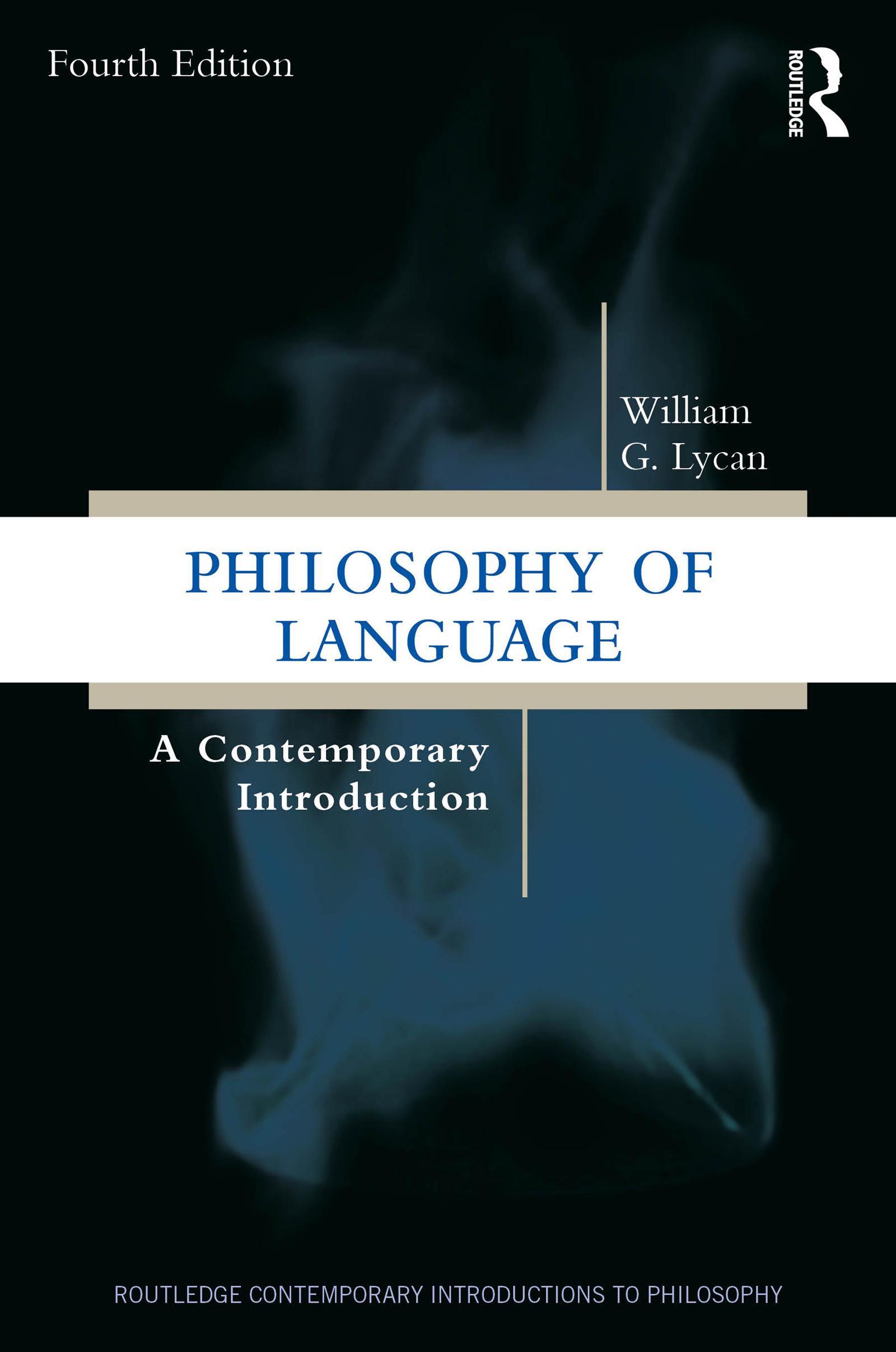
Now in its fourth edition, Philosophy of Language: A Contemporary Introduction introduces students to the main issues and theories in twenty-first-century philosophy of language, focusing specifically on linguistic phenomena.
Author William G. Lycan structures the book’s thirteen chapters into four general parts. Part I, Reference and referring, includes topics such as Russell’s Theory of Descriptions (and its failings), Donnellan’s distinction, problems of anaphora, the Description Theory of proper names, Searle’s Cluster Theory, and the Causal–Historical Theory. Part II, Theories of meaning, surveys the competing theories of linguistic meaning and compares their various advantages and liabilities. Part III, Pragmatics and speech acts, introduces the basic concepts of linguistic pragmatics and includes an introduction to the Relevance approach to pragmatics. Part IV, The expressive and the figurative, examines various forms of expressive language, as well as what “metaphorical meaning” is and how most listeners readily grasp it.
Features of Philosophy of Language include:
- chapter overviews and summaries
- clear supportive examples
- study questions
- annotated lists of further reading
- a glossary.
Key updates to the fourth edition:
- a new section on the predicativist theory of proper names
- an expanded section on inferentialist theories of meaning
- a new section on dynamic (“update”) theories of meaning
- a separate section on varieties of presupposition
- an all-new section on “applied” philosophy of language, listing eleven recent areas of
research - up-to-date coverage of new literature, further reading lists, and the bibliography.
Paga facilmente con carta, Klarna, Apple Pay o Google Pay. Non sei soddisfatto? Hai sempre 14 giorni per il rimborso. Leggi di più nei nostri termini. Per qualsiasi domanda, scrivici a hello@memmo.org.
Memmo rende lo studio più facile, ovunque tu sia nel mondo. Qui trovi i tuoi libri di testo e strumenti di studio intelligenti, tutto in un unico posto: riassunti, quiz, podcast e flashcard. E poi c'è Ted, il tuo compagno di studio che risponde a ogni tua domanda. Oltre 50.000 studenti studiano già qui: è stato creato per aiutarti a imparare più velocemente e a stressarti meno.