
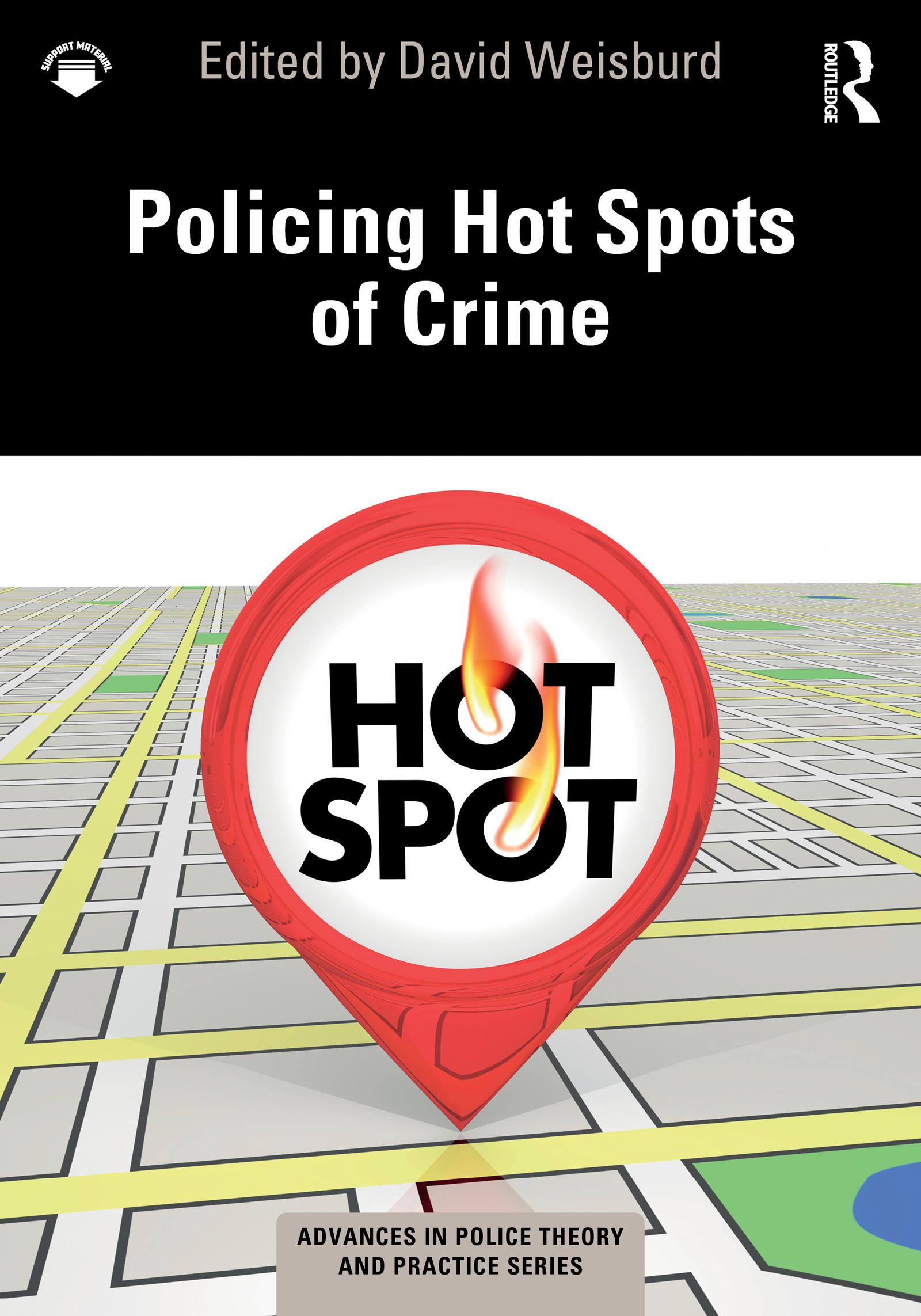
This volume provides a broad framework for understanding hot spots policing in the context of contributions by Professor David Weisburd, recipient of the Stockholm Prize in Criminology for his work in this area.
The book aims to bring together a wide array of studies that are seldom integrated into a broad general argument about why hot spots policing “makes sense,” why police agencies should be implementing this approach, and how police reform can be integrated into their efforts. In the 21st century, a series of rigorous evaluations of hot spots policing overturned the widespread assumption that the police could not prevent crime. Today, there is wide agreement that when the police focus on crimes clustered in individual locations, often called microgeographic units or hot spots, they can be effective in preventing and controlling crime. This collection examines the history of the development of the idea of crime hot spots and evidence of crime concentrations at place that underlie hot spots policing. It also presents key experimental studies that show that hot spots policing works and that it does not simply lead to displacement of crime. Finally, the volume addresses how police reform can be integrated into hot spots policing.
Of interest to a wide range of criminologists and policing scholars, this volume brings together and synthesizes the evidence supporting a focus on hot spots to prevent crime.
Paga facilmente con carta, Klarna, Apple Pay o Google Pay. Non sei soddisfatto? Hai sempre 14 giorni per il rimborso. Leggi di più nei nostri termini. Per qualsiasi domanda, scrivici a hello@memmo.org.
Memmo rende lo studio più facile, ovunque tu sia nel mondo. Qui trovi i tuoi libri di testo e strumenti di studio intelligenti, tutto in un unico posto: riassunti, quiz, podcast e flashcard. E poi c'è Ted, il tuo compagno di studio che risponde a ogni tua domanda. Oltre 50.000 studenti studiano già qui: è stato creato per aiutarti a imparare più velocemente e a stressarti meno.