
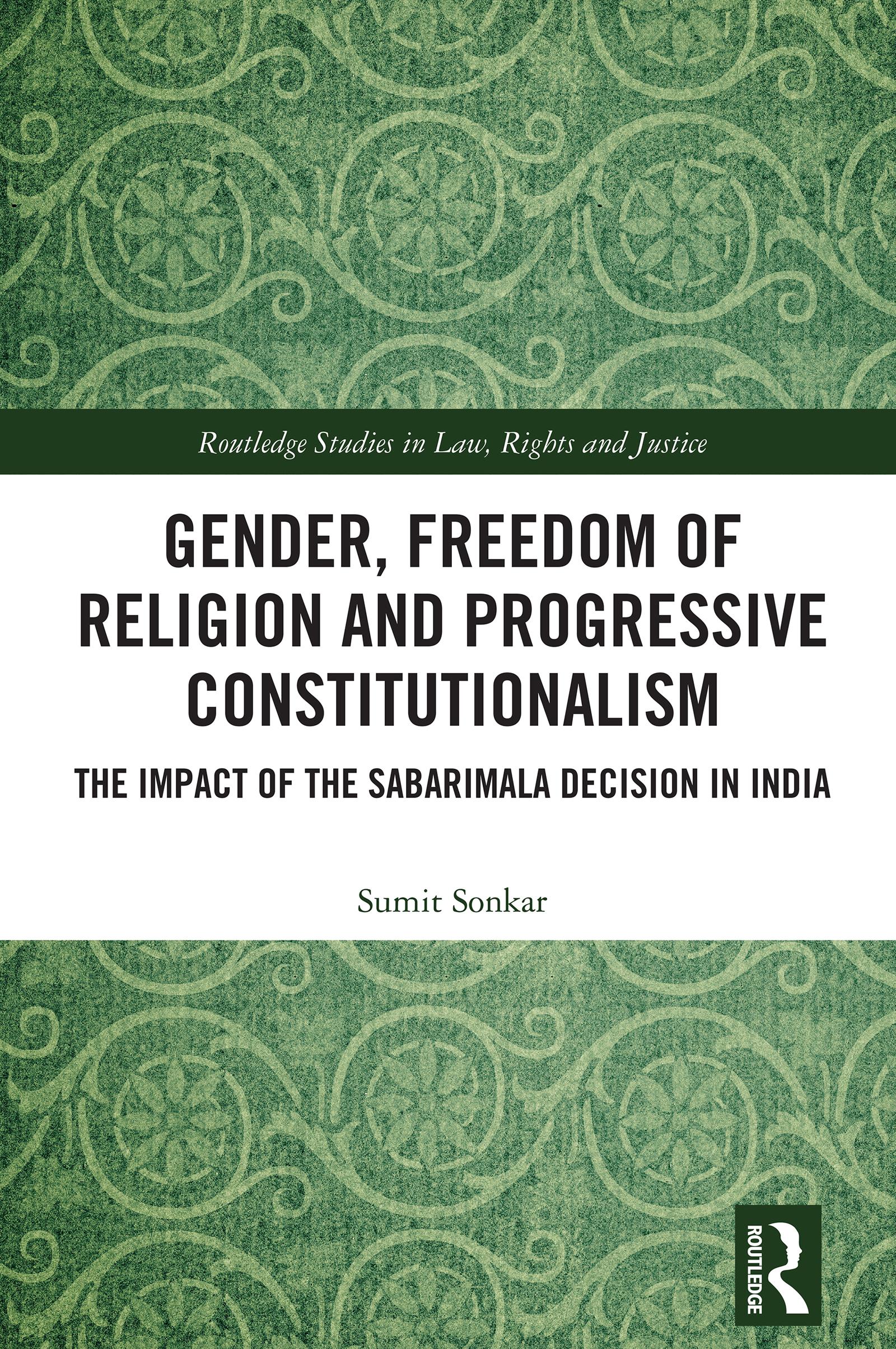
This book examines the role of courts in settling religious disputes in the context of wider debates around religion and gender. By declaring the long-standing tradition of prohibiting entry of menstruating women in the Sabarimala temple unconstitutional, in the Indian Young Lawyers Association v State of Kerala (Sabarimala case), the Supreme Court of India has not only recognised the women’s right to access the temple but also ignited debates on the role of constitutional courts in adjudicating religious disputes and bringing social transformation in India. This work explores the nexus of religious freedom and gender equality, the nature and scope of religious freedom under the Indian Constitution, and judicial approaches in adjudicating religious matters. Thus, it provides a contextual and comprehensive analysis of the Sabarimala case for implementing and enforcing court-crafted constitutional rights. The book includes a discussion of how judicial interventions can bring about progressive social change that can offer valuable lessons on judicial frameworks to advance gender justice more widely. The study will be of interest to academics and researchers working in the areas of human rights law, law and religion, law and gender, social justice, and constitutional law.
Paga facilmente con carta, Klarna, Apple Pay o Google Pay. Non sei soddisfatto? Hai sempre 14 giorni per il rimborso. Leggi di più nei nostri termini. Per qualsiasi domanda, scrivici a hello@memmo.org.
Memmo rende lo studio più facile, ovunque tu sia nel mondo. Qui trovi i tuoi libri di testo e strumenti di studio intelligenti, tutto in un unico posto: riassunti, quiz, podcast e flashcard. E poi c'è Ted, il tuo compagno di studio che risponde a ogni tua domanda. Oltre 50.000 studenti studiano già qui: è stato creato per aiutarti a imparare più velocemente e a stressarti meno.