
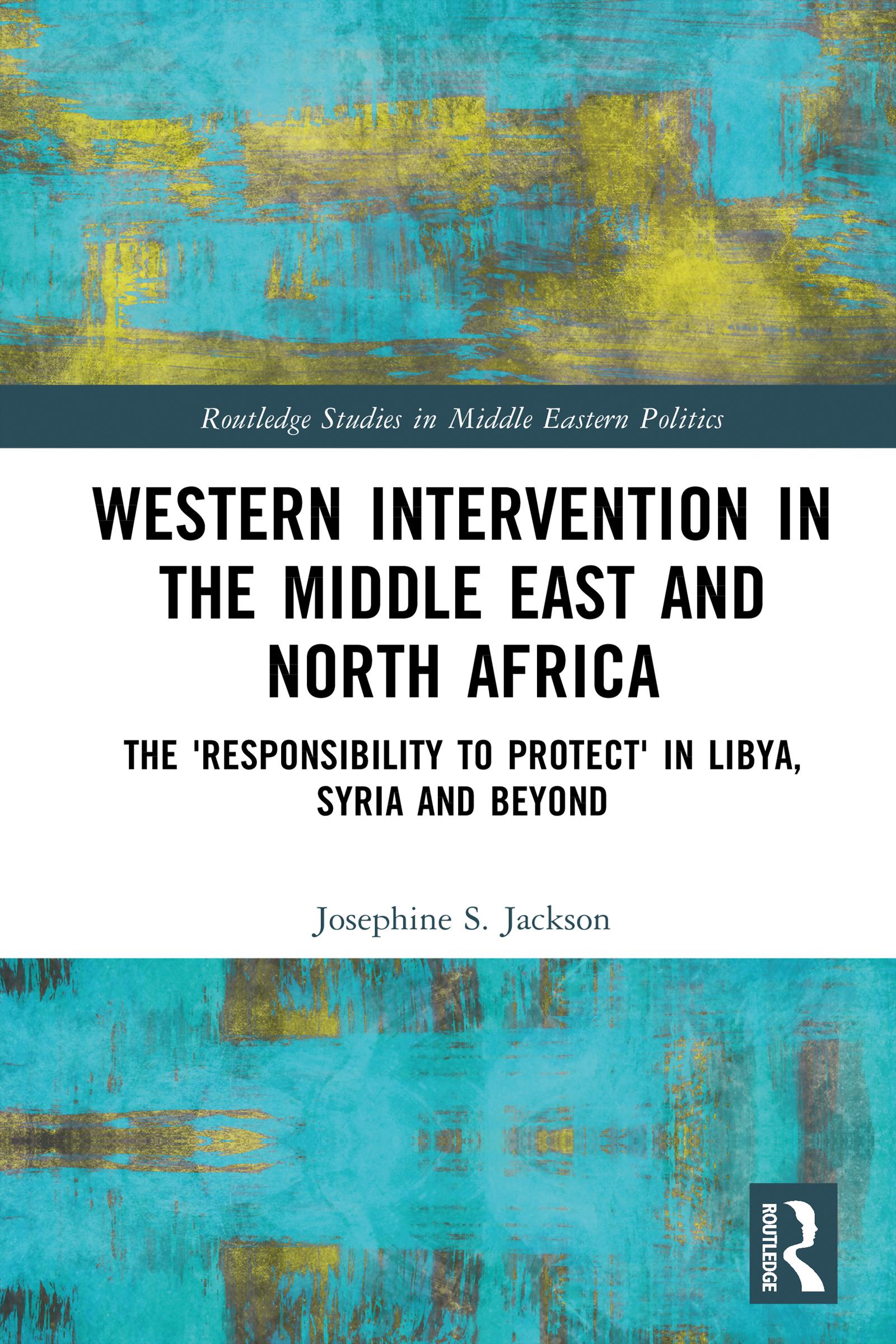
Western Intervention in the Middle East and North Africa: The ‘Responsibility to Protect’ in Libya, Syria and Beyond offers a groundbreaking investigation into one of the most contested questions in international relations: why states intervene to stop mass atrocities in some contexts but not in others.
Focusing on the United States and the United Kingdom, this book examines two pivotal cases – Libya (2011) and Syria (2011–2013) – to reveal how decisions under the third pillar of the Responsibility to Protect (R2P) are shaped less by universal norms than by nationally constructed identities and interests. Through detailed case studies, qualitative interviews, and extensive engagement with social constructivist theory, the book demonstrates how the U.S. and U.K. positioned themselves as ‘intervener’ in Libya but as ‘non-intervener’ in Syria, and how the Libya experience itself influenced subsequent restraint in Syria. By tracing the complex interaction of social, political, and institutional factors, it challenges the assumption that R2P operates as a purely international agenda and instead uncovers the national-level dynamics that determine whether and how military interventions occur.
Essential reading for scholars, policy makers, and practitioners in international relations, human rights, and Middle East and North African studies, this book provides critical insights into the politics of atrocity prevention and highlights the nuanced conditions required for future third pillar responses.
Paga facilmente con carta, Klarna, Apple Pay o Google Pay. Non sei soddisfatto? Hai sempre 14 giorni per il rimborso. Leggi di più nei nostri termini. Per qualsiasi domanda, scrivici a hello@memmo.org.
Memmo rende lo studio più facile, ovunque tu sia nel mondo. Qui trovi i tuoi libri di testo e strumenti di studio intelligenti, tutto in un unico posto: riassunti, quiz, podcast e flashcard. E poi c'è Ted, il tuo compagno di studio che risponde a ogni tua domanda. Oltre 50.000 studenti studiano già qui: è stato creato per aiutarti a imparare più velocemente e a stressarti meno.