
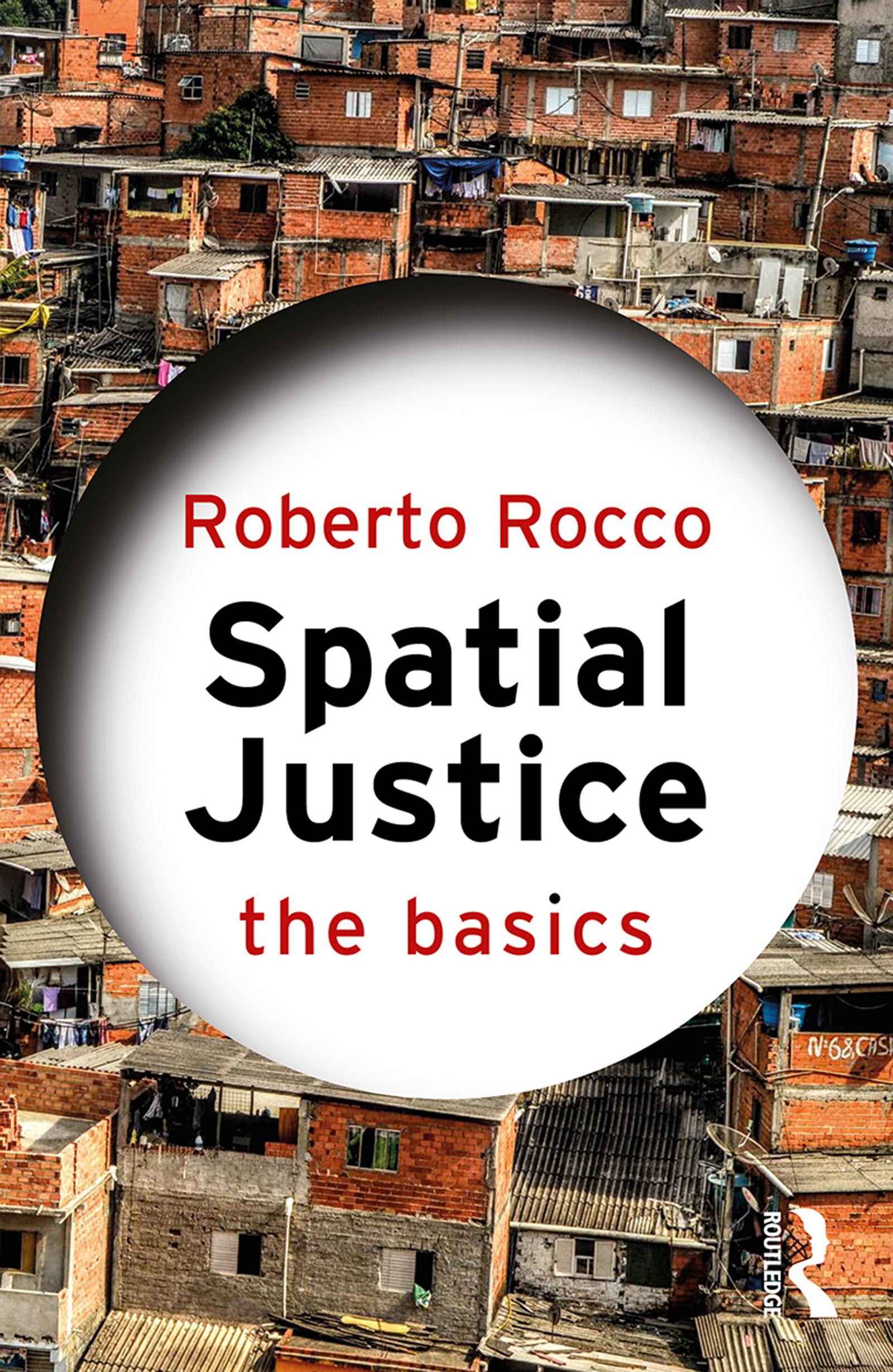
Spatial Justice: The Basics offers a concise and accessible introduction to spatial justice as both a theoretical framework and a practical agenda for urban transformation. It examines how urban space is produced, contested, and governed, and how it is implicated in broader dynamics of inequality, recognition, and participation. Drawing on key thinkers such as Henri Lefebvre, Nancy Fraser, Iris Marion Young, Edward Soja, and Susan Fainstein, the book articulates spatial justice through its distributive, procedural, and recognitional dimensions, while also tracing its intellectual genealogy across critical theory, planning thought, and Southern urbanism.
The book centres spatial planning as a normative, political, and ethical practice capable of fostering solidarity, democratising decision-making, and addressing structural injustices. Real-world examples from Indonesia, Colombia, Brazil, the US, and more illustrate how spatial justice is negotiated in practice, while discussions of neoliberal governance, democratic backsliding, and epistemic justice ground the analysis in urgent global challenges.
Designed for upper-level undergraduates, postgraduates, and early-career professionals in planning, geography, architecture, and related fields, the book includes a detailed glossary of key terms, visual diagrams, and analytical tables to support critical engagement and classroom use.
Paga facilmente con carta, Klarna, Apple Pay o Google Pay. Non sei soddisfatto? Hai sempre 14 giorni per il rimborso. Leggi di più nei nostri termini. Per qualsiasi domanda, scrivici a hello@memmo.org.
Memmo rende lo studio più facile, ovunque tu sia nel mondo. Qui trovi i tuoi libri di testo e strumenti di studio intelligenti, tutto in un unico posto: riassunti, quiz, podcast e flashcard. E poi c'è Ted, il tuo compagno di studio che risponde a ogni tua domanda. Oltre 50.000 studenti studiano già qui: è stato creato per aiutarti a imparare più velocemente e a stressarti meno.