
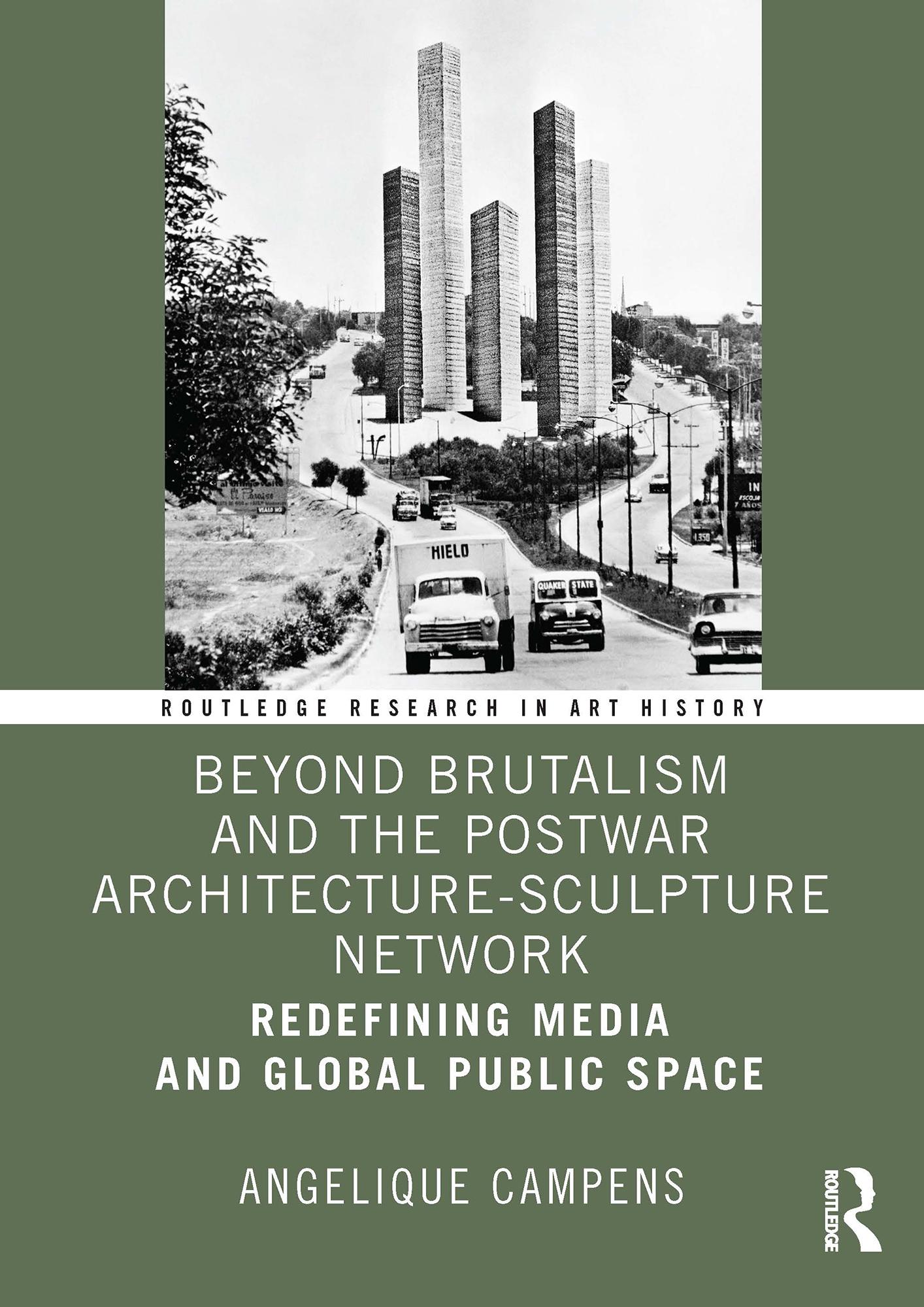
This study focuses on the moment in the history of modern art, during the 1950s, when sculptors and architects began to use concrete to create a previously impossible fusion of their respective art forms and the mutual influences between sculpture and architecture.
The book pays particular attention to those works that left the concrete "brut"—that is, "raw" or unfinished—and thus produced a rough aesthetic that has become an icon of postwar art. The author shines a spotlight on the work of André Bloc and the international networks, publications, and initiatives that he facilitated, demonstrating the pivotal role he played in the exchange between architecture and sculpture and the expansion of public art practice. Placing Bloc among a roster of artists and architects working in concrete that also included Picasso and Le Corbusier, the book follows the movement from Brut’s conceptual and material roots in the 1930s into the height of its influence from the mid-1950s to early 1970s. It ends by tracing the legacy into the present. In so doing, it shows how fundamental the use of concrete was to the development of a new architectural-sculptural form and, in turn, how their interdisciplinary and socially focused practices form an overlooked genealogy of the arts in the present.
This book is ideal for researchers and students in 20th-century Art, Architecture, Design, and Urban Studies.
Paga facilmente con carta, Klarna, Apple Pay o Google Pay. Non sei soddisfatto? Hai sempre 14 giorni per il rimborso. Leggi di più nei nostri termini. Per qualsiasi domanda, scrivici a hello@memmo.org.
Memmo rende lo studio più facile, ovunque tu sia nel mondo. Qui trovi i tuoi libri di testo e strumenti di studio intelligenti, tutto in un unico posto: riassunti, quiz, podcast e flashcard. E poi c'è Ted, il tuo compagno di studio che risponde a ogni tua domanda. Oltre 50.000 studenti studiano già qui: è stato creato per aiutarti a imparare più velocemente e a stressarti meno.