
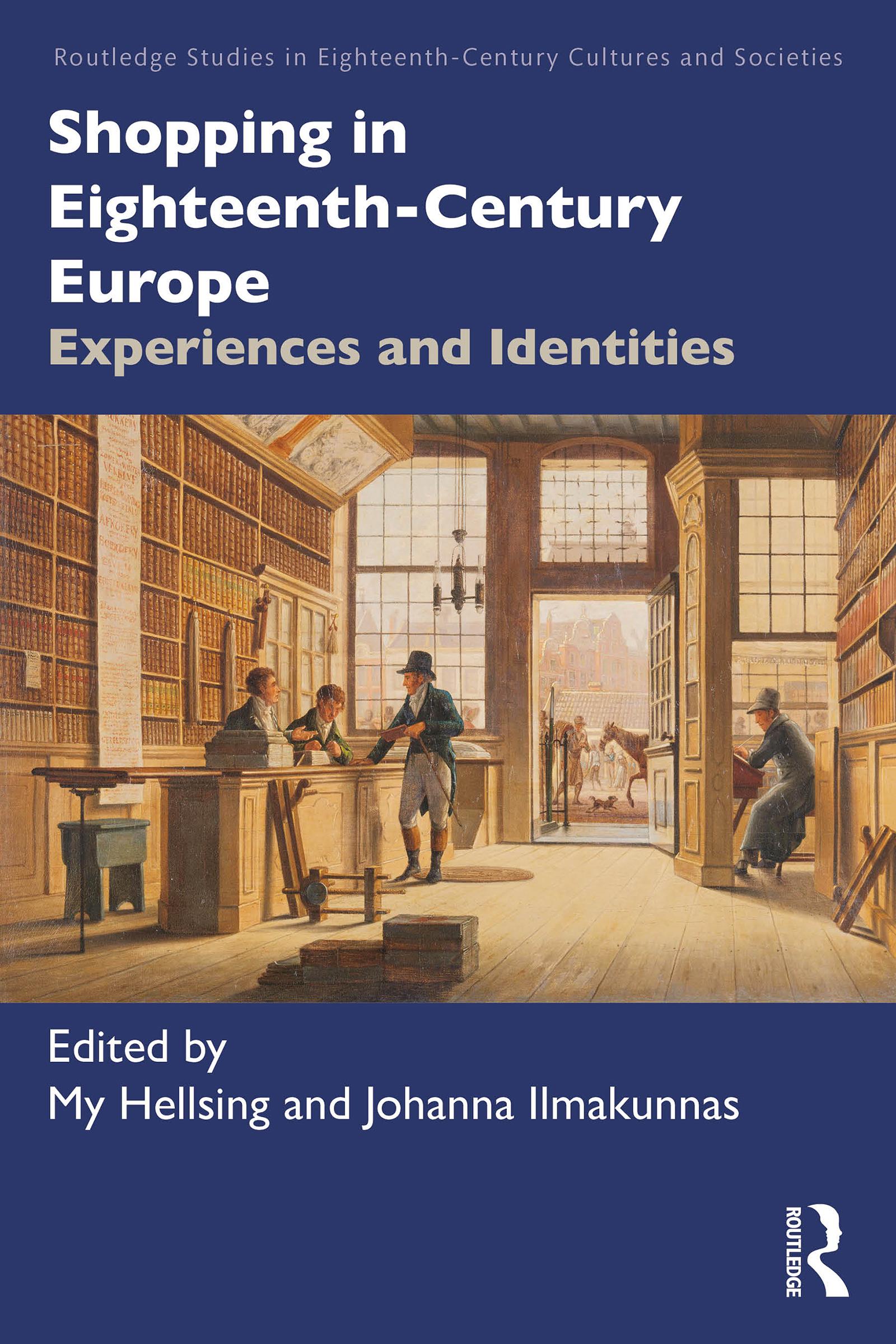
This volume explores the practices of shopping in Europe during the long eighteenth century, a period during which consumption choices expanded to encompass much larger groups than before. Shopping functioned as an act of social distinction, where retail practices not only reflected and reinforced social aspirations and identities but also were a means of creating relationships through shared information and exchanges.
Bringing together ten diverse case studies, the collection provides in-depth insights into the transformation of shopping practices across Western and Northern Europe. The production of made-to-order goods gave way to a range of ready-made objects that could be viewed, browsed and touched in shops, booths, workshops and markets. Together, the chapters highlight a crucial historical nuance: the concept of ‘shopping’ as understood in England—with its associations of pleasure and socialising—did not exist in other major European languages during this period. From actors in Stockholm to aristocrats in Paris, this study rigorously contextualises the practice of consumption, leaving readers with an enriched understanding of how shopping shaped identities and social relationships throughout eighteenth-century Europe.
This collection is an essential resource for scholars, students and non-specialists interested in the material culture, economy, everyday life and social dynamics of Europe during the long eighteenth century.
Paga facilmente con carta, Klarna, Apple Pay o Google Pay. Non sei soddisfatto? Hai sempre 14 giorni per il rimborso. Leggi di più nei nostri termini. Per qualsiasi domanda, scrivici a hello@memmo.org.
Memmo rende lo studio più facile, ovunque tu sia nel mondo. Qui trovi i tuoi libri di testo e strumenti di studio intelligenti, tutto in un unico posto: riassunti, quiz, podcast e flashcard. E poi c'è Ted, il tuo compagno di studio che risponde a ogni tua domanda. Oltre 50.000 studenti studiano già qui: è stato creato per aiutarti a imparare più velocemente e a stressarti meno.