
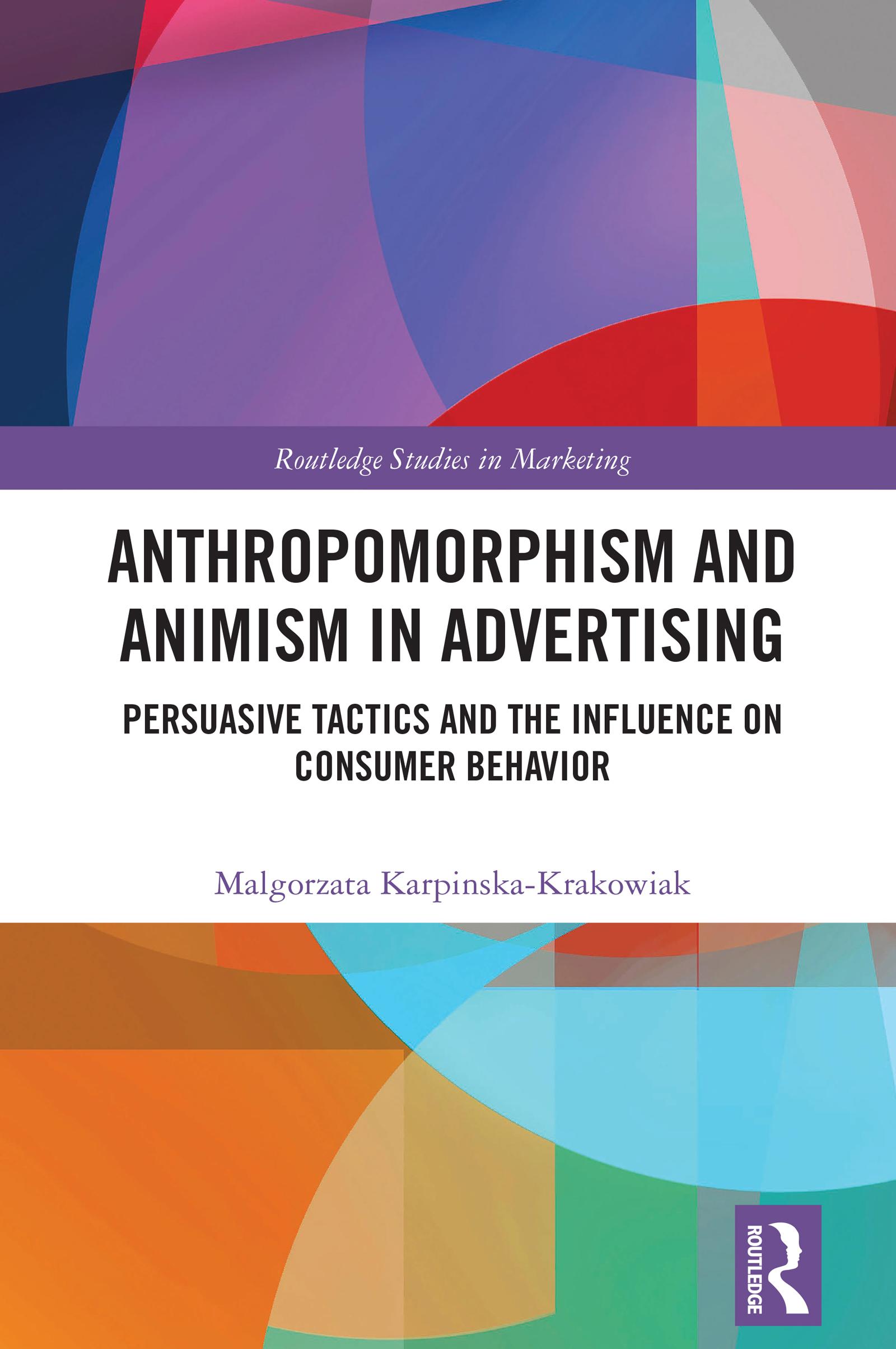
Traditionally, advertisers have assumed that anthropomorphism (seeing a product as human) and animism (seeing a product as alive) are identical processes, triggering the same consumer responses. This book shows that this assumption is incorrect, often leading to misinterpretations in scholarly studies. Through a series of experiments, it reveals that animism and anthropomorphism are two distinct processes with different causes, consequences and implications.
While anthropomorphism is well-studied, animism has been largely overlooked. This book is the first to systematically differentiate the two, providing clear definitions and empirical evidence. It identifies specific advertising tactics that trigger animism versus anthropomorphism and examines their persuasive impact. It explores when and why consumers are more likely to animate or anthropomorphize products. These insights help readers determine which process is more effective for different contexts, services and product categories. Additionally, the book includes a comprehensive review of existing empirical studies on anthropomorphism, offering a summary of key findings, manipulation techniques and moderating factors. This resource allows readers to recognize broader patterns in past research and apply them to their work.
This novel book offers valuable new insights for scholars across advertising, marketing and consumer psychology in particular.
Paga facilmente con carta, Klarna, Apple Pay o Google Pay. Non sei soddisfatto? Hai sempre 14 giorni per il rimborso. Leggi di più nei nostri termini. Per qualsiasi domanda, scrivici a hello@memmo.org.
Memmo rende lo studio più facile, ovunque tu sia nel mondo. Qui trovi i tuoi libri di testo e strumenti di studio intelligenti, tutto in un unico posto: riassunti, quiz, podcast e flashcard. E poi c'è Ted, il tuo compagno di studio che risponde a ogni tua domanda. Oltre 50.000 studenti studiano già qui: è stato creato per aiutarti a imparare più velocemente e a stressarti meno.