
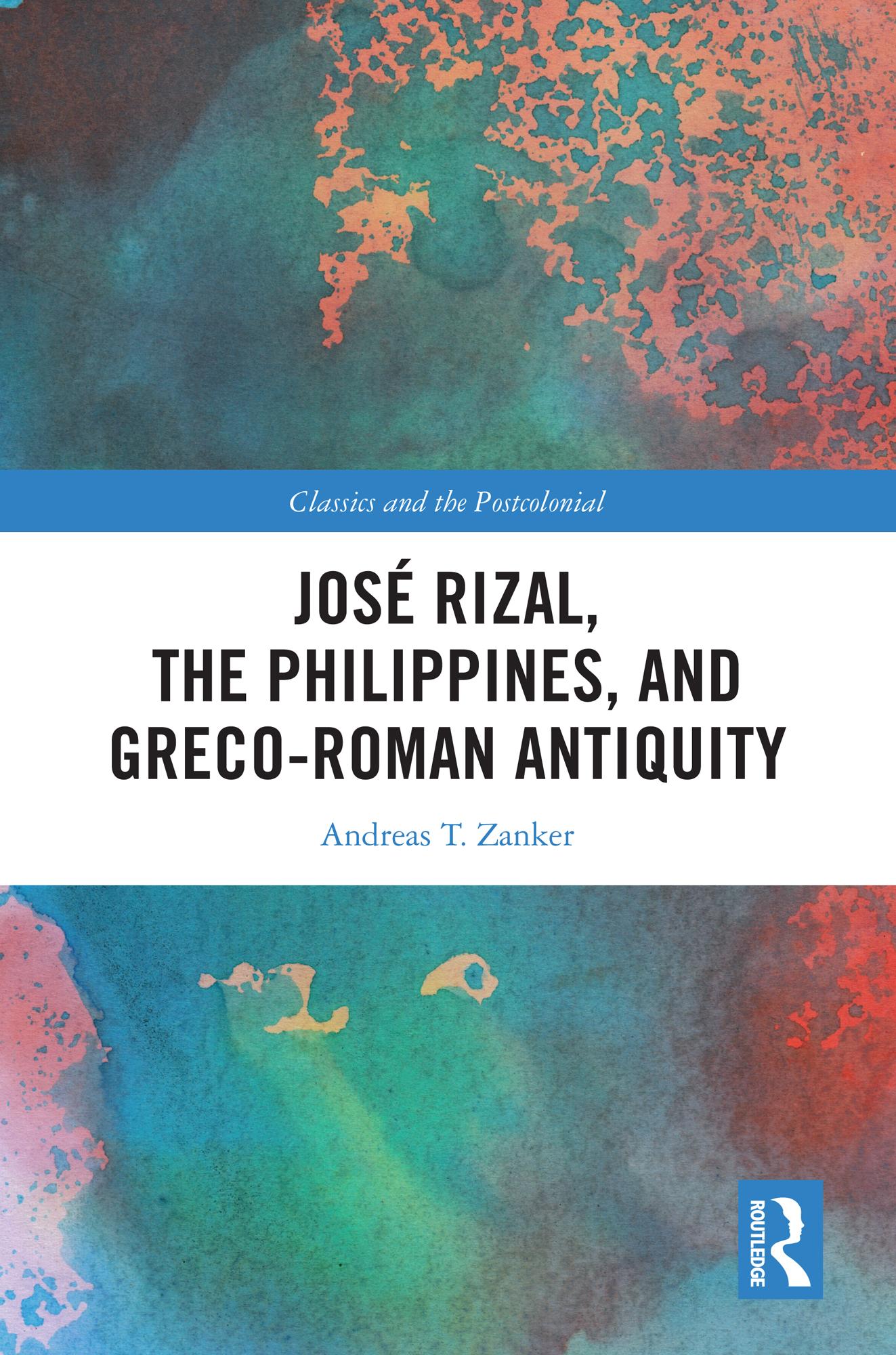
This volume is the first extended investigation of the classicism of José Rizal (1861–1896), the de facto national hero of the Philippines, and explores how Greco-Roman antiquity was harnessed by Rizal and other Philippine artists and thinkers at the end of the Spanish colonial period.
Rizal lived at a crucial juncture in his nation’s history, and Zanker argues that Rizal’s writing and thought represents a rich and evolving example of late-colonial classical reception. The volume illustrates how the forms of knowledge associated with Greco-Roman antiquity were put to creative and powerful new tasks in the attempts of Rizal and his contemporaries to redefine the relationship between Spain and its most distant colony. It not only explores the presence of Greco-Roman antiquity in Rizal’s novels but also his lesser-known works in a roughly chronological order. Besides covering the entirety of Rizal’s surviving works, Zanker considers the role of antiquity in the paintings of Juan Luna and in Rizal’s parsing of his friendship with his Austrian collaborator, Ferdinand Blumentritt.
José Rizal, the Philippines, and Greco-Roman Antiquity is of interest to students and scholars of Classics, particularly Classical Reception, and the colonial-era Philippines, as well as Latin American Studies, Southeast Asian Studies, and Postcolonial Studies more broadly.
Paga facilmente con carta, Klarna, Apple Pay o Google Pay. Non sei soddisfatto? Hai sempre 14 giorni per il rimborso. Leggi di più nei nostri termini. Per qualsiasi domanda, scrivici a hello@memmo.org.
Memmo rende lo studio più facile, ovunque tu sia nel mondo. Qui trovi i tuoi libri di testo e strumenti di studio intelligenti, tutto in un unico posto: riassunti, quiz, podcast e flashcard. E poi c'è Ted, il tuo compagno di studio che risponde a ogni tua domanda. Oltre 50.000 studenti studiano già qui: è stato creato per aiutarti a imparare più velocemente e a stressarti meno.