
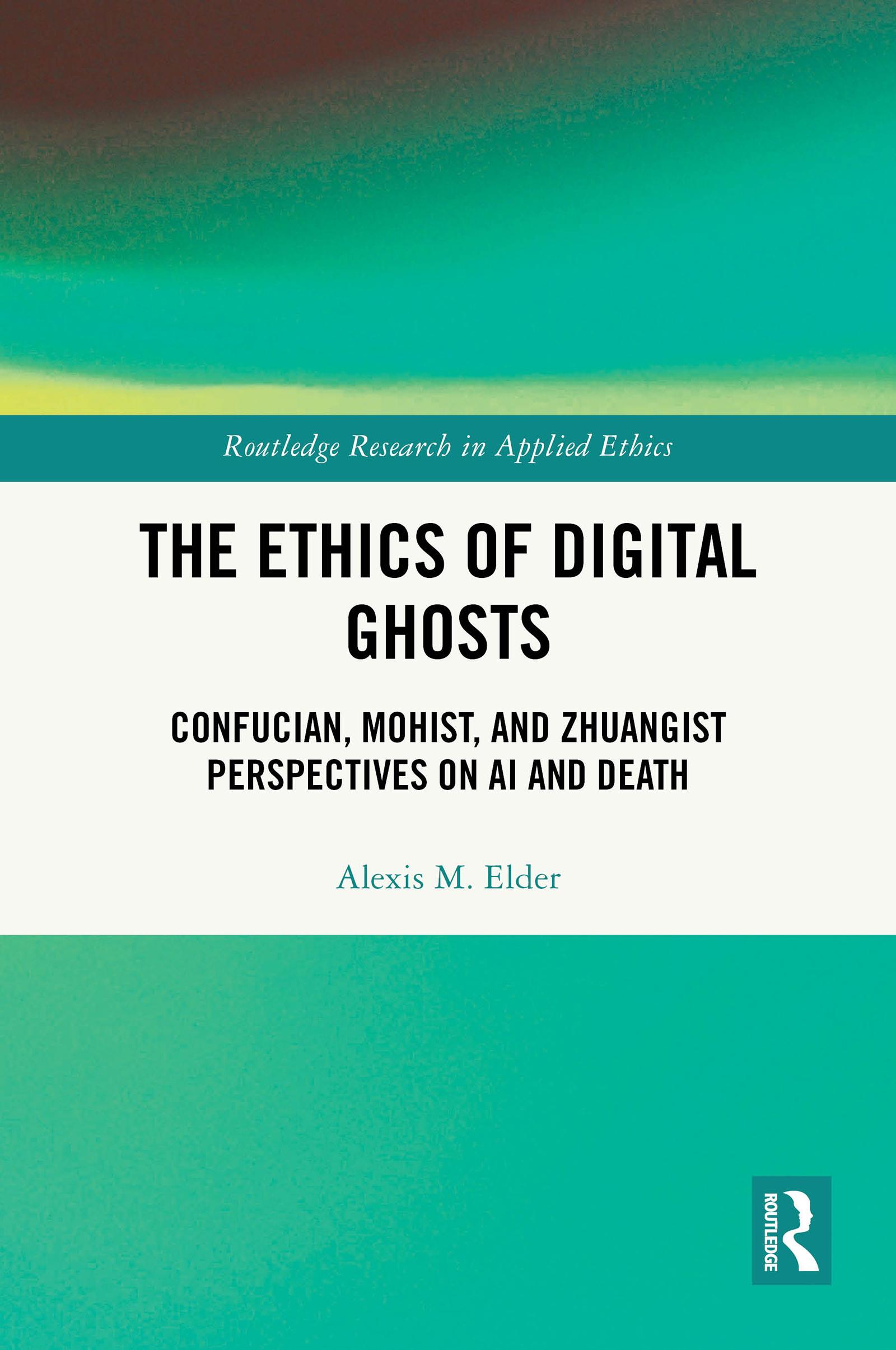
Advances in artificial intelligence (AI) are enabling the construction of “digital ghosts”: algorithmic reconstructions of deceased individuals based on patterns of interaction in their text messages, social media posts, and other personal data. This book develops an ethics of digital ghosts using resources from classical Chinese philosophy.
Bereaved people have reported that conversations with digital ghosts can be surprisingly comforting and beneficial. However, there are concerns that they can be harmful, whether by preventing a hard but necessary acknowledgment of loss, producing ongoing dependence, or encouraging instrumentalization of our beloved dead. Building on some suggestive comparisons between digital remains and physical remains, this book uses resources from classical Chinese philosophy to connect concerns from funerary ethics to those presented by AI today. Confucianism, Mohism, and Zhuangism were remarkable for their rich, detailed discussions of the ethics of handling physical remains. This book updates and extends these concerns to apply to digital ghosts. It explores topics including the role of rituals and traditions in communal mourning, the epistemic consequences of fragmented standards for remembrance and data reuse, and the value of creative transformation and adaptation. The result is a psychologically plausible, culturally informed, and afterlife-neutral grounding for thinking about the ethics of digital ghosts.
The Ethics of Digital Ghosts will appeal to researchers and graduate students working in applied ethics, moral psychology, philosophy of technology, technology and AI ethics, cross-cultural philosophy, and classical Chinese philosophy.
Paga facilmente con carta, Klarna, Apple Pay o Google Pay. Non sei soddisfatto? Hai sempre 14 giorni per il rimborso. Leggi di più nei nostri termini. Per qualsiasi domanda, scrivici a hello@memmo.org.
Memmo rende lo studio più facile, ovunque tu sia nel mondo. Qui trovi i tuoi libri di testo e strumenti di studio intelligenti, tutto in un unico posto: riassunti, quiz, podcast e flashcard. E poi c'è Ted, il tuo compagno di studio che risponde a ogni tua domanda. Oltre 50.000 studenti studiano già qui: è stato creato per aiutarti a imparare più velocemente e a stressarti meno.