
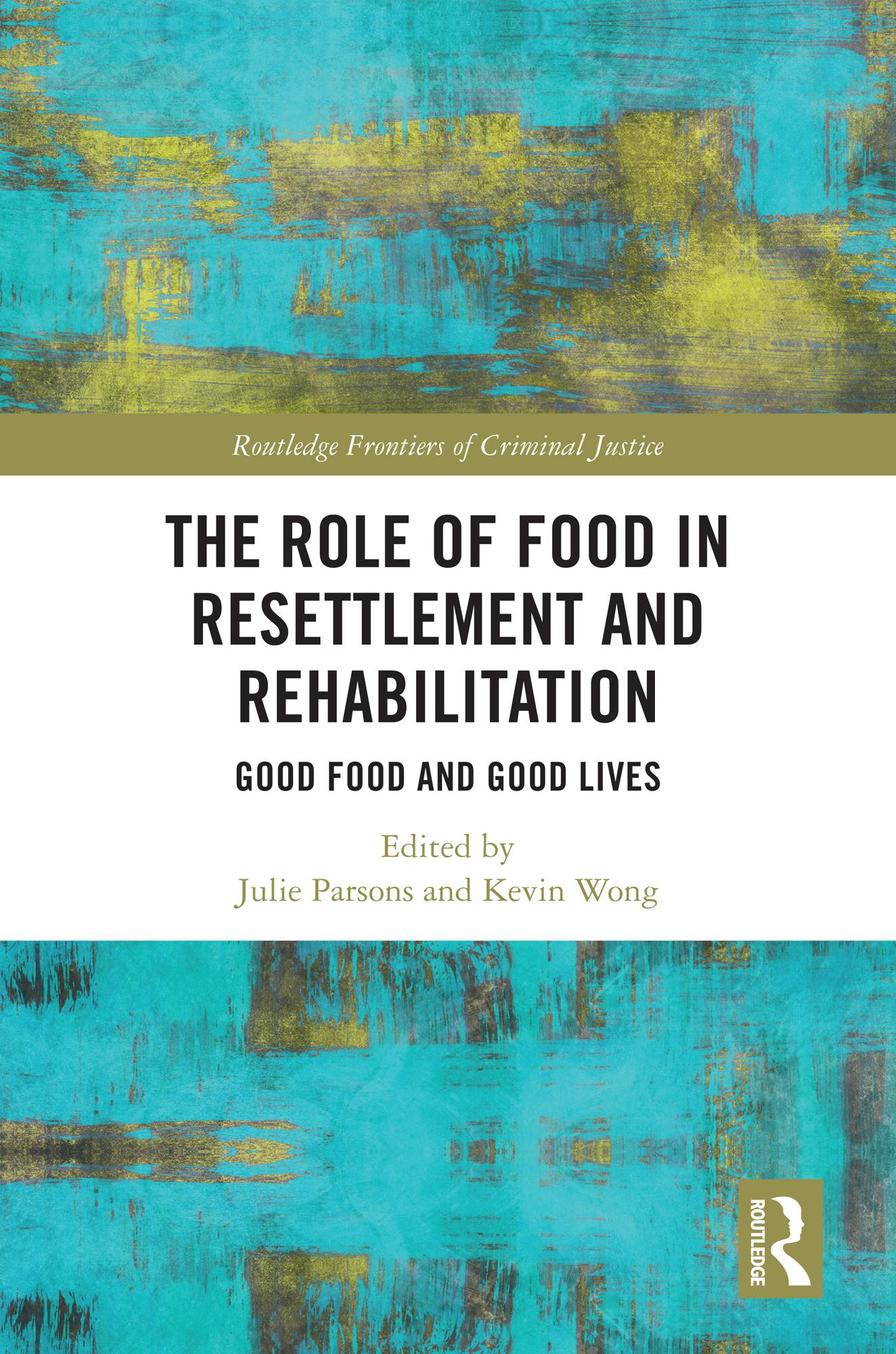
Exploring the role of food in enabling people with convictions to live a “good life”, this book examines the tangible ways in which growing food, cooking, and eating together has the potential to be both transformative and small steps incremental in facilitating desistance journeys for people with convictions.
At its most reductive, food sustains us physically; it’s the fuel which keeps us alive. Of course, emotionally, culturally, and socially it does more than that. This edited book addresses an under-researched area of resettlement and rehabilitation which has real-world application to policy and practice in criminal justice and related areas such as mental health, physical health, employment, and education. Importantly, given the relatability of food growing, cooking, and eating to the wider public, it offers opportunities to connect the desistance journeys and lives of people with convictions to the wider public.
The Role of Food in Resettlement and Rehabilitation will be of great interest to students and scholars of criminology, sociology, social work, and food studies. It is also important reading for government policymakers in criminal justice and health care, social policy, and criminal justice practitioners, including prison governors, social workers, and providers of services for people with convictions in custody and community.
Paga facilmente con carta, Klarna, Apple Pay o Google Pay. Non sei soddisfatto? Hai sempre 14 giorni per il rimborso. Leggi di più nei nostri termini. Per qualsiasi domanda, scrivici a hello@memmo.org.
Memmo rende lo studio più facile, ovunque tu sia nel mondo. Qui trovi i tuoi libri di testo e strumenti di studio intelligenti, tutto in un unico posto: riassunti, quiz, podcast e flashcard. E poi c'è Ted, il tuo compagno di studio che risponde a ogni tua domanda. Oltre 50.000 studenti studiano già qui: è stato creato per aiutarti a imparare più velocemente e a stressarti meno.