
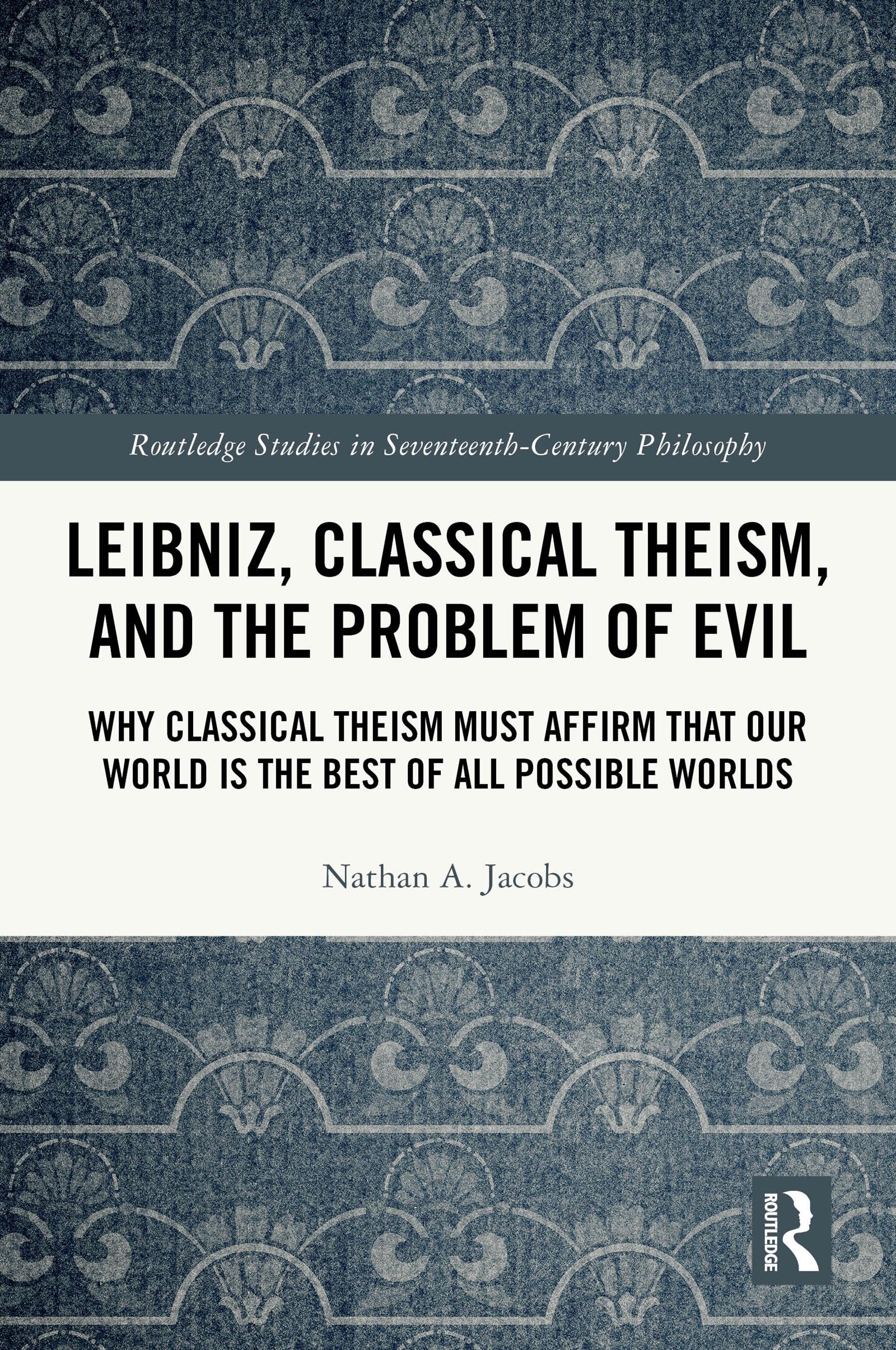
This volume offers a defense of Leibniz’s theodicy and his infamous claim that our world is the best of all possible worlds. It considers Leibniz’s rationale for “optimism,” examines its roots in ancient and medieval thought, and forwards a novel rereading of Leibniz’s theory of freedom in light of this background, all of which highlights the very real challenges of evading optimism from within the framework of classical theism.
Gottfried Leibniz is known for his “theodicy,” or defense of God's Goodness, Wisdom, and Justice despite the realities of evil in our world. This book argues that Leibniz’s optimism is inevitable for proponents of classical theism and even for many not-so-classical theists. The author’s argument is threefold. First, he demonstrates that Leibniz's theodicy is deeply rooted in the classical theist tradition, pagan and Christian, and shows that the philosopher of Leipzig is merely following these commitments to their logical conclusion, a conclusion that long precedes Leibniz. Second, he offers a novel rereading of Leibniz in the light of his philosophical and theological antecedents, a reading that, if correct, dispels ubiquitous but problematic assumptions about Leibniz's case, specifically those about divine and human freedom. Third, he demonstrates the analytic tether that connects classical theism to Leibniz’s conclusion, making his notorious optimism virtually inevitable for proponents of classical theism — and even for not-so-classical theists. This book demonstrates the ways in which Leibniz is relevant to not only classical theists and students of Modern philosophy but also to contemporary philosophers of religion more generally and philosophical theologians who are concerned with the problem of evil.
Leibniz, Classical Theism, and the Problem of Evil will appeal to scholars and graduate students interested in Leibniz, philosophy of religion, history of philosophy, philosophical theology, free will, and the problem of evil.
Paga facilmente con carta, Klarna, Apple Pay o Google Pay. Non sei soddisfatto? Hai sempre 14 giorni per il rimborso. Leggi di più nei nostri termini. Per qualsiasi domanda, scrivici a hello@memmo.org.
Memmo rende lo studio più facile, ovunque tu sia nel mondo. Qui trovi i tuoi libri di testo e strumenti di studio intelligenti, tutto in un unico posto: riassunti, quiz, podcast e flashcard. E poi c'è Ted, il tuo compagno di studio che risponde a ogni tua domanda. Oltre 50.000 studenti studiano già qui: è stato creato per aiutarti a imparare più velocemente e a stressarti meno.