
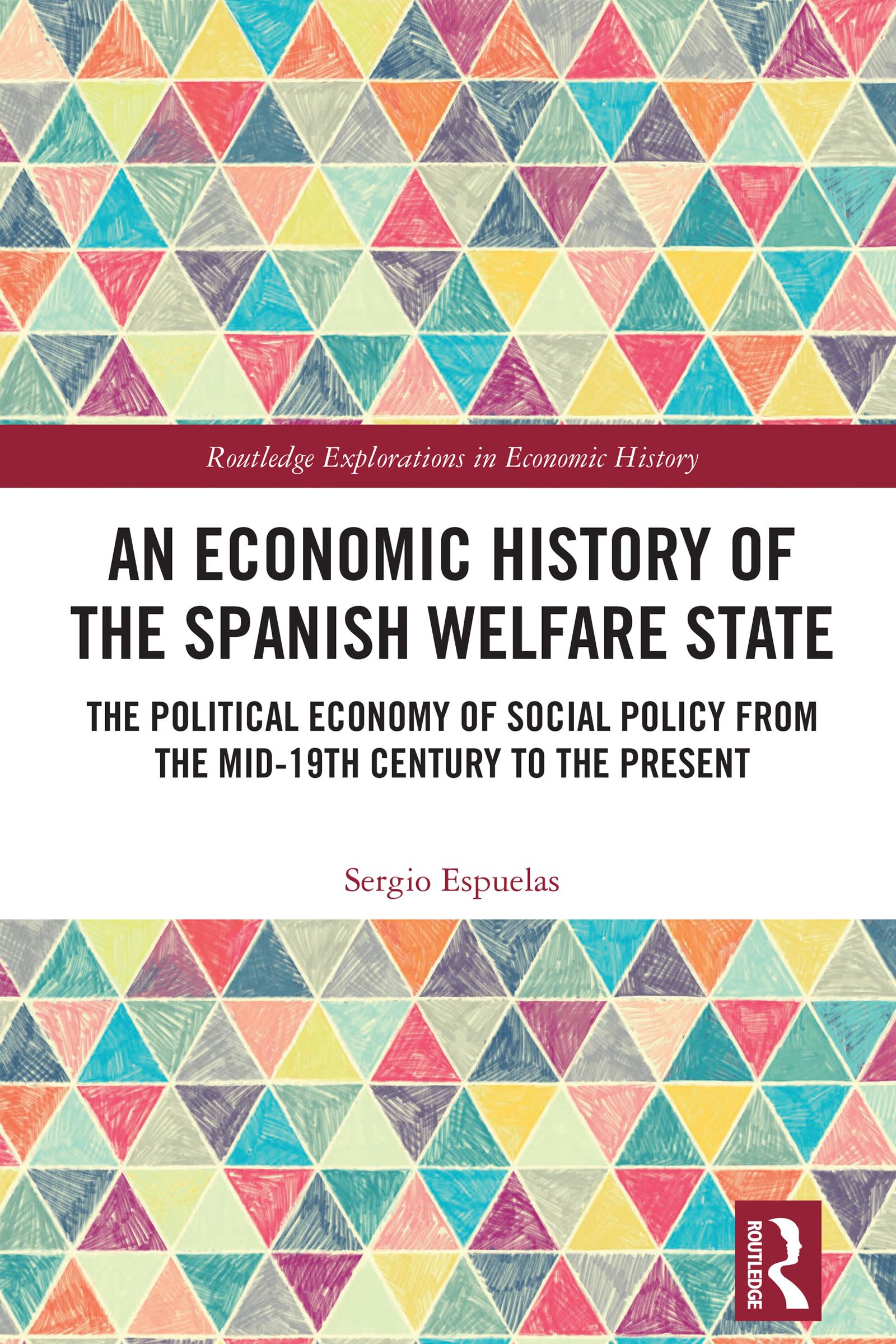
This monograph analyses the evolution of the welfare state in Spain from qualitative and quantitative perspectives. It basically relies on estimates of public social spending from 1850 to the present and offers comparisons with the rest of Europe.
As a whole, the volume sheds light on the historical, political, and economic conditions at play during the relatively late development of the Spanish welfare state. Three key driving factors are explored: the political regime, social inequality, and Spain’s exposure to international markets. While economic backwardness and demographic factors explain part of the story, Espuelas demonstrates that inequality explains much of the pre-1936 gap; the lack of democracy and the Franco dictatorship were crucial up to the 1970s, and globalization, rather than having a clear positive or negative effect, has mainly influenced the way social policy is financed.
This volume will be of interest to advanced students and researchers of economic history, welfare states, European history, and social policy.
Paga facilmente con carta, Klarna, Apple Pay o Google Pay. Non sei soddisfatto? Hai sempre 14 giorni per il rimborso. Leggi di più nei nostri termini. Per qualsiasi domanda, scrivici a hello@memmo.org.
Memmo rende lo studio più facile, ovunque tu sia nel mondo. Qui trovi i tuoi libri di testo e strumenti di studio intelligenti, tutto in un unico posto: riassunti, quiz, podcast e flashcard. E poi c'è Ted, il tuo compagno di studio che risponde a ogni tua domanda. Oltre 50.000 studenti studiano già qui: è stato creato per aiutarti a imparare più velocemente e a stressarti meno.