
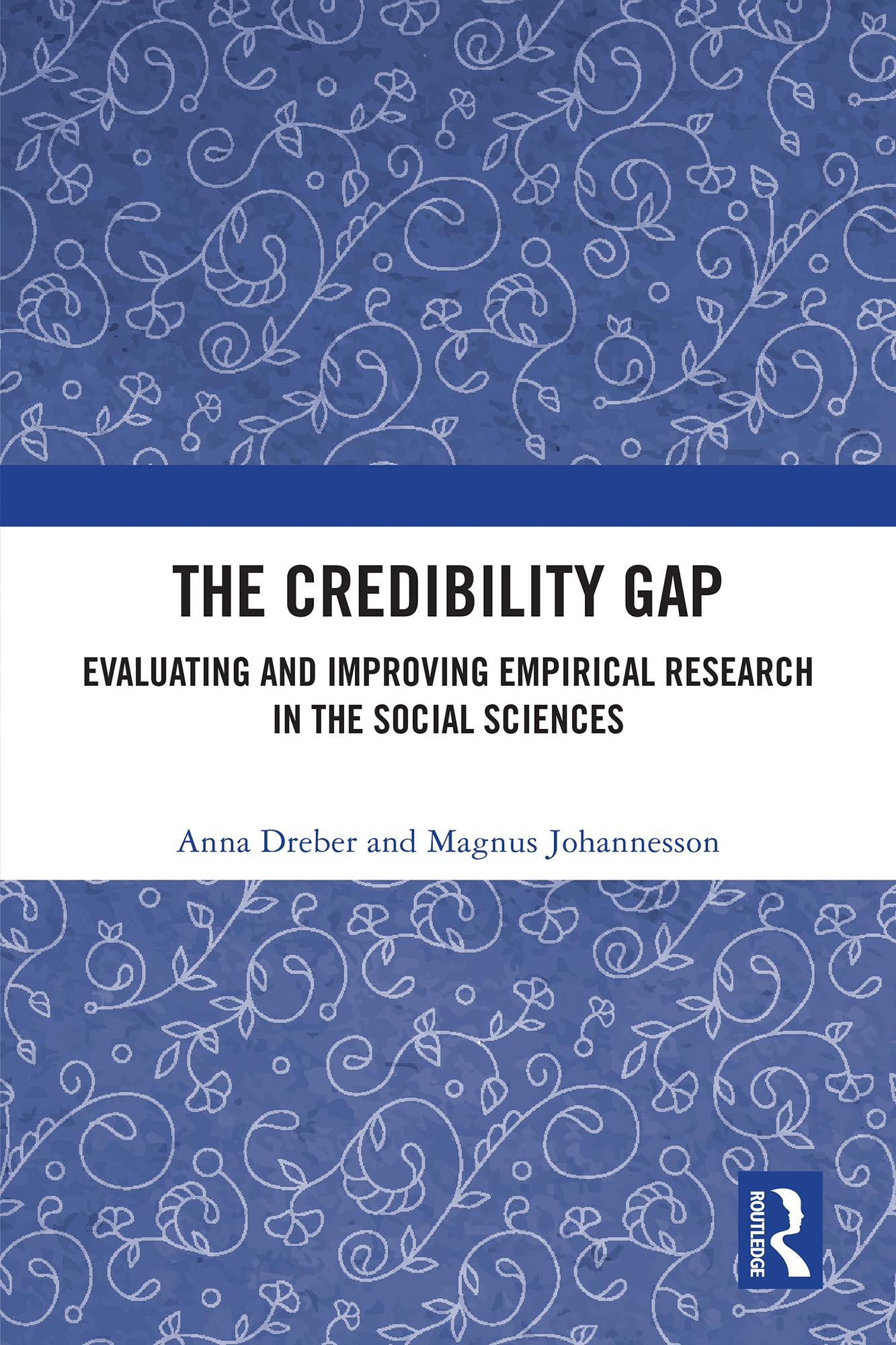
Which scientific results can we trust? This question has been brought to the forefront of research in the social sciences in recent years with the movement towards open science practices and preregistration. Systematic replication studies of laboratory experiments in the social sciences have found that only about half of the “statistically significant” results published in top journals can be replicated in the sense that similar results are achieved with new data. This low replicability may be even lower in studies based on observational data as such studies have more degrees of freedom in the analysis of the data leading to larger possibilities to selectively report more publishable findings.
In this book, the authors provide a framework for evaluating reproducibility, replicability and generalizability of empirical research in the social sciences. They define different types of reproducibility and replicability and show how they can be measured to evaluate the credibility of published findings. Different approaches to improving the credibility of published findings, such as preregistration with detailed pre-analysis plans, Registered Report publications, and preregistered prospective meta-analysis are also outlined and discussed. Even if published results are not systematically biased, the variation in results across populations, research designs, and analyses decreases the reliability and generalizability of published findings. The book shows how such heterogeneity in results can be measured and incorporated in the analysis to more accurately represent the uncertainty and thereby generalizability of reported results.
Paga facilmente con carta, Klarna, Apple Pay o Google Pay. Non sei soddisfatto? Hai sempre 14 giorni per il rimborso. Leggi di più nei nostri termini. Per qualsiasi domanda, scrivici a hello@memmo.org.
Memmo rende lo studio più facile, ovunque tu sia nel mondo. Qui trovi i tuoi libri di testo e strumenti di studio intelligenti, tutto in un unico posto: riassunti, quiz, podcast e flashcard. E poi c'è Ted, il tuo compagno di studio che risponde a ogni tua domanda. Oltre 50.000 studenti studiano già qui: è stato creato per aiutarti a imparare più velocemente e a stressarti meno.