
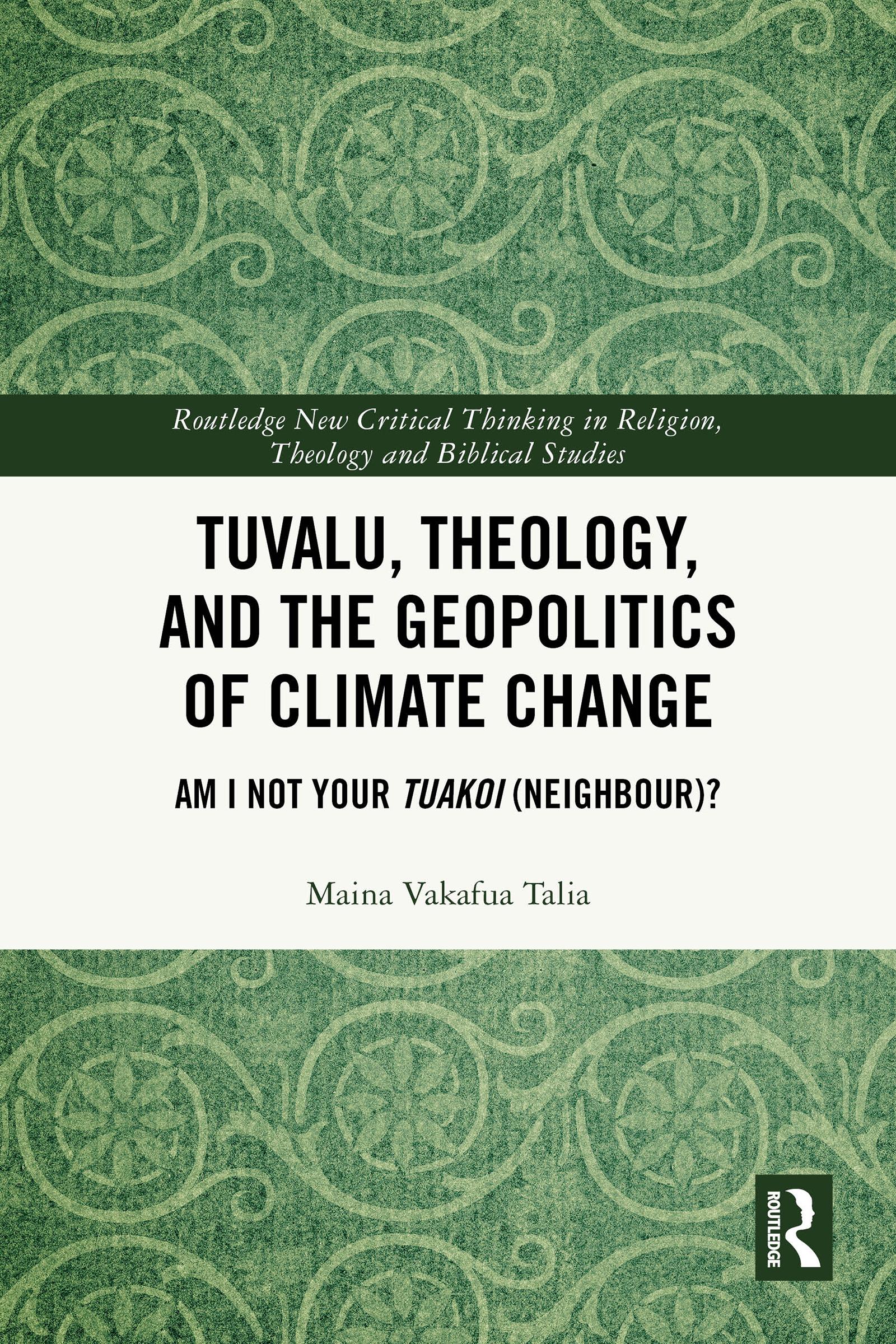
This book examines the threat posed by climate change to the low-lying islands of Tuvalu through a lens of what it means to be a neighbour. Those who live on Tuvalu are among the most vulnerable in the world to threats of rising sea levels and global climate change. Their carbon emissions are miniscule and they are ‘weak actors’ in terms of the geopolitics of climate change. The task in Tuvalu is to take seriously the prospect of the submergence of islands and the potential for cultural extinction. This prospect raises a network of interconnected questions to do with the rights of climate displaced persons and sovereignty over lands lost to climate change. In this volume, the author draws upon Indigenous knowledge, the ethics of climate justice, insights from climate science and familiarity with discourses surrounding the Anthropocene to explore the implications of the parable of the Good Samaritan. The rhetoric of the question ‘am I not your tuakoi (neighbour)?’ inserts a theological and moral dimension into the complex politics of climate change. The book will be of particular interest to scholars of theology, ethics, ecology and environment, as well as those working in Pacific studies, development studies, and politics.
Paga facilmente con carta, Klarna, Apple Pay o Google Pay. Non sei soddisfatto? Hai sempre 14 giorni per il rimborso. Leggi di più nei nostri termini. Per qualsiasi domanda, scrivici a hello@memmo.org.
Memmo rende lo studio più facile, ovunque tu sia nel mondo. Qui trovi i tuoi libri di testo e strumenti di studio intelligenti, tutto in un unico posto: riassunti, quiz, podcast e flashcard. E poi c'è Ted, il tuo compagno di studio che risponde a ogni tua domanda. Oltre 50.000 studenti studiano già qui: è stato creato per aiutarti a imparare più velocemente e a stressarti meno.