
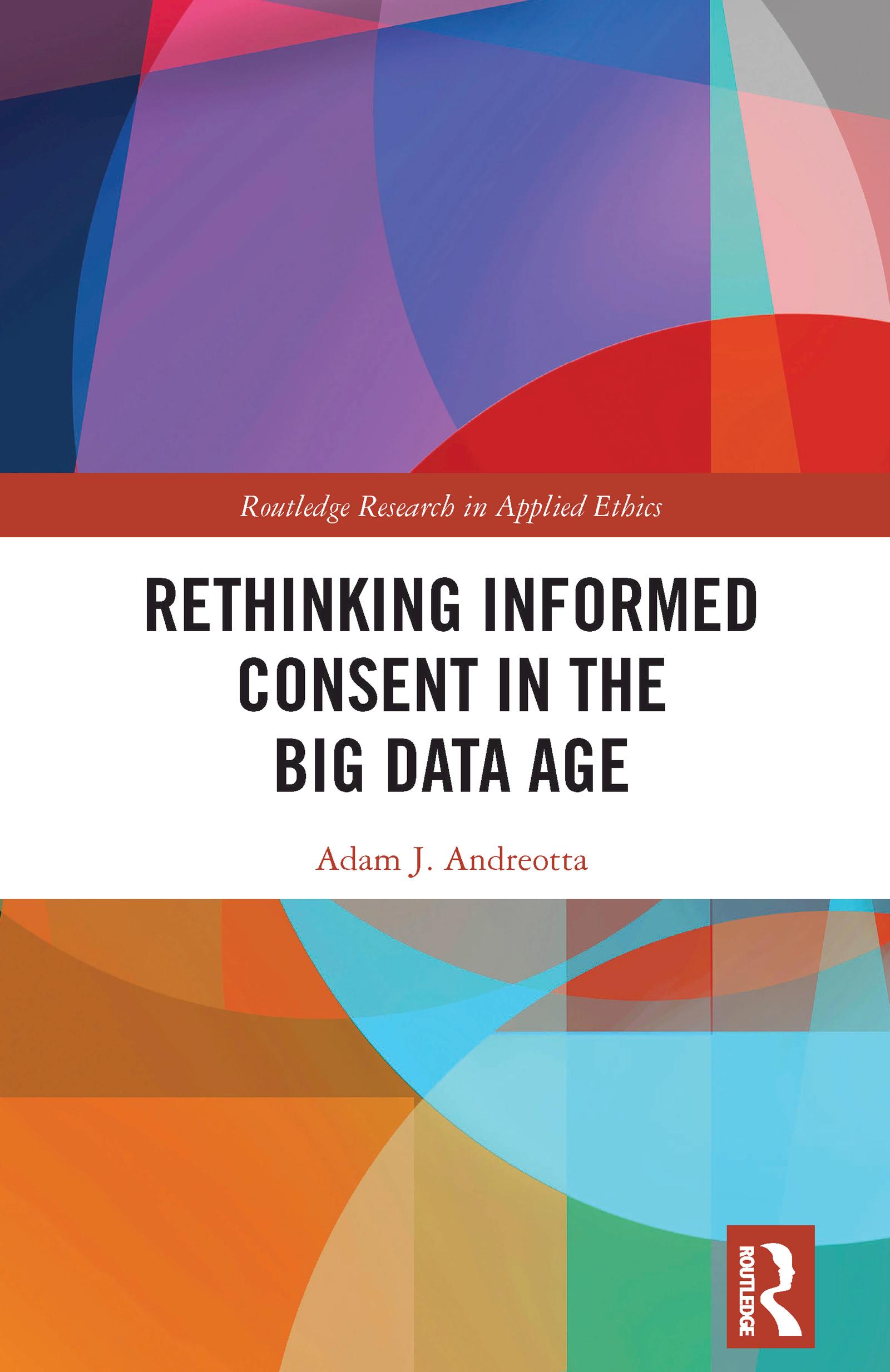
In the “big data age”, providing informed consent online has never been more challenging. Countless companies collect and share our personal data through devices, apps, and websites, fuelling a growing data economy and the emergence of surveillance capitalism. Few of us have the time to read the associated privacy policies and terms and conditions, and thus are often unaware of how our personal data are being used. This is a problem, as in the last few years, large tech companies have abused our personal data. As privacy self-management, through the mechanism of providing online consent, has become increasingly difficult, some have argued that surveillance capitalism and the data economy more broadly need to be overthrown.
This book presents a different perspective. It departs from the concept of revolutionary change to focus on pragmatic, incremental solutions tailored to everyday contexts. It scrutinises how consent is currently sought and provided online and offers suggestions about how online consent practices can be improved upon. These include the possibility of subjecting consent-gathering practices to ethics committees for review; the creation of visual-based consent agreements and privacy policies to help with transparency and engagement; the development of software to protect privacy; and the idea of automated consent functionalities that allow users to bypass the task of reading vast amounts of online consent agreements. The author suggests that these “small-scale” changes to online consent-obtaining procedures could, if successfully implemented, provide us with a way of self-managing our privacy in a way that avoids a revolutionary dismantling of the data economy. In the process, readers are encouraged to rethink the very purpose of providing informed consent online.
Rethinking Informed Consent in the Big Data Age will appeal to researchers in normative ethics, applied ethics, philosophy of law, and the philosophy of AI. It will also be of interest to business scholars, communication researchers, students, and those in industry.
Paga facilmente con carta, Klarna, Apple Pay o Google Pay. Non sei soddisfatto? Hai sempre 14 giorni per il rimborso. Leggi di più nei nostri termini. Per qualsiasi domanda, scrivici a hello@memmo.org.
Memmo rende lo studio più facile, ovunque tu sia nel mondo. Qui trovi i tuoi libri di testo e strumenti di studio intelligenti, tutto in un unico posto: riassunti, quiz, podcast e flashcard. E poi c'è Ted, il tuo compagno di studio che risponde a ogni tua domanda. Oltre 50.000 studenti studiano già qui: è stato creato per aiutarti a imparare più velocemente e a stressarti meno.