
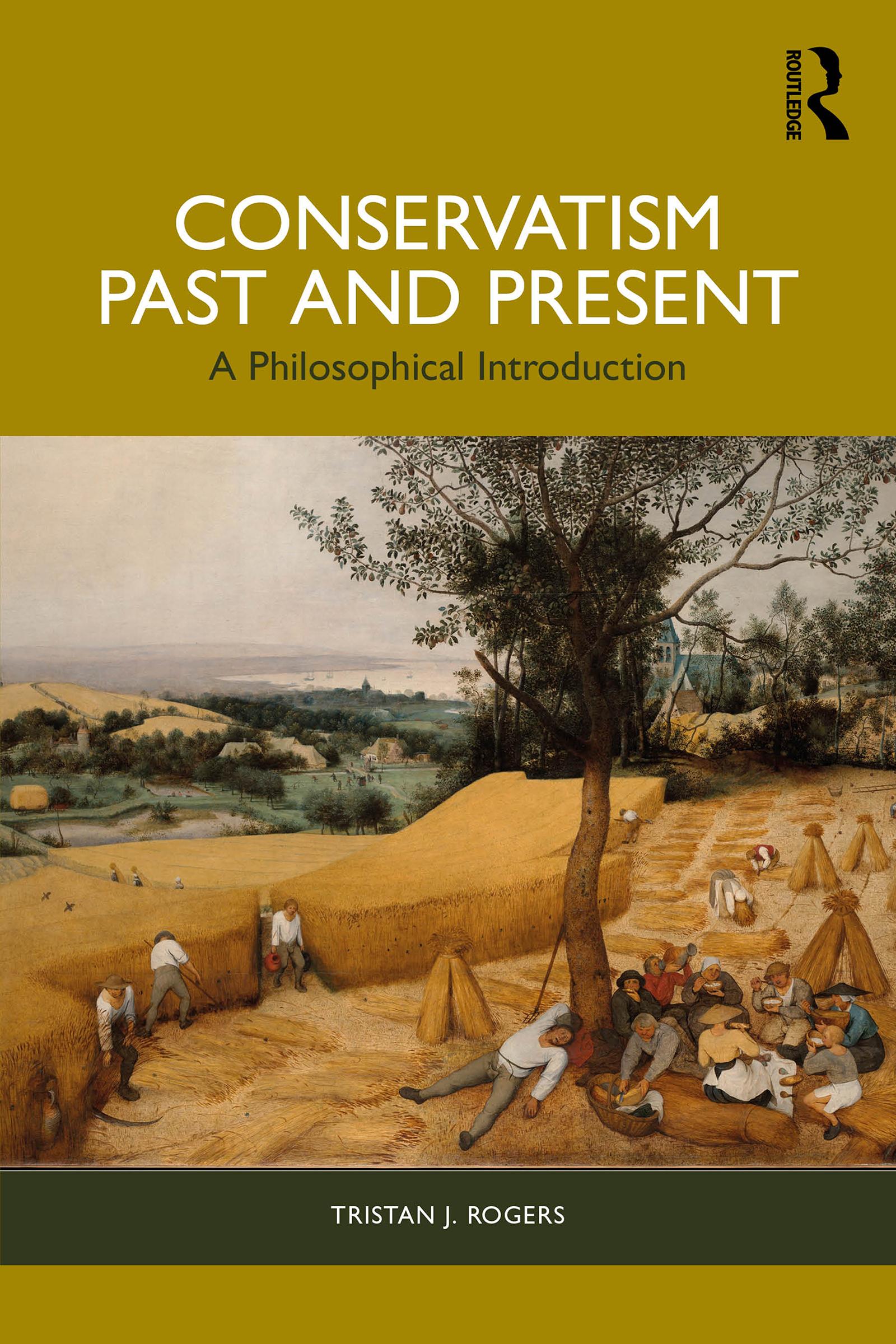
In Conservatism, Past and Present: A Philosophical Introduction, Tristan J. Rogers argues that philosophical conservatism is a coherent and compelling set of historically rooted ideas about conserving and promoting the human good. Part I, “Conservatism Past,” presents a history of conservative ideas, exploring themes, such as the search for wisdom, the limits of philosophy, reform in preference to revolution, the relationship between authority and freedom, and liberty as a living tradition. Major figures include Aristotle, Saint Thomas Aquinas, Edmund Burke, G.W.F. Hegel, and Roger Scruton. Part II, “Conservatism Present,” applies philosophical conservatism to contemporary conservative politics, focusing on issues such as nationalism, populism, the family, education, and responsibility.
Rogers shows that conservatism has been defined differently at different times: as a loose set of connected ideas reacting against the French Revolution; as a kind of disposition or instinct in favor of the status quo; and more recently as any ideas opposed to the political left. But he also allows a set of questions to guide his argument for conservatism’s merits: What is conservatism? Is it a coherent and attractive philosophy? What are conservatives for? And how is today’s conservatism related to its past? In his answers, Rogers paints a compelling and coherent picture of an aligned and attractive set of ideas.
Paga facilmente con carta, Klarna, Apple Pay o Google Pay. Non sei soddisfatto? Hai sempre 14 giorni per il rimborso. Leggi di più nei nostri termini. Per qualsiasi domanda, scrivici a hello@memmo.org.
Memmo rende lo studio più facile, ovunque tu sia nel mondo. Qui trovi i tuoi libri di testo e strumenti di studio intelligenti, tutto in un unico posto: riassunti, quiz, podcast e flashcard. E poi c'è Ted, il tuo compagno di studio che risponde a ogni tua domanda. Oltre 50.000 studenti studiano già qui: è stato creato per aiutarti a imparare più velocemente e a stressarti meno.