
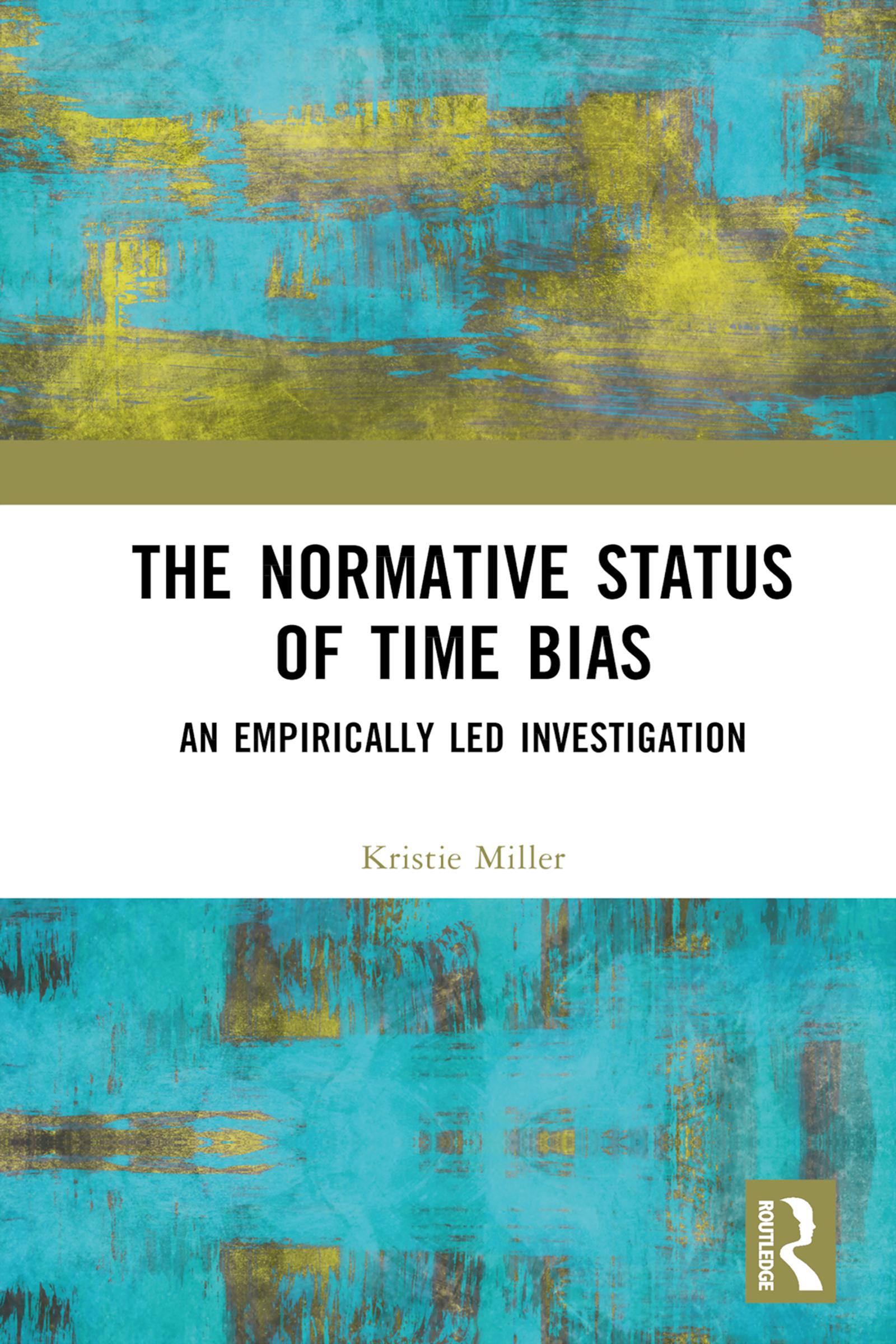
This book empirically investigates the nature of time biases. Many philosophers think that it is rationally permissible to prefer a life that is overall worse to one that is overall better, as long as the badness of that life lies in the past rather than the future. These philosophers think that it is rationally permissible to be time biased. Time biased individuals differently value the wellbeing of their various selves in virtue of where those selves are located in time. This book focuses on three key kinds of time bias: near, present, and future bias. It presents a rich picture of the conditions under which we display these biases, and it outlines several psychological explanations for them. It then uses this new empirical research we conducted to inform arguments regarding the normative status of these biases. At its heart it considers the question: does having time biased preferences of one sort or another make us better off or worse off? And it uses the answers to these questions to inform our theorising about whether we have reason either to have or to avoid having such preferences.
Paga facilmente con carta, Klarna, Apple Pay o Google Pay. Non sei soddisfatto? Hai sempre 14 giorni per il rimborso. Leggi di più nei nostri termini. Per qualsiasi domanda, scrivici a hello@memmo.org.
Memmo rende lo studio più facile, ovunque tu sia nel mondo. Qui trovi i tuoi libri di testo e strumenti di studio intelligenti, tutto in un unico posto: riassunti, quiz, podcast e flashcard. E poi c'è Ted, il tuo compagno di studio che risponde a ogni tua domanda. Oltre 50.000 studenti studiano già qui: è stato creato per aiutarti a imparare più velocemente e a stressarti meno.