
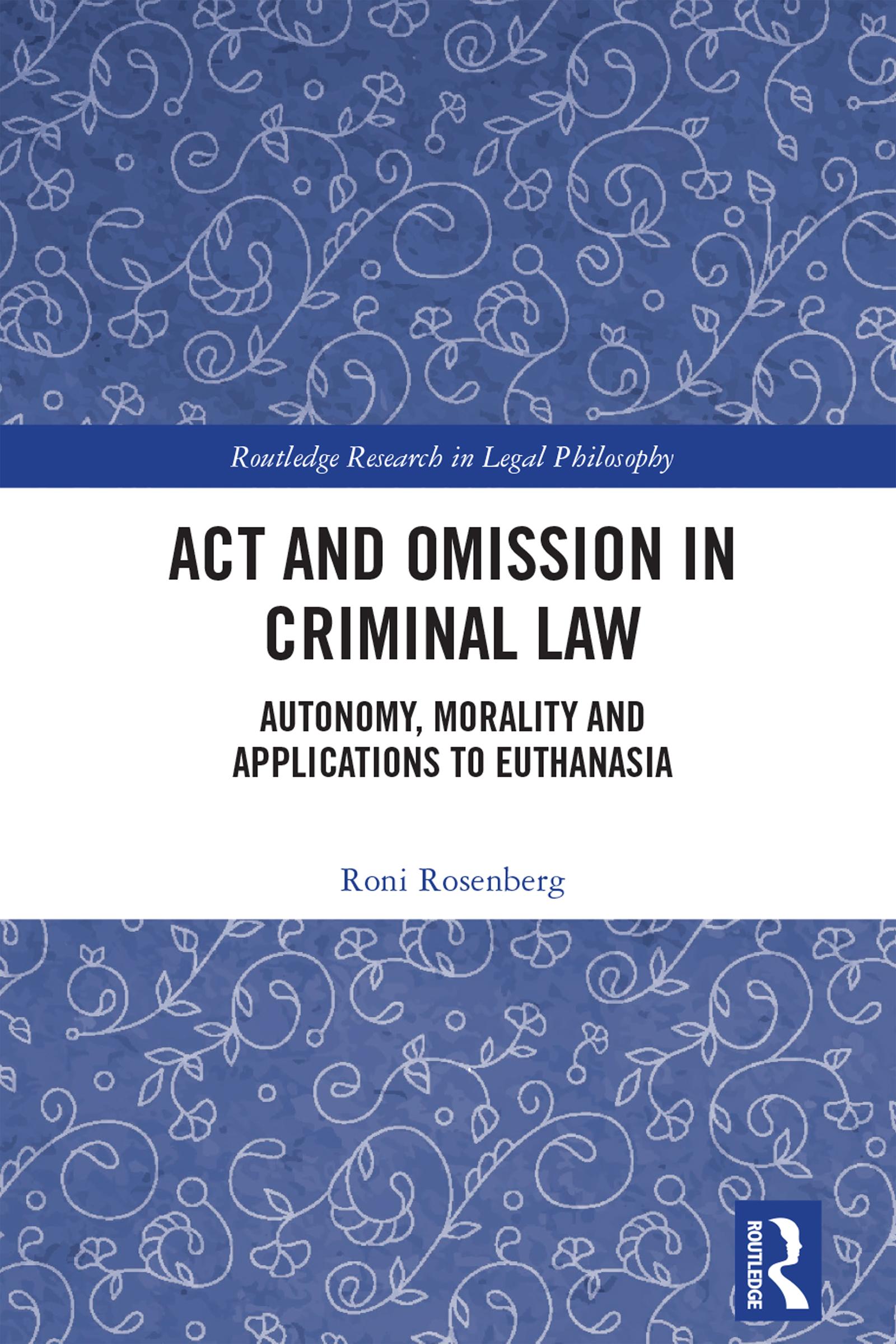
This book offers an innovative perspective on the critical distinction between acts and omissions in criminal law, a distinction that runs like a defining thread through all types of criminal offenses.
While any act that positively causes a prohibited harm is sufficient for a conviction, an omission that causes the very same harm warrants a conviction only when there is a legal duty to act. This fundamental distinction between acts and omissions is not just relevant to criminal law, but it is also deeply rooted in our moral thinking. Thus, it is commonly argued that the difference between acts and omissions is also applicable to the intuitive moral distinction between active euthanasia, forbidden in most countries, and passive euthanasia, permitted in many countries under certain circumstances. Hence, the significance of this book is threefold: First, it offers a comprehensive, coherent, and systematic discussion of the intersections between the philosophical-moral and the legal-criminal aspects of this fundamental topic. Second, it offers a novel rationale for the distinction between acts and omissions, based on the principle of autonomy. Finally, it demonstrates the influences of the theoretical discussion, on the most significant practical questions.
This book will be of interest to researchers, academics and policy-makers working in the areas of criminal law, moral philosophy, and bioethics.
Paga facilmente con carta, Klarna, Apple Pay o Google Pay. Non sei soddisfatto? Hai sempre 14 giorni per il rimborso. Leggi di più nei nostri termini. Per qualsiasi domanda, scrivici a hello@memmo.org.
Memmo rende lo studio più facile, ovunque tu sia nel mondo. Qui trovi i tuoi libri di testo e strumenti di studio intelligenti, tutto in un unico posto: riassunti, quiz, podcast e flashcard. E poi c'è Ted, il tuo compagno di studio che risponde a ogni tua domanda. Oltre 50.000 studenti studiano già qui: è stato creato per aiutarti a imparare più velocemente e a stressarti meno.