
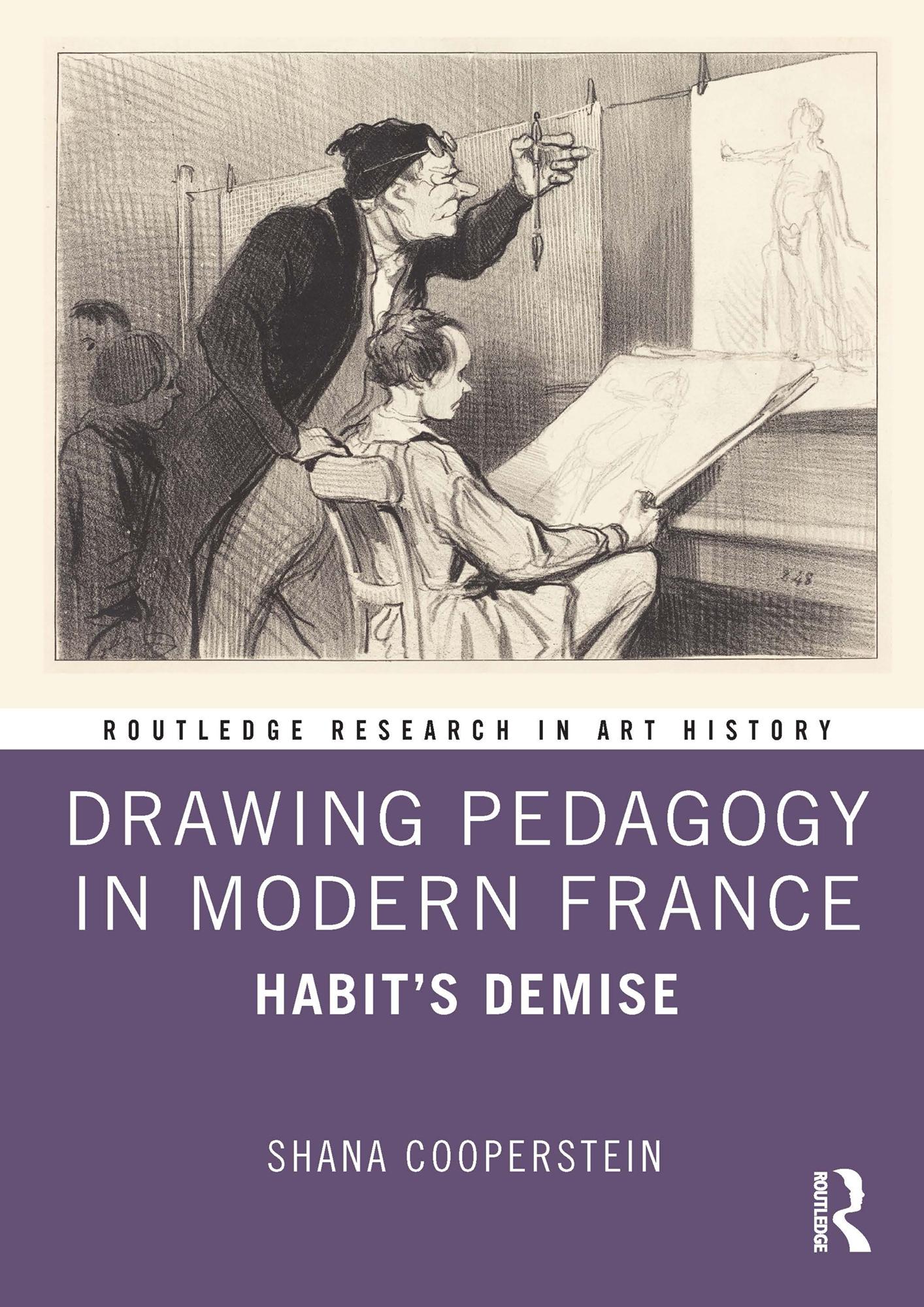
This study uncovers the plethora of new, innovative drawing strategies that shaped French visual arts at the height of France’s imperial power.
Horace Lecoq de Boisbaudran, Eugene Guillaume, and Félix Ravaisson, among others, designed new drawing procedures that responded to leading concerns of modern art and the exigencies of modern life: landscape painting and picturesque tourism, industrial design, and the use of drawing as vehicles of knowledge production and in social control. From graphic regimes that were “purement mathématique” and demanded the practice of orthographic projection, to those that privileged the articulation of proportions and the cultivation of an internal measuring system, fin de siècle educators in the fine and applied arts radically transformed drawing strategies and its history. The shifting parameters of drawing pedagogy and practice unfold onto a wider set of theoretical concerns central to humanistic inquiry and art-making today: the philosophy and cultural history of habit-based learning, the relation between industrialization and drawing, and the relation between art and mathematics.
The book will be of interest to scholars working in art history, French studies, history of art education, history of philosophy, and history of science.
Paga facilmente con carta, Klarna, Apple Pay o Google Pay. Non sei soddisfatto? Hai sempre 14 giorni per il rimborso. Leggi di più nei nostri termini. Per qualsiasi domanda, scrivici a hello@memmo.org.
Memmo rende lo studio più facile, ovunque tu sia nel mondo. Qui trovi i tuoi libri di testo e strumenti di studio intelligenti, tutto in un unico posto: riassunti, quiz, podcast e flashcard. E poi c'è Ted, il tuo compagno di studio che risponde a ogni tua domanda. Oltre 50.000 studenti studiano già qui: è stato creato per aiutarti a imparare più velocemente e a stressarti meno.