
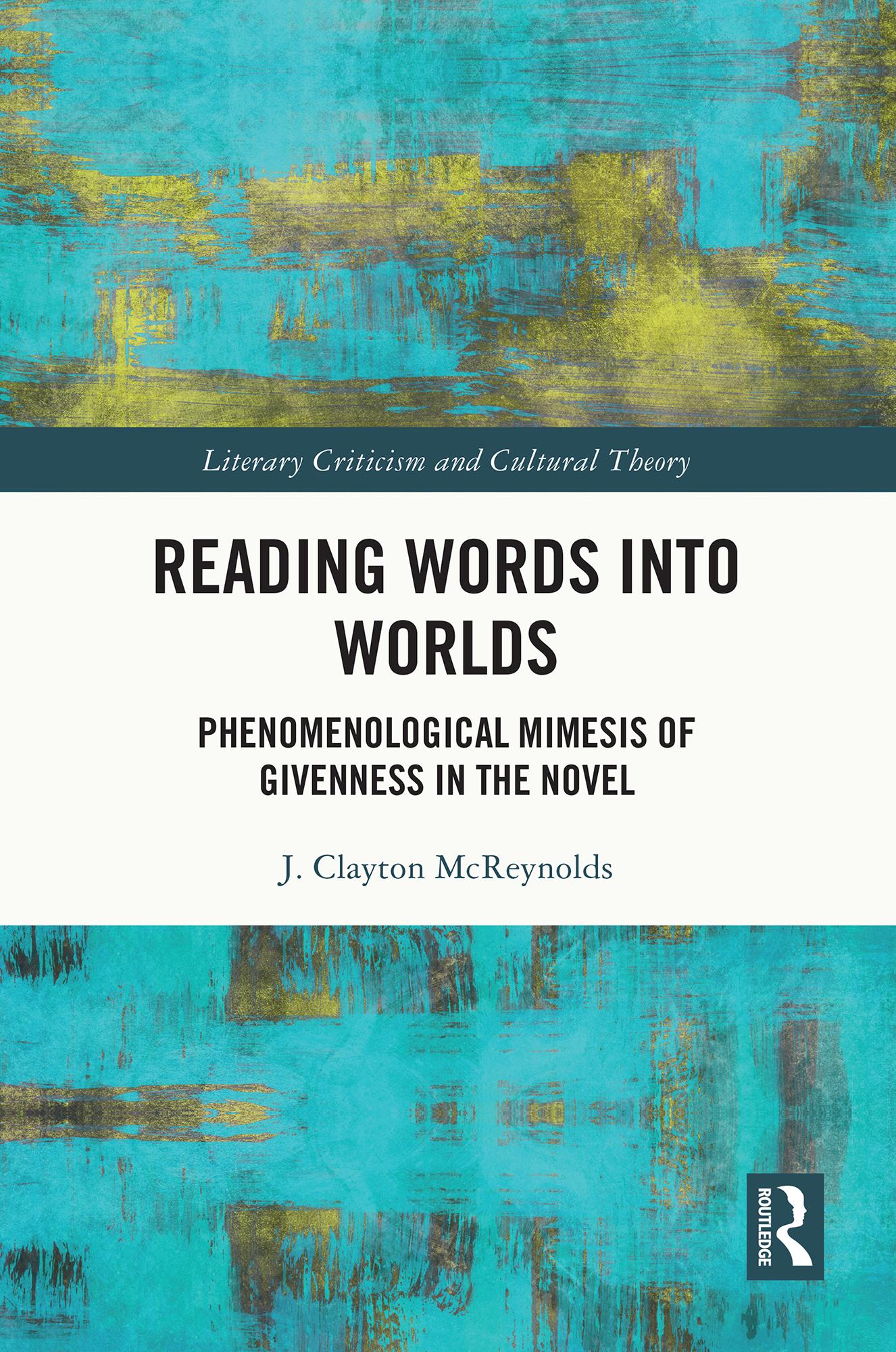
Reading Words into Worlds asks how it is that reading a novel can feel in some ways like being-in-a-world. The book explores how novels give themselves to readers in ways that mimetically resemble our phenomenological reception of given beings in reality. McReynolds refers to this process as phenomenological mimesis of givenness, and he draws on the phenomenological philosophy of Husserl, Heidegger, and Jean-Luc Marion to explore how masterful novels can make reading ink marks on a page feel like seeing things, feeling things, and meeting (even loving) others. McReynolds blends rigorous phenomenological study with a personable style, first laying out his theory in detail and then applying that theory through close studies of his reading experiences of four British realist masterpieces: Defoe’s Robinson Crusoe, Austen’s Northanger Abbey, Eliot’s Middlemarch, and Hardy’s Jude the Obscure. Ultimately, this book offers a grounded phenomenology of novel-reading, illuminating what gives novels such power to not only thrill readers—but to change them.
Paga facilmente con carta, Klarna, Apple Pay o Google Pay. Non sei soddisfatto? Hai sempre 14 giorni per il rimborso. Leggi di più nei nostri termini. Per qualsiasi domanda, scrivici a hello@memmo.org.
Memmo rende lo studio più facile, ovunque tu sia nel mondo. Qui trovi i tuoi libri di testo e strumenti di studio intelligenti, tutto in un unico posto: riassunti, quiz, podcast e flashcard. E poi c'è Ted, il tuo compagno di studio che risponde a ogni tua domanda. Oltre 50.000 studenti studiano già qui: è stato creato per aiutarti a imparare più velocemente e a stressarti meno.