
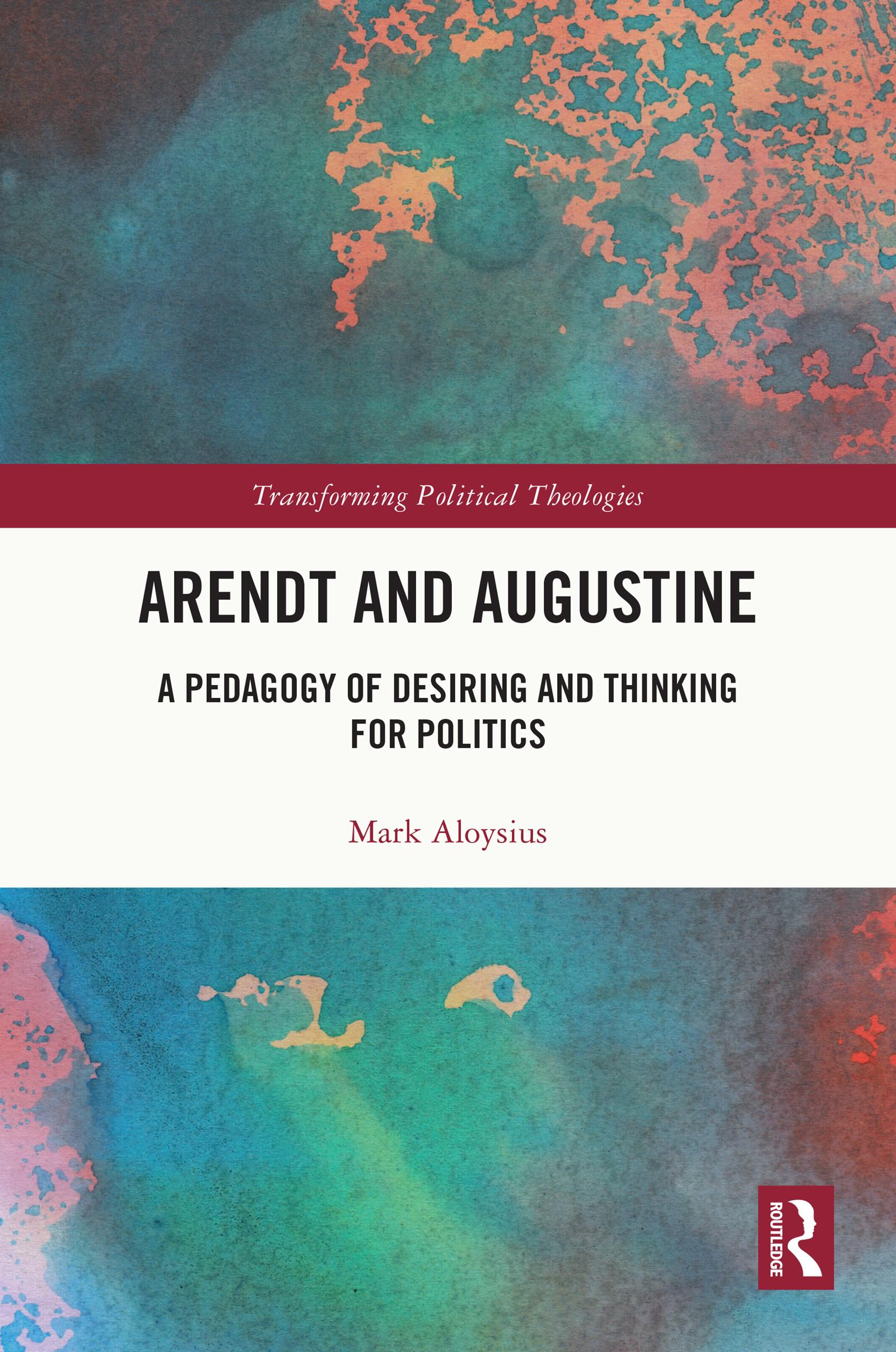
This book addresses a lacuna in scholarship concerning Hannah Arendt’s Augustinian heritage that has predominantly focused on her early work. It de-canonises the sources that political theology has appealed to by shifting the interpretive focus to her mature treatment in The Life of the Mind. Arendt’s initial criticism of Augustinian desiring is that it generates 'worldlessness'. In her later works, Arendt develops a more nuanced reading of the movements of thinking, desiring, and loving in her engagement with Augustine. This study attends to these movements and inspects the spatio-temporal framework which structure Arendt’s conception of the political. The author assesses the claim that Arendt’s conception of the political is drawn from a pedagogy of desiring and thinking from Augustine severed from his mystagogy. Although respecting the method of political theory, the author contends that Arendt’s severing of Augustinian pedagogy from mystagogy brings her to an insurmountable aporia. Instead, the author embeds these pedagogical practices within Augustine’s theology and suggests how that aporia might be overcome and used to develop a mystagogy for contemporary political life. The book will be of particular interest to scholars of political theology, as well as political theory, and political philosophy.
Paga facilmente con carta, Klarna, Apple Pay o Google Pay. Non sei soddisfatto? Hai sempre 14 giorni per il rimborso. Leggi di più nei nostri termini. Per qualsiasi domanda, scrivici a hello@memmo.org.
Memmo rende lo studio più facile, ovunque tu sia nel mondo. Qui trovi i tuoi libri di testo e strumenti di studio intelligenti, tutto in un unico posto: riassunti, quiz, podcast e flashcard. E poi c'è Ted, il tuo compagno di studio che risponde a ogni tua domanda. Oltre 50.000 studenti studiano già qui: è stato creato per aiutarti a imparare più velocemente e a stressarti meno.