
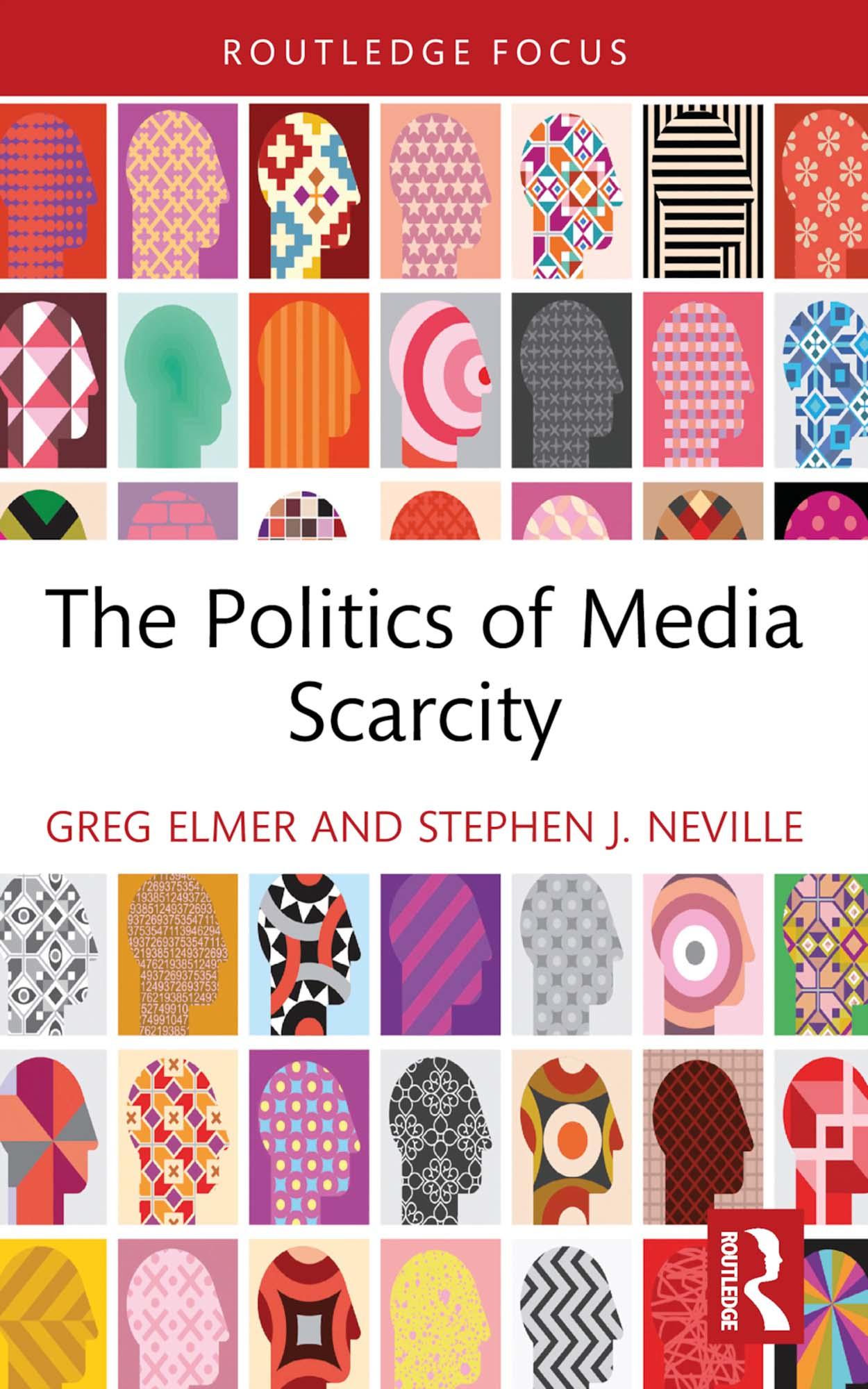
This book questions the predominance of “media abundance” as a guiding concept for contemporary mediated politics. The authors argue that media abundance is not a universal condition, and that certain individuals, communities, and even nations can more accurately be referred to as media scarce – where access to media technologies and content is limited, highly controlled, or surveilled.
Through case studies that focus on guerilla militants, incarcerated Indigenous people, and cold war‑era infrastructure, including Soviet “closed” or “secret” cities and Canadian nuclear bunkers, the book’s chapters interrogate how the once media scarce later “speak” to – and can be heard by – the predominant, abundant media culture. Drawing from several art projects and diverse cultural sites, the book highlights how media scarce communities negotiate and otherwise narrate their place in the world, their past experiences and lives, and escape from subjugation. To better understand media scarce politics, the book asks how and when communities become – by accident or force, by choice or necessity – media scarce.
This innovative and insightful text will appeal to students and scholars around the world working in the areas of media and politics, art and politics, visual studies, surveillance studies, and communication studies.
Paga facilmente con carta, Klarna, Apple Pay o Google Pay. Non sei soddisfatto? Hai sempre 14 giorni per il rimborso. Leggi di più nei nostri termini. Per qualsiasi domanda, scrivici a hello@memmo.org.
Memmo rende lo studio più facile, ovunque tu sia nel mondo. Qui trovi i tuoi libri di testo e strumenti di studio intelligenti, tutto in un unico posto: riassunti, quiz, podcast e flashcard. E poi c'è Ted, il tuo compagno di studio che risponde a ogni tua domanda. Oltre 50.000 studenti studiano già qui: è stato creato per aiutarti a imparare più velocemente e a stressarti meno.