
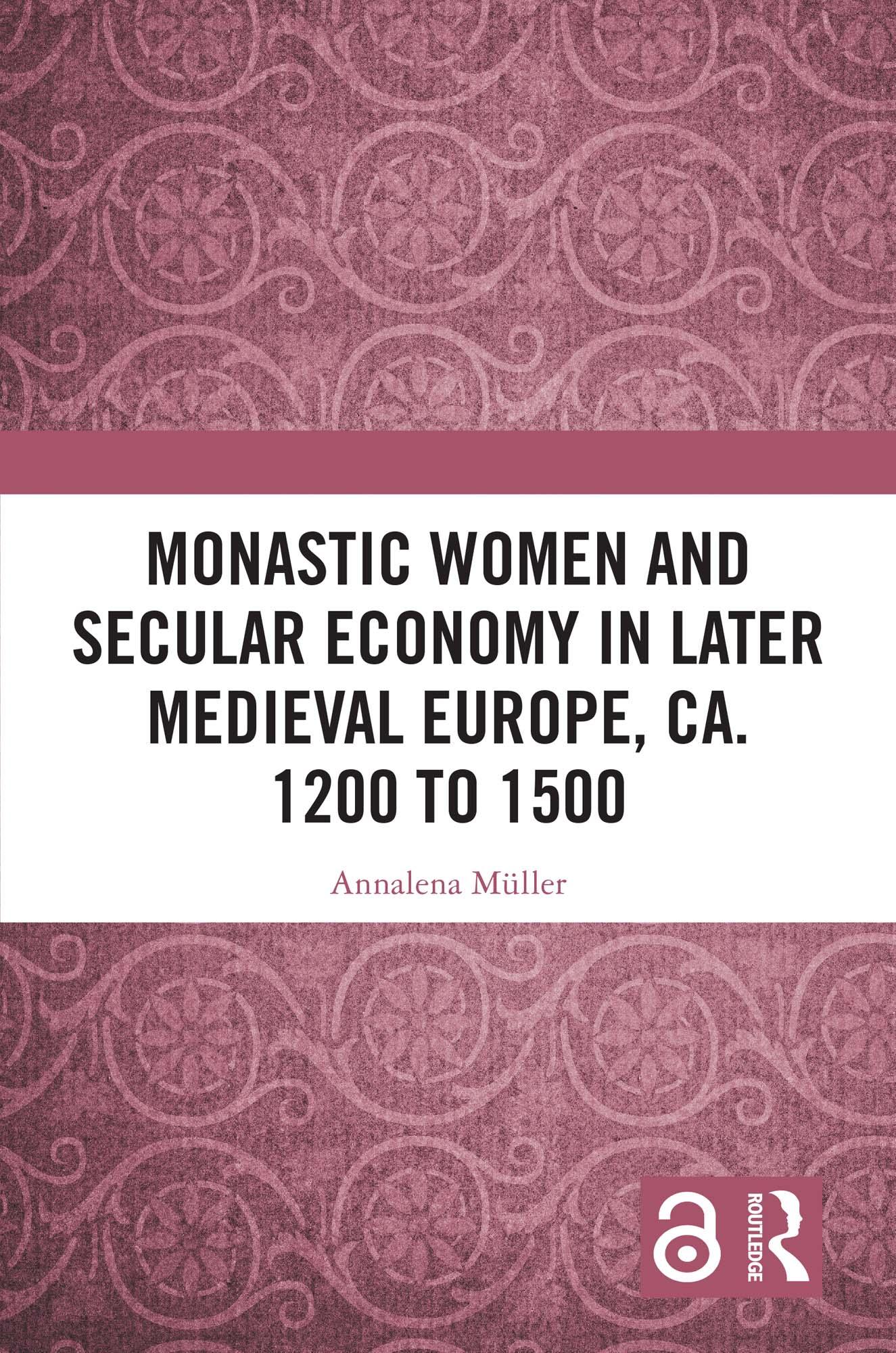
This book aims to rewrite the narrative of women and power in medieval society. Based on a rich corpus of sources – systematically collected for the first time – it reveals female monasteries as central and economically able agents in feudal society.
With a chronological focus on the late Middle Ages, this book focuses on four powerful convents located in modern-day France, Germany, and Switzerland. Three of these institutions were aristocratic convents founded in the early Middle Ages. They were endowed with far-ranging feudal prerogatives that were largely, but not exclusively, derived from landed possessions. The fourth convent originated in the thirteenth century and disposed of a primarily monetary economy.
Observed from a longue-durée perspective, Monastic Women and Secular Economy in Later Medieval Europe reveals strategies of adaptations that allowed these different institutions to weather the significant economic changes of the late Middle Ages. Within the context of medieval feudal society, these abbesses and prioresses were authoritative figures. They ruled over territories, dispensed justice, appointed priests, and even sent soldiers to war. Late medieval convents acted as urban landlords and gave credits – they were thus major economic players in the rising cities. These observations of this monograph will force medievalists to reconsider the traditional image of both the “male” feudal Middle Ages and medieval monetary economy.
Paga facilmente con carta, Klarna, Apple Pay o Google Pay. Non sei soddisfatto? Hai sempre 14 giorni per il rimborso. Leggi di più nei nostri termini. Per qualsiasi domanda, scrivici a hello@memmo.org.
Memmo rende lo studio più facile, ovunque tu sia nel mondo. Qui trovi i tuoi libri di testo e strumenti di studio intelligenti, tutto in un unico posto: riassunti, quiz, podcast e flashcard. E poi c'è Ted, il tuo compagno di studio che risponde a ogni tua domanda. Oltre 50.000 studenti studiano già qui: è stato creato per aiutarti a imparare più velocemente e a stressarti meno.