
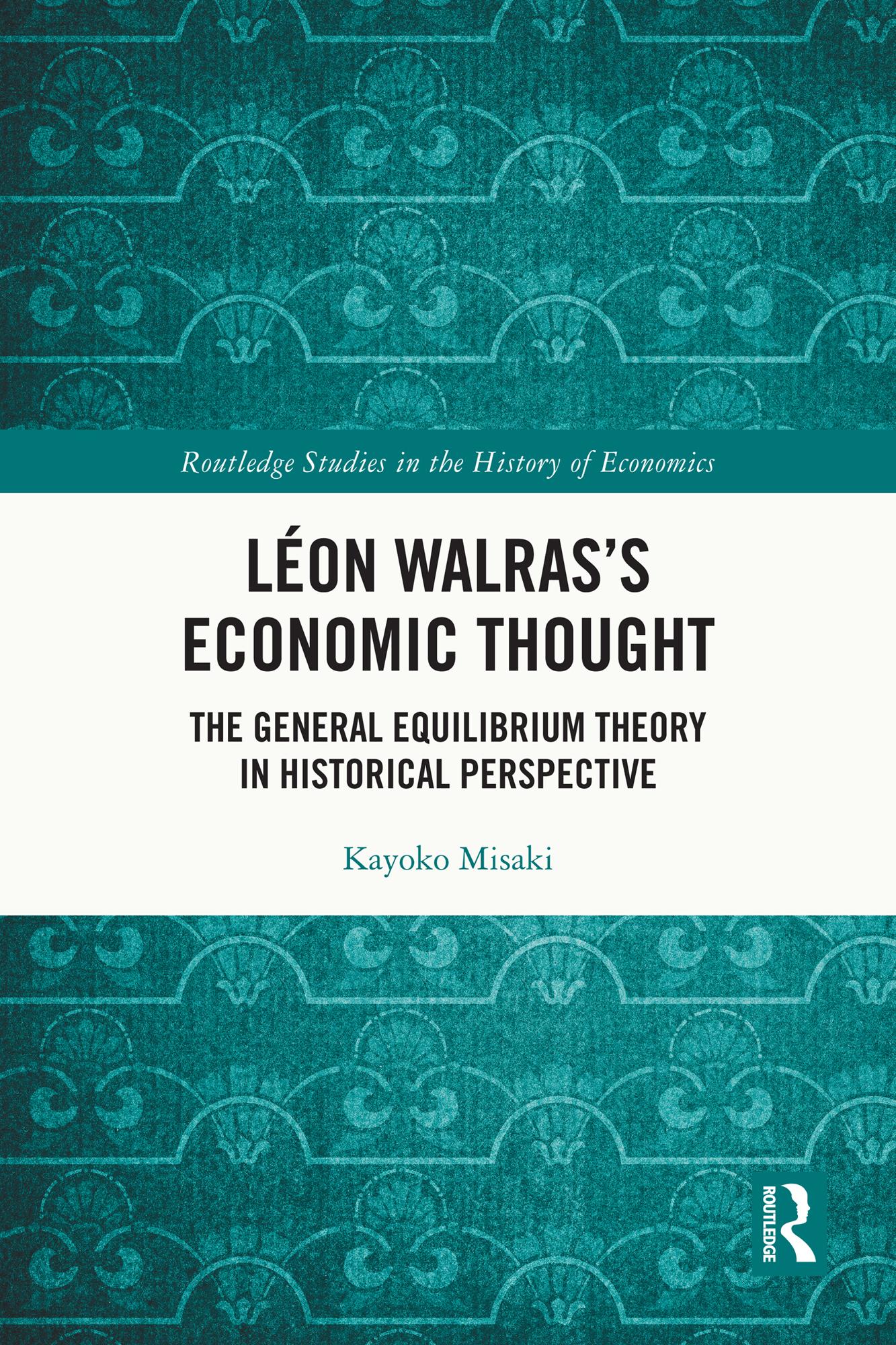
This book sheds new light on the general equilibrium theory of Léon Walras (1834–1910) from a historical perspective. Walras's construction of general equilibrium theory marked the dawn of modern economics, and the theory was greatly developed in the 20th century. However, Walras's own intentions and ideas behind the theory are still not fully understood.
This book aims to clarify the intellectual background of Walras’s economics by delving into his original writings, which have not received much attention until now. Part 1 of the book reconsiders the relationship between Walras and his predecessors, Adam Smith (1723–1790), Jean-Baptiste Say (1767–1832), and Achylle Nicolas Isnard (1749–1803), who are believed to have had a decisive influence on Walras's general equilibrium theory. In Part 2, the book explores Walras's views on the labor market, entrepreneurship, and non-selfish human nature, including concepts like sympathy, which have been overlooked in his general equilibrium theory and subsequently misunderstood to this day. Walras’s economic thought is one of the foundational sources of modern economics. An accurate and in-depth understanding of it will provide a new perspective on the problems faced by modern economics and open future possibilities for economics as a social science.
This book offers new insights not only to researchers and students of the history of economics but also to all those interested in the origins of modern economics.
Paga facilmente con carta, Klarna, Apple Pay o Google Pay. Non sei soddisfatto? Hai sempre 14 giorni per il rimborso. Leggi di più nei nostri termini. Per qualsiasi domanda, scrivici a hello@memmo.org.
Memmo rende lo studio più facile, ovunque tu sia nel mondo. Qui trovi i tuoi libri di testo e strumenti di studio intelligenti, tutto in un unico posto: riassunti, quiz, podcast e flashcard. E poi c'è Ted, il tuo compagno di studio che risponde a ogni tua domanda. Oltre 50.000 studenti studiano già qui: è stato creato per aiutarti a imparare più velocemente e a stressarti meno.