
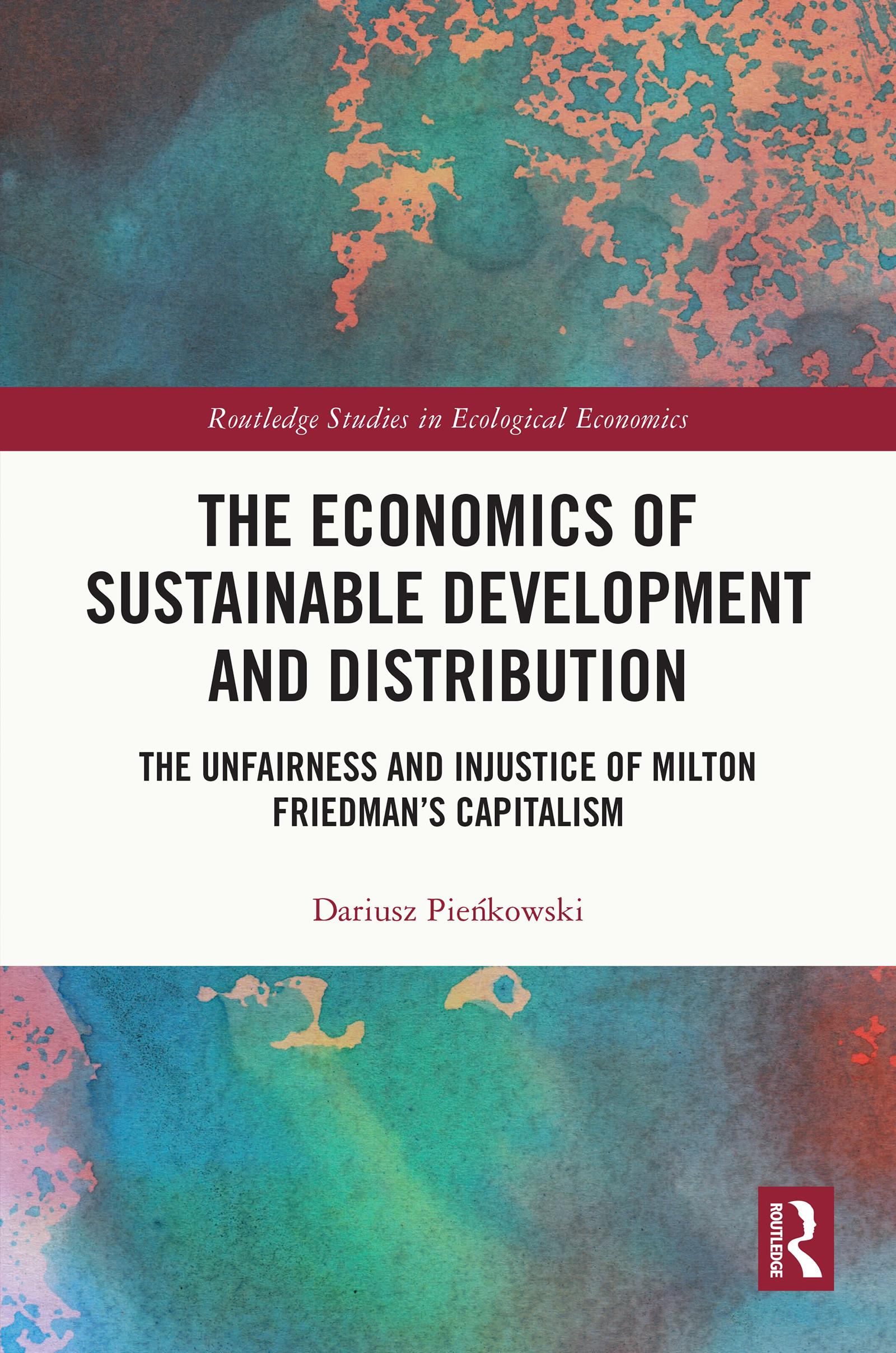
Drawing on a broad transdisciplinary background, this book compares distributive justice systems and related socioeconomic institutions within the liberal and sustainable development traditions. Confronting the capitalist worldview of prominent Nobel Prize–winning economist Milton Friedman, the book offers a theoretical framework for sustainable development: a new paradigm of economics grounded in environmental and social issues. The analysis takes as its starting point that the development and evolution of human beings is codetermined by socioeconomic institutions. These institutions facilitate models of society, morality and human behaviour: they are all social constructs. This matters because the liberal system of justice uses the claim that ‘life is unfair’ as the justification of socioeconomic inequalities, and it is these institutions which determine the concepts of fairness and justice. Therefore, the liberal system’s favouring of entrepreneurs should require advance measures to safeguard the interests of the losers—instead, it seeks to justify their misfortunes. It is argued that this liberal notion of fairness can only be fairly executed in conditions of perfect market competition, which have never existed. In contrast, the principles of sustainable development pay attention to the problems generated by the unjust and unfair distribution of resources and postulate wider use of the fairness formula ‘to each according to their needs’. It is thus more focused on fair ends than on fair procedures. This book is addressed to scholars and advanced students in ecological economics, environmental economics, economics of sustainable development and political science.
Paga facilmente con carta, Klarna, Apple Pay o Google Pay. Non sei soddisfatto? Hai sempre 14 giorni per il rimborso. Leggi di più nei nostri termini. Per qualsiasi domanda, scrivici a hello@memmo.org.
Memmo rende lo studio più facile, ovunque tu sia nel mondo. Qui trovi i tuoi libri di testo e strumenti di studio intelligenti, tutto in un unico posto: riassunti, quiz, podcast e flashcard. E poi c'è Ted, il tuo compagno di studio che risponde a ogni tua domanda. Oltre 50.000 studenti studiano già qui: è stato creato per aiutarti a imparare più velocemente e a stressarti meno.