
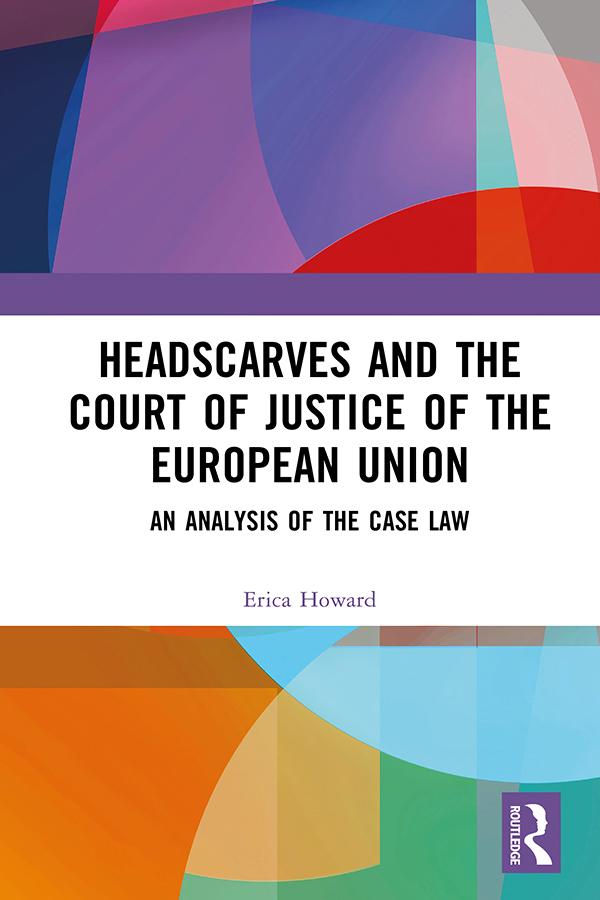
This book contains an in-depth examination of the Islamic headscarf cases of the Court of Justice of the European Union (CJEU) and places these against the background of the Islamophobia existing across Europe. It assesses how EU law can best protect women who want to wear headscarves at work for religious reasons and why this protection is important not only for the women themselves but also for the EU, taking into account its values as laid down in the Treaties, the Charter of Fundamental Rights of the EU and in the anti-discrimination Directives. It puts forward arguments for a finding that workplace neutrality bans constitute direct religion or belief discrimination and examines the way that the justification test for indirect discrimination has been applied by the CJEU. The work suggests that such bans could be more successfully challenged as gender and/or racial or ethnic origin discrimination, because the protection against these forms of discrimination is stronger. It also suggests that a claim for intersectional discrimination – on the grounds of gender, racial and ethnic origin, and religion or belief – should be possible in EU anti-discrimination law. The book will be of interest to academics, researchers and policy-makers working in the areas of equality and non-discrimination law, EU law and law and religion.
Paga facilmente con carta, Klarna, Apple Pay o Google Pay. Non sei soddisfatto? Hai sempre 14 giorni per il rimborso. Leggi di più nei nostri termini. Per qualsiasi domanda, scrivici a hello@memmo.org.
Memmo rende lo studio più facile, ovunque tu sia nel mondo. Qui trovi i tuoi libri di testo e strumenti di studio intelligenti, tutto in un unico posto: riassunti, quiz, podcast e flashcard. E poi c'è Ted, il tuo compagno di studio che risponde a ogni tua domanda. Oltre 50.000 studenti studiano già qui: è stato creato per aiutarti a imparare più velocemente e a stressarti meno.