
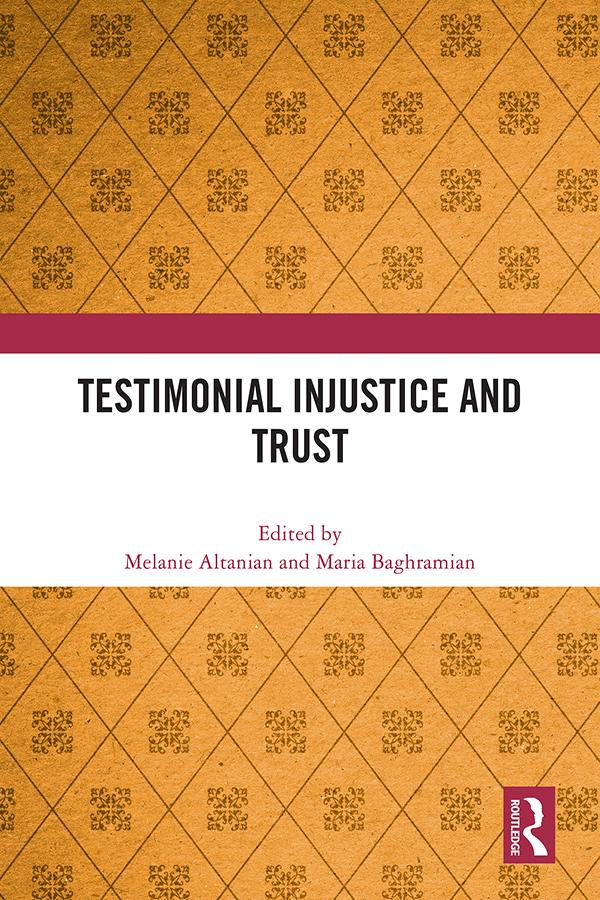
This book presents novel approaches and perspectives to scholarship on epistemic injustice and particularly, testimonial injustice and their connections with public trust.
Drawing from different philosophical schools of thought and approaches, the book provides a comprehensive analysis of the conditions, mechanisms and normative implications of testimonial injustice, a term most prominently introduced by Fricker (2007), and the role that trust can play in fostering testimonial justice. Through the application of theories of epistemic injustice, and testimonial injustice, to new contexts and cases, including gendered violence, disability, indigenous knowledge, genocide, vaccine hesitancy and the COVID-19 pandemic, the book sheds light on the real-world significance of these philosophical concepts.
Testimonial Injustice and Trust introduces new directions for further research and will appeal to scholars and students in (critical) social and political epistemology, normative ethics as well as social and political philosophy more generally. The chapters in this book were originally published in the International Journal of Philosophical Studies, Social Epistemology and Educational Philosophy and Theory.
Paga facilmente con carta, Klarna, Apple Pay o Google Pay. Non sei soddisfatto? Hai sempre 14 giorni per il rimborso. Leggi di più nei nostri termini. Per qualsiasi domanda, scrivici a hello@memmo.org.
Memmo rende lo studio più facile, ovunque tu sia nel mondo. Qui trovi i tuoi libri di testo e strumenti di studio intelligenti, tutto in un unico posto: riassunti, quiz, podcast e flashcard. E poi c'è Ted, il tuo compagno di studio che risponde a ogni tua domanda. Oltre 50.000 studenti studiano già qui: è stato creato per aiutarti a imparare più velocemente e a stressarti meno.