
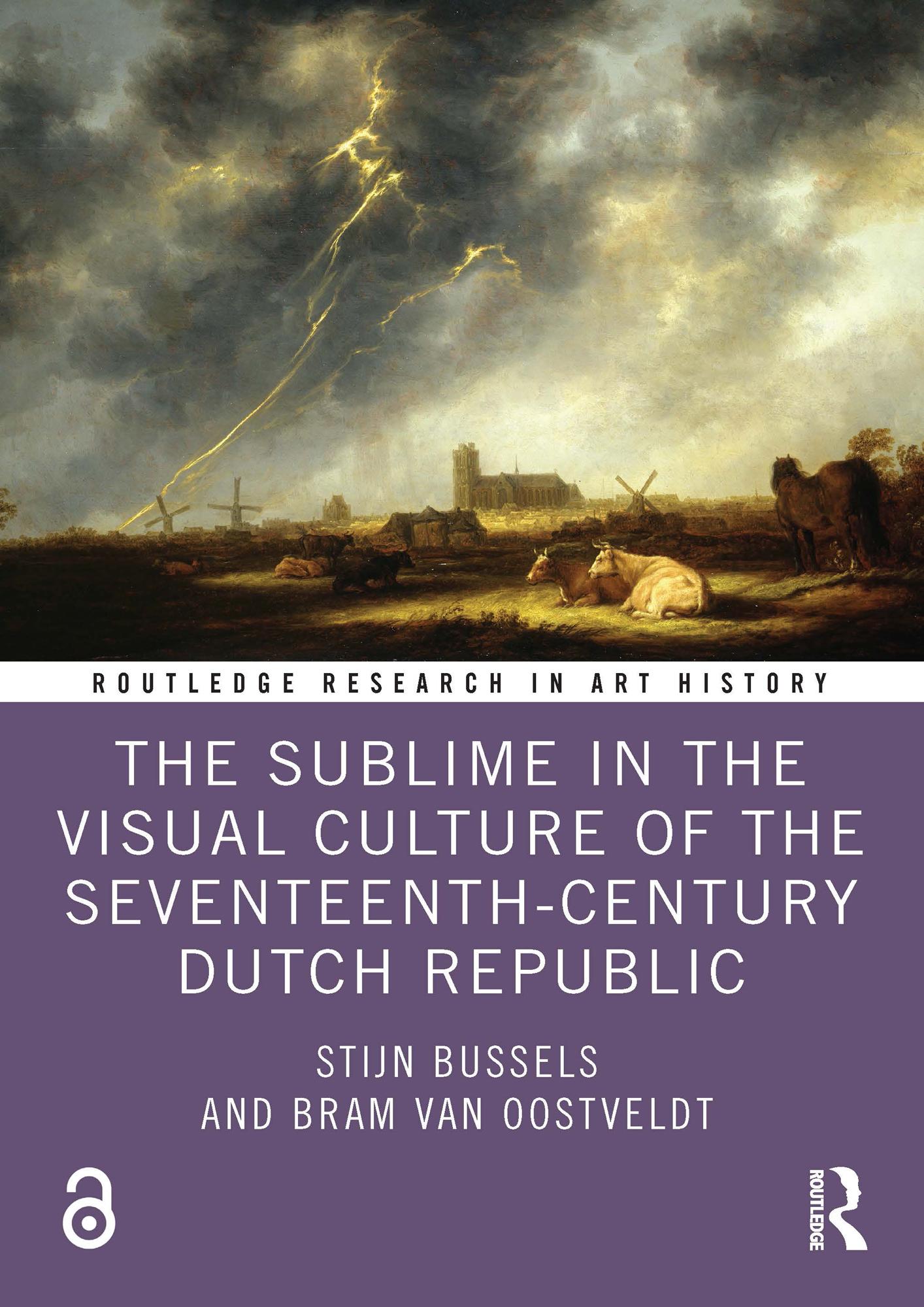
Contrary to what Kant believed about the Dutch (and their visual culture) as “being of an orderly and diligent position” and thus having no feeling for the sublime, this book argues that the sublime played an important role in seventeenth-century Dutch visual culture.
By looking at different visualizations of exceptional heights, divine presence, political grandeur, extreme violence, and extraordinary artifacts, the authors demonstrate how viewers were confronted with the sublime, which evoked in them a combination of contrasting feelings of awe and fear, attraction and repulsion. In studying seventeenth-century Dutch visual culture through the lens of notions of the sublime, we can move beyond the traditional and still widespread views on Dutch art as the ultimate representation of everyday life and the expression of a prosperous society in terms of calmness, neatness, and order.
The book will be of interest to scholars working in art history, visual culture, architectural history, and cultural history.
The Open Access version of this book, available at www.taylorfrancis.com, has been made available under a Creative Commons Attribution-Non Commercial-No Derivatives (CC-BY-NC-ND 4.0) 4.0 International license. Funded by Ghent University.
Paga facilmente con carta, Klarna, Apple Pay o Google Pay. Non sei soddisfatto? Hai sempre 14 giorni per il rimborso. Leggi di più nei nostri termini. Per qualsiasi domanda, scrivici a hello@memmo.org.
Memmo rende lo studio più facile, ovunque tu sia nel mondo. Qui trovi i tuoi libri di testo e strumenti di studio intelligenti, tutto in un unico posto: riassunti, quiz, podcast e flashcard. E poi c'è Ted, il tuo compagno di studio che risponde a ogni tua domanda. Oltre 50.000 studenti studiano già qui: è stato creato per aiutarti a imparare più velocemente e a stressarti meno.