
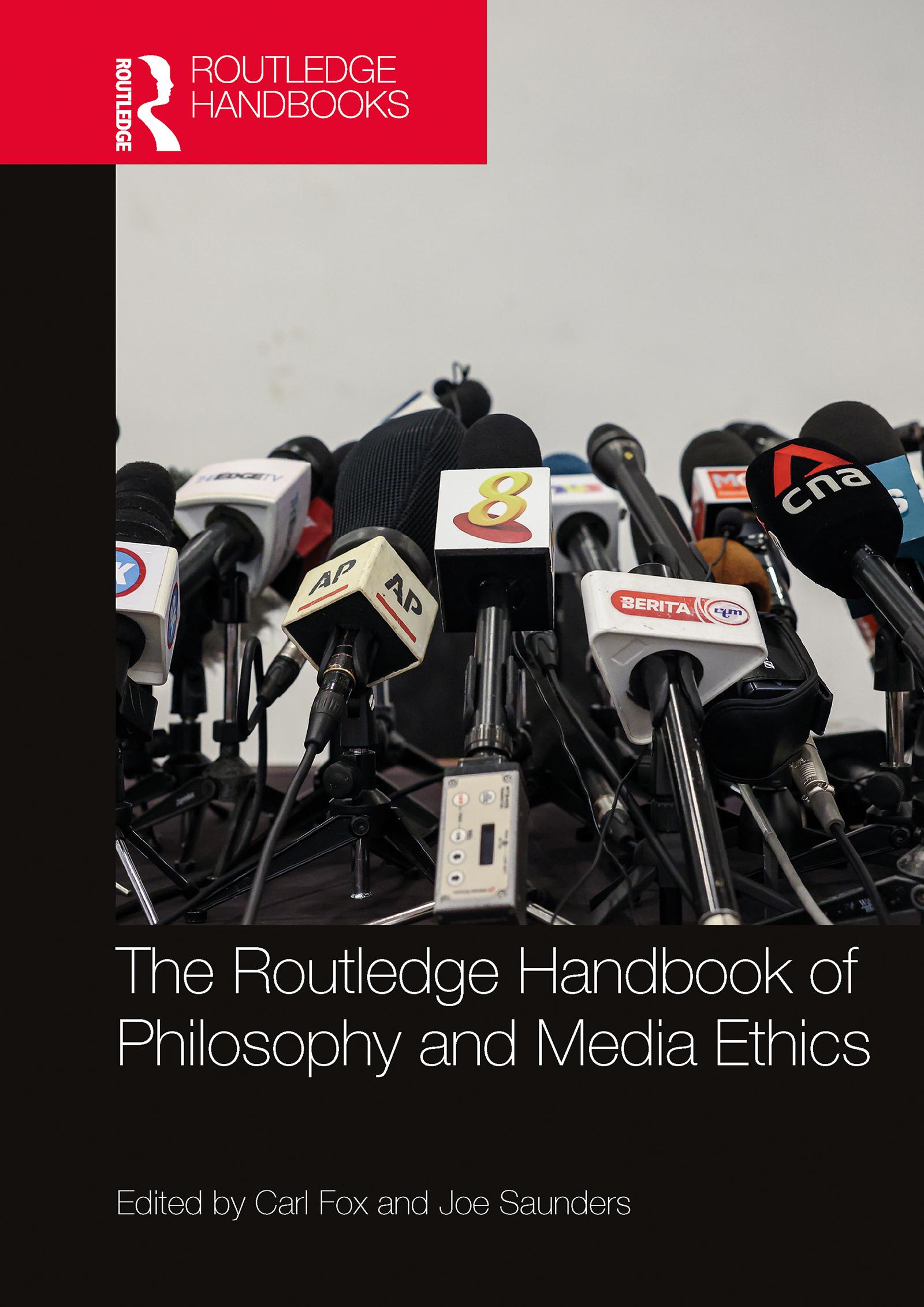
The media informs, entertains, and connects us. It is woven into the fabric of politics. Its increasing immediacy has become an inescapable feature of almost everybody’s life. We are, at the same time, subject to the media and participants in it. The ethical questions it raises have never been more urgent. Trust is in short supply, but we need to share information while dealing with problems like misinformation, disinformation, and echo chambers. And what responsibilities fall on the state, and on other actors such as artists, advertisers, and social media users, as we reckon with endemic problems like racism, sexism, and classism?
The Routledge Handbook of Philosophy and Media Ethics is an outstanding survey and assessment of this vitally important field. Comprising thirty chapters written by an international team of contributors, the Handbook is divided into five parts:
- Freedom of Speech, Privacy, and Censorship
- The News Media
- Broadening the Scope: Giving Other Aspects of the Media their Due
- Justice, Power, and Representation
- Vice and Virtue Online
The Routledge Handbook of Philosophy and Media Ethics is essential reading for students and researchers in philosophy, media and communication studies, politics, and law, as well as practising media professionals and journalists.
Paga facilmente con carta, Klarna, Apple Pay o Google Pay. Non sei soddisfatto? Hai sempre 14 giorni per il rimborso. Leggi di più nei nostri termini. Per qualsiasi domanda, scrivici a hello@memmo.org.
Memmo rende lo studio più facile, ovunque tu sia nel mondo. Qui trovi i tuoi libri di testo e strumenti di studio intelligenti, tutto in un unico posto: riassunti, quiz, podcast e flashcard. E poi c'è Ted, il tuo compagno di studio che risponde a ogni tua domanda. Oltre 50.000 studenti studiano già qui: è stato creato per aiutarti a imparare più velocemente e a stressarti meno.