
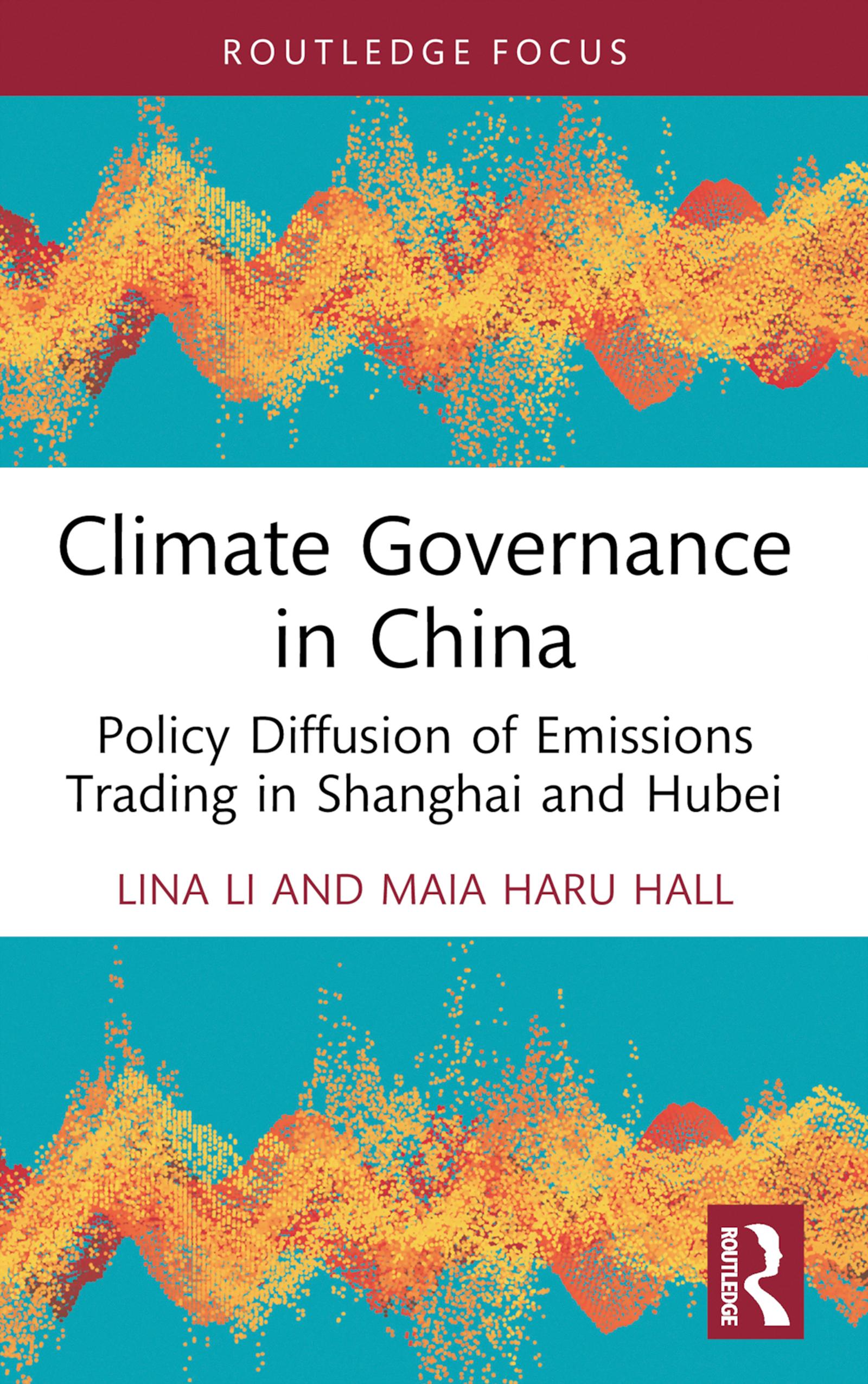
This book explores how and why innovative climate policies spread across subnational regions and between governance levels in China.
Despite the significance of emerging economies in a pathway to a zero-carbon future, research to date on China’s transformation governance remains limited. Drawing on a theoretical framework for policy diffusion and based on extensive data from expert interviews with Chinese decisionmakers and policy practitioners, Lina Li and Maia Haru Hall focus on the policy of emissions trading systems (ETS) and two key case studies: Shanghai and Hubei. The authors examine the role of the national government and how much freedom the subnational regions have in developing ETS policy, as well as pinpointing key actors and the role of policy and knowledge diffusion mechanisms. Overall, this book sheds light on the competition between China and the West in the transition to climate-friendly societies and economies, highlighting opportunities for cooperation between them.
This book will be of great interest to students and scholars of environmental politics and policy, climate change, urban studies, and Chinese studies more broadly.
Paga facilmente con carta, Klarna, Apple Pay o Google Pay. Non sei soddisfatto? Hai sempre 14 giorni per il rimborso. Leggi di più nei nostri termini. Per qualsiasi domanda, scrivici a hello@memmo.org.
Memmo rende lo studio più facile, ovunque tu sia nel mondo. Qui trovi i tuoi libri di testo e strumenti di studio intelligenti, tutto in un unico posto: riassunti, quiz, podcast e flashcard. E poi c'è Ted, il tuo compagno di studio che risponde a ogni tua domanda. Oltre 50.000 studenti studiano già qui: è stato creato per aiutarti a imparare più velocemente e a stressarti meno.