
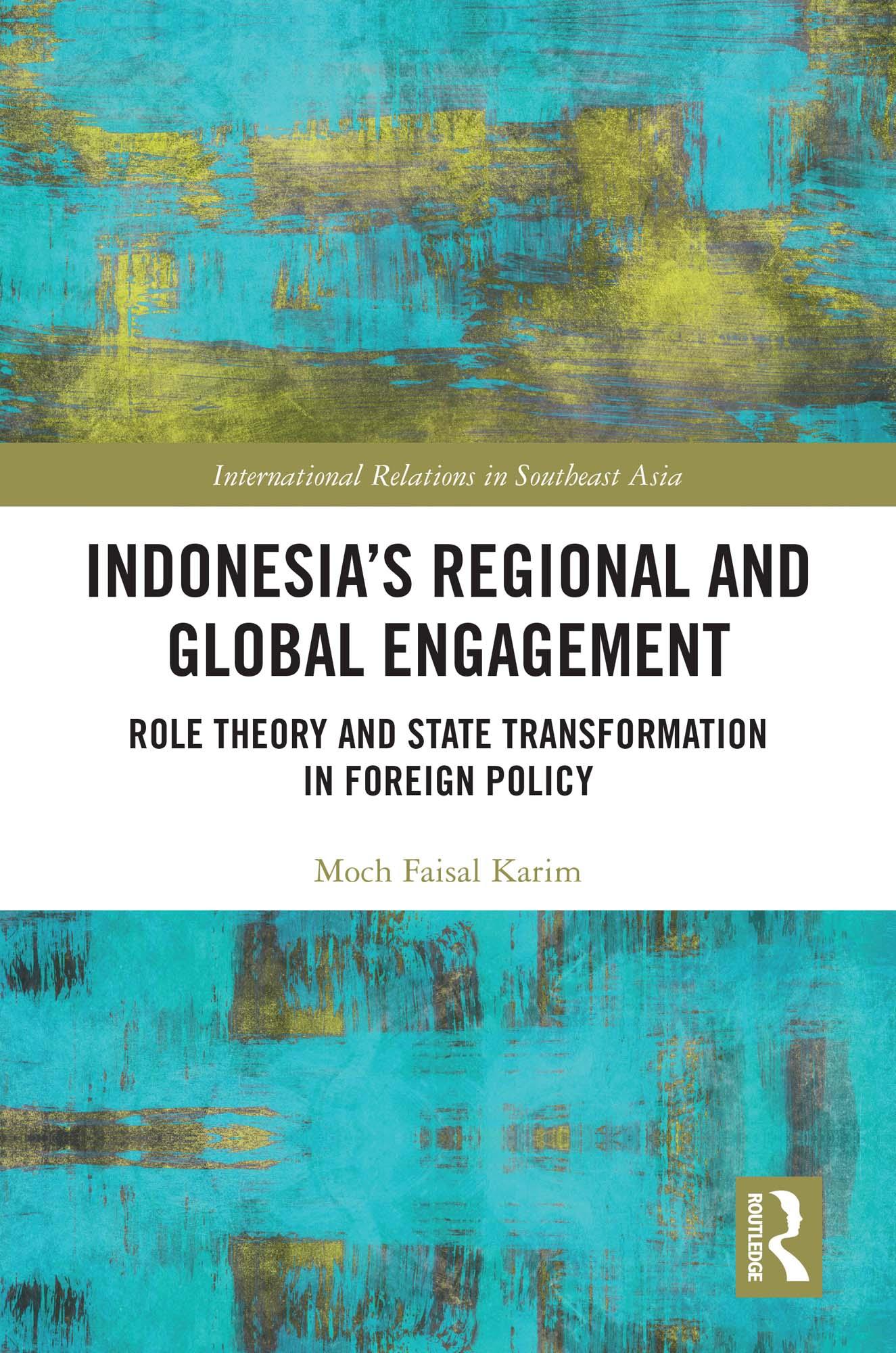
Karim examines the changes and continuity of Indonesia’s foreign policy in the post-authoritarian era, under presidents Susilo Bambang Yudhoyono and Joko Widodo.
Indonesia conceptualised and aimed to adopt four principle roles after 2004 – being a voice for developing countries; being a regional leader; being an advocate for democratic and human rights; and being a bridge-builder. These roles, however, were by no means stable and were constantly being negotiated and contested. Karim analyses the contested nature of Indonesian foreign policy and the limits this places on consistency in enacting these roles. He highlights two drivers for such limitations – conflicting role conceptions and state fragmentation. He develops this argument based on four case studies of Indonesia’s engagement in human rights governance and trade governance at both regional and global levels.
Essential reading for students and scholars of Indonesia’s foreign policy, that will also be of substantial value to those studying policy in Southeast Asia more broadly.
Paga facilmente con carta, Klarna, Apple Pay o Google Pay. Non sei soddisfatto? Hai sempre 14 giorni per il rimborso. Leggi di più nei nostri termini. Per qualsiasi domanda, scrivici a hello@memmo.org.
Memmo rende lo studio più facile, ovunque tu sia nel mondo. Qui trovi i tuoi libri di testo e strumenti di studio intelligenti, tutto in un unico posto: riassunti, quiz, podcast e flashcard. E poi c'è Ted, il tuo compagno di studio che risponde a ogni tua domanda. Oltre 50.000 studenti studiano già qui: è stato creato per aiutarti a imparare più velocemente e a stressarti meno.