
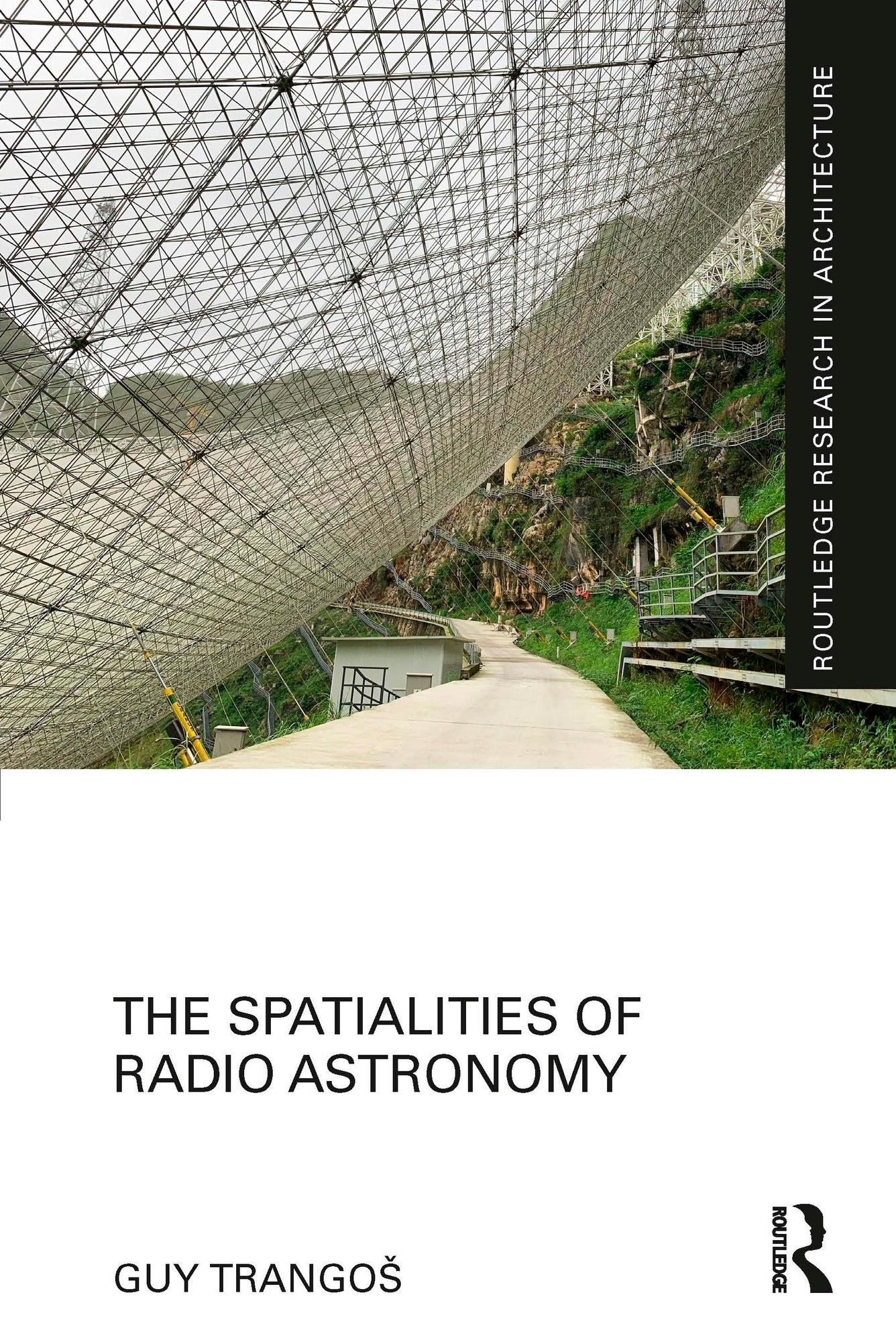
The Spatialities of Radio Astronomy examines the multidisciplinary overlap between the spatial disciplines and the studies of science and technology through a comparative study of four of the world’s most important radio telescopes. Employing detailed analysis, historical research, interviews, personal observations, and various conceptual manoeuvres, Guy Trangoš reveals the depth of spatial process active at these scientific sites and the territories they traverse.
Through the conceptual frameworks of territory, hyper-concentration, and contingency, Trangoš interprets the telescope as exploded across space and time, present in multiple connected sites simultaneously, and active in the production of space. He develops a historiographic and contemporary analysis of the Atacama Large Millimeter/submillimeter Array (ALMA, Chile); the Five-hundred-meter Aperture Spherical radio Telescope (FAST, China); the Arecibo Observatory (Puerto Rico); and the MeerKAT/SKA (South Africa). These case studies are global exemplars of the different spatial transformations that occur through science. Their relationships to surrounding communities and landscapes reveal deeper constitutional processes embodied in each institutional and spatial form.
This book spans the modern history of architecture and science, the studies of science, technology and society, and urban theory. It is of specific interest to architects and designers expanding their analysis of spatial production, scholars in the study of geography, landscape, science, technology, and astronomy, and people fascinated with how these radio telescopes were conceptualised, built, and operate today.
Paga facilmente con carta, Klarna, Apple Pay o Google Pay. Non sei soddisfatto? Hai sempre 14 giorni per il rimborso. Leggi di più nei nostri termini. Per qualsiasi domanda, scrivici a hello@memmo.org.
Memmo rende lo studio più facile, ovunque tu sia nel mondo. Qui trovi i tuoi libri di testo e strumenti di studio intelligenti, tutto in un unico posto: riassunti, quiz, podcast e flashcard. E poi c'è Ted, il tuo compagno di studio che risponde a ogni tua domanda. Oltre 50.000 studenti studiano già qui: è stato creato per aiutarti a imparare più velocemente e a stressarti meno.