
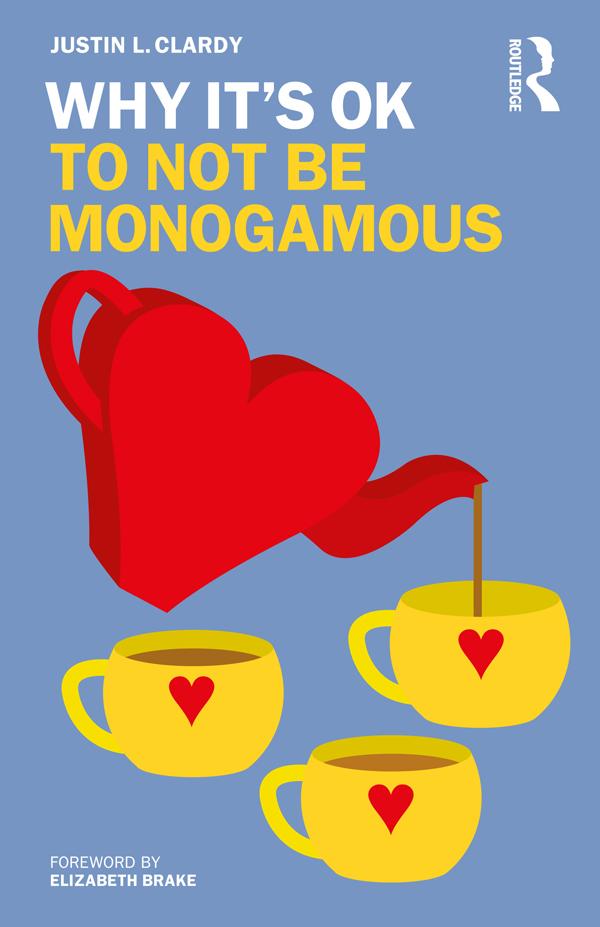
The downsides of monogamy are felt by most people engaged in long-term relationships, including restrictions on self-discovery, limits on friendship, sexual boredom, and a circumscribed understanding of intimacy. Yet, a "happily ever after" monogamy is assumed to be the ideal form of romantic love in many modern societies: a relationship that is morally ideal and will bring the most happiness to its two partners.
In Why It’s OK to Not Be Monogamous, Justin L. Clardy deeply questions these assumptions. He rejects the claim that non-monogamy among honest, informed and consenting adults is morally impermissible. He shows instead how polyamorous relationships can actually be exemplars of moral virtue. The book discusses how social and political forces sustain and reward monogamous relationships. The book defines non-monogamy as a privative concept; a negation of monogamy. Looking at its prevalence in the United States, the book explains how common criticisms of non-monogamy come up short. Clardy argues, as some researchers have recently shown—monogamy relies on continually demonizing non-monogamy to sustain its moral status. Finally, the book concludes with a focus on equality, asking what justice for polyamorous individuals might look like.
Paga facilmente con carta, Klarna, Apple Pay o Google Pay. Non sei soddisfatto? Hai sempre 14 giorni per il rimborso. Leggi di più nei nostri termini. Per qualsiasi domanda, scrivici a hello@memmo.org.
Memmo rende lo studio più facile, ovunque tu sia nel mondo. Qui trovi i tuoi libri di testo e strumenti di studio intelligenti, tutto in un unico posto: riassunti, quiz, podcast e flashcard. E poi c'è Ted, il tuo compagno di studio che risponde a ogni tua domanda. Oltre 50.000 studenti studiano già qui: è stato creato per aiutarti a imparare più velocemente e a stressarti meno.