
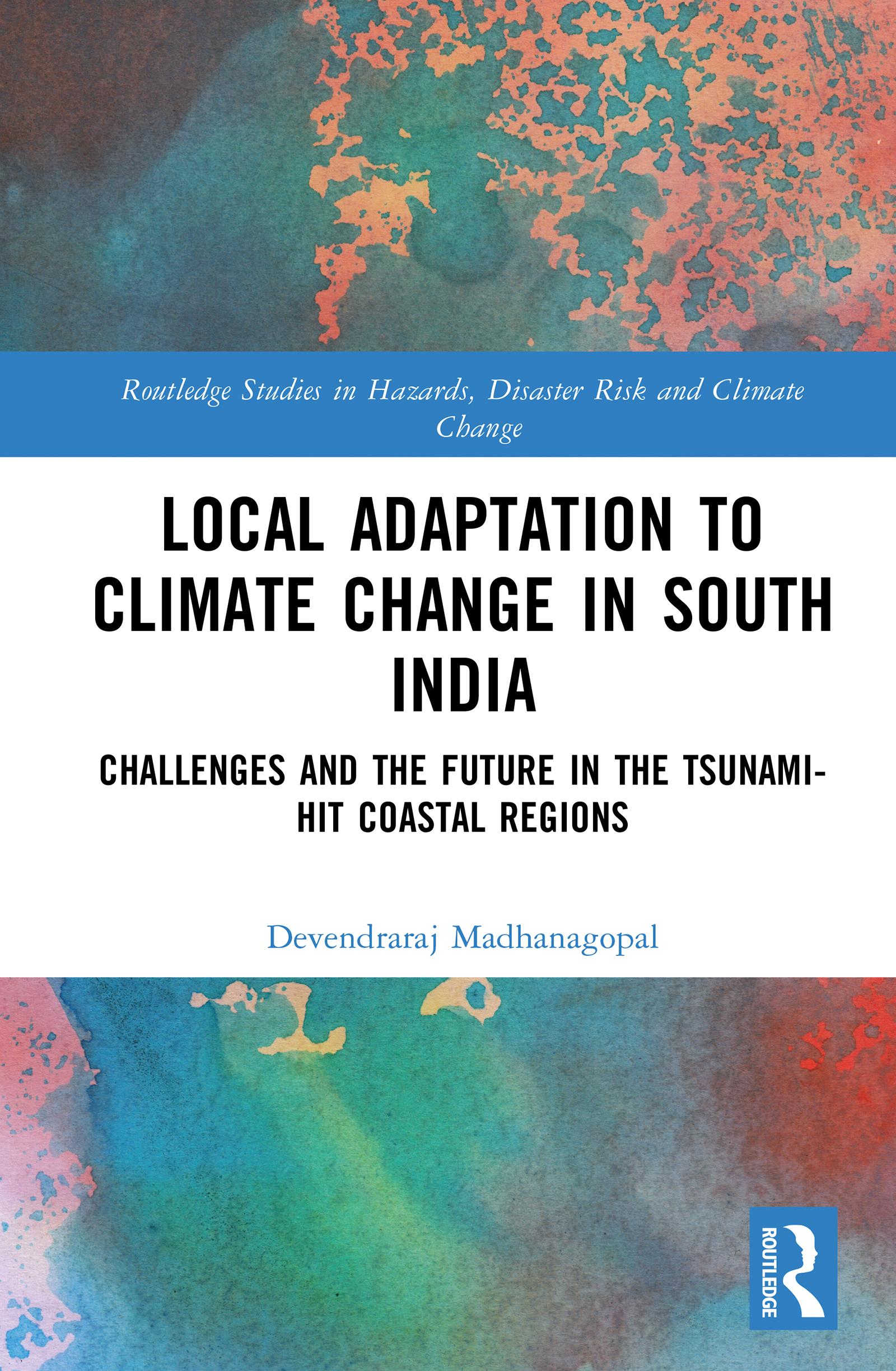
This book critically discusses the vulnerabilities and local adaptation actions of the traditional marine fishers of the tsunami-hit coastal regions of South India to climate change and risks, with an emphasis on their local institutions. Thereby, it offers a comprehensive account of the ways in which marine fishers live and respond to climate change.
The Coromandel coastal regions of South India are known for their rich sociocultural history and enormous marine resources, as well as their long history of vulnerability to climate change and disasters, including the 2004 tsunami. By drawing cases from the tsunami-hit fishing villages of this coast, this book demonstrates that indigenous knowledge systems, climate change perceptions, sociocultural norms, and governance systems of the fishers influence and contest the local adaptation responses to climate change. By foregrounding the real picture of vulnerability and adaptation actions of marine fishers in the face of climate change and disasters, this book also challenges the conventional understanding of local institutions and fishers' knowledge systems. Underlining that adaptation to climate change is a sociopolitical process, this book explores the potentials, limits, and complexities of local adaptation actions of marine fishers of this coast and offers novel insights and climate change lessons gleaned from the field to other coasts of India and around the world.
This book will be of great interest to students, scholars, and policymakers in climate change, fisheries, environmental sociology, environmental anthropology, sustainable livelihoods, and natural resource management.
Paga facilmente con carta, Klarna, Apple Pay o Google Pay. Non sei soddisfatto? Hai sempre 14 giorni per il rimborso. Leggi di più nei nostri termini. Per qualsiasi domanda, scrivici a hello@memmo.org.
Memmo rende lo studio più facile, ovunque tu sia nel mondo. Qui trovi i tuoi libri di testo e strumenti di studio intelligenti, tutto in un unico posto: riassunti, quiz, podcast e flashcard. E poi c'è Ted, il tuo compagno di studio che risponde a ogni tua domanda. Oltre 50.000 studenti studiano già qui: è stato creato per aiutarti a imparare più velocemente e a stressarti meno.