
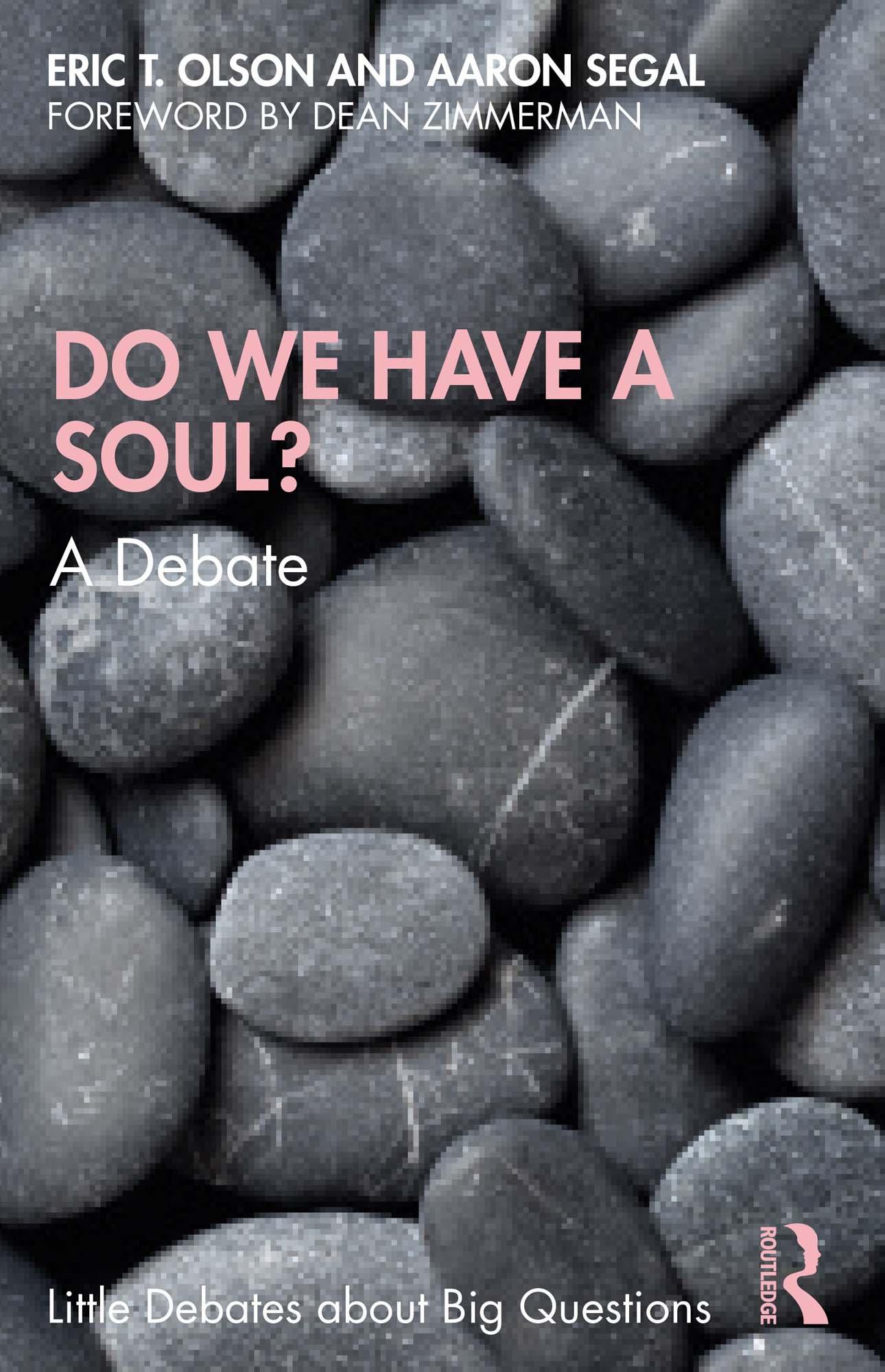
Are we made entirely of matter, like sticks and stones? Or do we have a soul—a nonphysical entity—where our mental lives take place?
The authors Eric T. Olson and Aaron Segal begin this accessible and wide-ranging debate by looking at the often-overlooked question of whether we appear in ordinary experience to be material things. Olson then argues that the dependence of our mental lives on the condition of our brains—the fact that general anesthesia causes complete unconsciousness, for instance—is best explained by saying that our mental lives are physical activities in our brains rather than nonphysical activities in the soul. Segal objects that this view is incompatible with two obvious and important facts about ourselves: that there is only one of you rather than trillions of almost identical beings now thinking your thoughts, and that we exist and remain conscious for more than an instant. These facts, he claims, are presupposed in our practical and moral judgments—but they require us to be immaterial things. Olson is forced to concede that there is no easy and uncontroversial answer to these objections but doubts whether taking us to be immaterial would be any help. The debate takes in large philosophical questions extending well beyond dualism and materialism.
The book features clear statements of each argument, responses to counter-arguments, in-text definitions, a glossary of key terms, and section summaries. Scholars and students alike will find it easy to follow the debate and learn the key concepts from metaphysics, philosophy of mind, and other areas necessary to understand each position.
Key Features
- Is the only introductory book devoted to the debate between substance dualism and materialism
- Discusses both traditional and novel arguments for each position
- Debates important but infrequently discussed questions, including:
- do we appear, in ordinary experience, to be material?
- should materialism be the default view?
- is there a good probabilistic argument for materialism?
- Written in a lively and accessible style
- Uses only a limited number of technical terms and defines all of them in the glossary
Paga facilmente con carta, Klarna, Apple Pay o Google Pay. Non sei soddisfatto? Hai sempre 14 giorni per il rimborso. Leggi di più nei nostri termini. Per qualsiasi domanda, scrivici a hello@memmo.org.
Memmo rende lo studio più facile, ovunque tu sia nel mondo. Qui trovi i tuoi libri di testo e strumenti di studio intelligenti, tutto in un unico posto: riassunti, quiz, podcast e flashcard. E poi c'è Ted, il tuo compagno di studio che risponde a ogni tua domanda. Oltre 50.000 studenti studiano già qui: è stato creato per aiutarti a imparare più velocemente e a stressarti meno.