
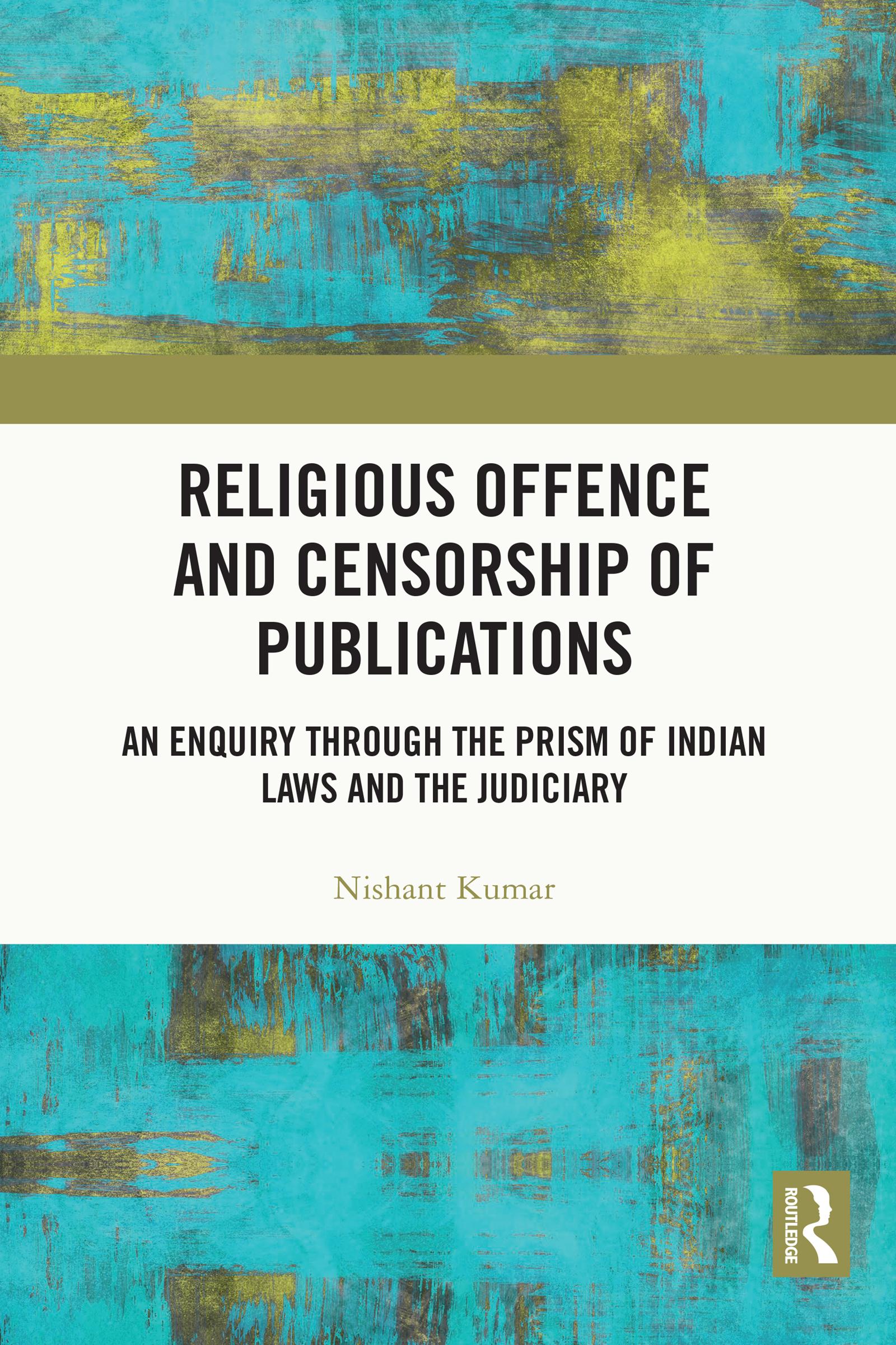
This book analyzes the role of laws and the judiciary in the process of censorship in India. It examines the rationales and observations produced by the judiciary when demands for censorship are directed against publications that allegedly offend religious sentiments. Focusing on a micro-level analysis of censorship of publications, it presents a hard case to understand the limitations of freedom of expression and the role played by the judiciary in defining its boundaries. The volume traces the evolution of laws governing freedom of expression since the colonial period and the context in which these laws were amended after Independence. It also explicates how the legal process – the structural and functional aspects of working of judiciary – affects the fate of freedom of expression in India. Employing comparative legal analysis, it tries to understand and situate the Indian case within the larger discourse of censorship and freedom of expression around the world, thereby marking its similarities and differences. In unravelling the politics of censorship, the author also examines the interaction among different stakeholders like government, non-state actors and the judiciary.
A tract for our times, this book will be of great interest to scholars and researchers of law, especially constitutional law and fundamental rights, politics, especially political theory and Indian politics, modern India and South Asian studies.
Paga facilmente con carta, Klarna, Apple Pay o Google Pay. Non sei soddisfatto? Hai sempre 14 giorni per il rimborso. Leggi di più nei nostri termini. Per qualsiasi domanda, scrivici a hello@memmo.org.
Memmo rende lo studio più facile, ovunque tu sia nel mondo. Qui trovi i tuoi libri di testo e strumenti di studio intelligenti, tutto in un unico posto: riassunti, quiz, podcast e flashcard. E poi c'è Ted, il tuo compagno di studio che risponde a ogni tua domanda. Oltre 50.000 studenti studiano già qui: è stato creato per aiutarti a imparare più velocemente e a stressarti meno.